KUALA LUMPUR: Illegal racing will be made a specific offence, with fresh provisions also targeting the “tonto” informants who obstruct enforcement operations, says the Transport Minister.
Tabling the Road Transport (Amendment) Bill 2026 for its second reading, Anthony Loke (pic) said the changes are meant to come down hard on offences that put road users at risk while making everyday dealings with the authorities easier.
“The government’s principle in this amendment is clear: to be firm against offences that can jeopardise road safety while making it easier for the public,” he said yesterday.
Loke said road transport had changed a great deal since the Act came into force in 1987, adding that enforcement now leans heavily on data and automated cameras, while newer problems have emerged around electric vehicles, micromobility, foreign vehicles and document forgery.
To keep up, he said the Bill sets out rules for electric and modified vehicles, as well as foreign vehicles entering the country, and tightens controls over Malaysian-registered vehicles crossing the border.
Loke emphasised that the changes aim to drive up public compliance rather than generate state revenue.
“The purpose of this amendment is to increase compliance, not to burden the people,” he said, adding that every change came back to a single priority.
“The ultimate objective of every amendment proposed is based on one clear priority: protecting the safety and lives of road users.”
Beyond the racing offence, the Bill brings in new provisions against tontos – the lookouts and scouts who clear the way for illegal racers.
It also raises penalties for selected traffic offences and places more responsibility on registered owners whose vehicles are caught breaking the rules on enforcement cameras.
On the easier side, the Bill gives legal recognition to digital driving licences and road tax records, so the digital versions carry the same standing as the physical ones. It also moves Road Transport Department services further onto digital platforms, including electronic notices.
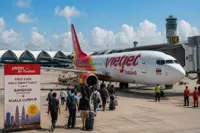
Meanwhile, Malaysian carriers are adjusting their operations by reducing flight frequencies and consolidating routes amid cost pressures from volatile global oil prices, said Loke.
Loke said the aviation sector continues to sustain operations and remains committed to ensuring services are not disrupted despite the challenging cost environment.
Speaking to reporters after the opening of the Global Maritime Economics Conference 2026 yesterday, Loke said that despite making minor adjustments to flight frequencies, Malaysian carriers have not experienced major operational disruptions and had maintained overall connectivity.
“In our context, Malaysia’s aviation scale is small compared to other countries where airlines have stopped operations or reduced many destinations,” he said.
Loke said maintaining air connectivity remains crucial for the wider economy, particularly for tourism, business travel and related services.