



KEPALA BATAS: Russia has agreed to supply oil, gas and diesel to Malaysia for at least the next 20 years, says Datuk Seri Anwar Ibrahim.
The Prime Minister said that Russian President Vladimir Putin conveyed this to him during his visit to Kazan last week.
This commitment, he said, underscored the close ties and longstanding friendship between Malaysia and Russia.
Anwar, who attended the Asean-Russia Commemorative Summit held on June 17 and 18 in Kazan, a southwest Russian city, said Putin not only gave an assurance about the supplies of petrol, oil and gas to Malaysia but also agreed to provide them over the long term.
From Kazan, Anwar proceeded to Turkmenistan for a two-day official visit aimed at fostering cooperation and exploring opportunities to enhance Malaysia’s long-term oil and gas supply.
He returned to Malaysia yesterday, saying that both countries viewed Malaysia as an independent nation that maintains friendly relations with all parties.
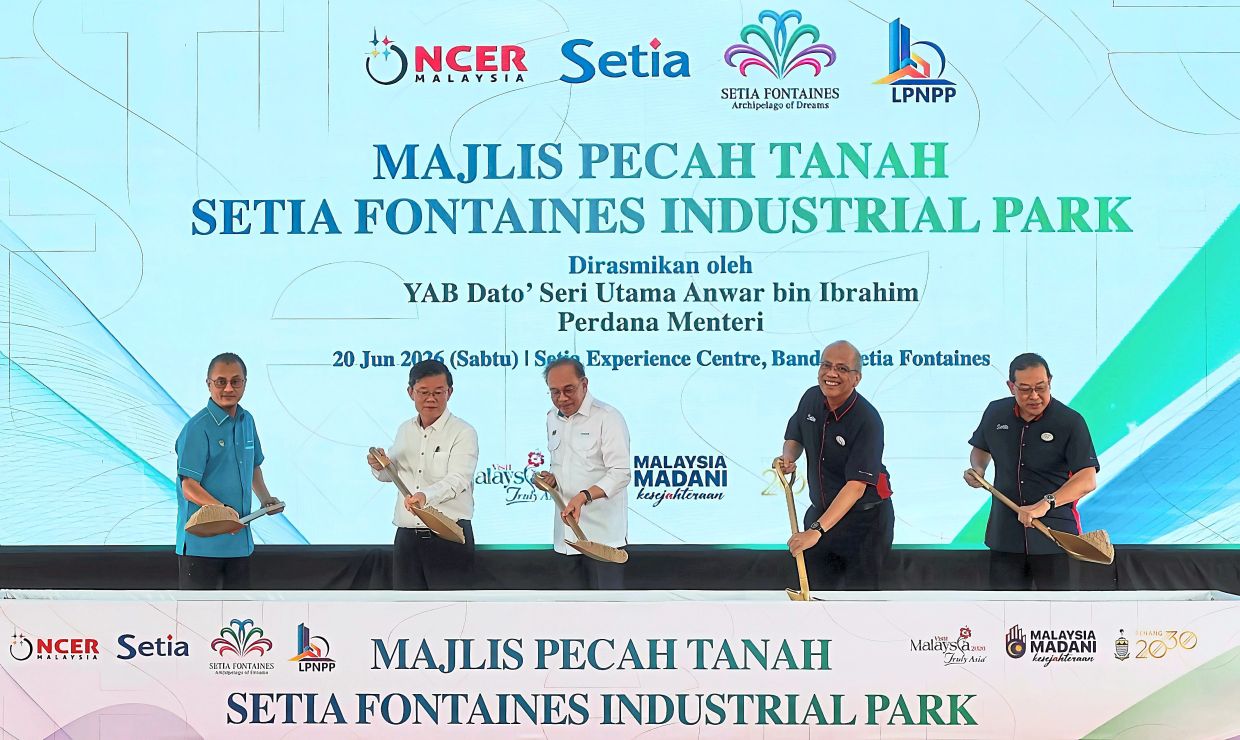
Speaking at the groundbreaking ceremony of the Setia Fontaines Industrial Park yesterday, Anwar said the development with both countries would strengthen Malaysia’s energy security for years to come.
He said Malaysia had also moved early to strengthen energy cooperation with Turkmenistan, which possesses some of the world’s largest oil and gas reserves.
The discussions had begun during Turkmenistan President Serdar Berdimuhamedov’s visit to Malaysia two years ago.
With PETRONAS’ presence in Turkmenistan for the past three decades and strong ties with the country, Anwar said Malaysia now has access to two of Turkmenistan’s gas reserves.
“Alhamdulillah (God willing), this provides us the confidence that our energy requirements can be met for decades,” he said.
Anwar said the arrangement could enhance Malaysia’s capacity to export energy to key markets such as China, Japan and South Korea, where demand remains strong.
He also urged government-linked companies and private firms to ensure development projects generate benefits for middle- and lower-income groups.
This is essential to prevent the widening of socio-economic disparities due to rapid development, he added.
“For every approval we give, be it to Khazanah (Khazanah Nasional Berhad), PNB (Permodalan Nasional Berhad), EPF (Employees Provident Fund) or private companies, there must also be opportunities for those in the middle- and lower-income groups.
“Otherwise, we will see a growing divide in our country, while opportunities for lower-income groups become increasingly constrained,” he said.
Anwar called for closer collaboration between industry, TVET institutions and universities, including Universiti Sains Malaysia, to ensure graduates are equipped with skills relevant to industry needs.
Otherwise, the creation of professional jobs would mean little if there were not enough qualified workers, he said.
“Technology changes rapidly, often within a year or two. Training programmes must therefore remain aligned with the needs of industry and educational institutions,” Anwar said.

