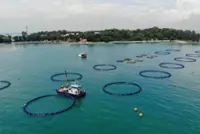
PETALING JAYA: The Fisheries Department will focus on developing broodstock for three key marine species for mariculture.
The species are barramundi or Asian seabass (Lates calcarifer), milkfish (Chanos chanos) and Snubnose pompano (Trachinotus blochii).
Deputy director-general for fisheries Datuk Azahari Othman said the Fisheries Research Institute at Tanjung Demong in Terengganu’s Besut district would serve as a reference centre for marine fish broodstock research, reproductive technology, egg production and the transfer of technology to entrepreneurs throughout the 13th Malaysia Plan (13MP) period until 2030.
He said developing quality broodstock is essential for ensuring a sustainable supply of fingerlings for the country’s mariculture industry.
“The choice of barramundi, milkfish and snubnose pompano was made based on their production potential, market demand and the availability of breeding technology for these three species,” Azahari said in a statement yesterday.
He added that the institute’s work also includes research on fish nutrition and health management to produce high-quality fingerlings.
“This effort will help reduce the reliance on fish parent imports, other than boosting the development of locally-led fish breeding technology,“ he said.
Developing quality broodstock involves selecting healthy parent fish with desirable traits, maintaining genetic diversity and carrying out selective breeding over several generations to improve characteristics such as faster growth and disease resistance.
It also requires careful record-keeping, controlled breeding and measures to prevent inbreeding.
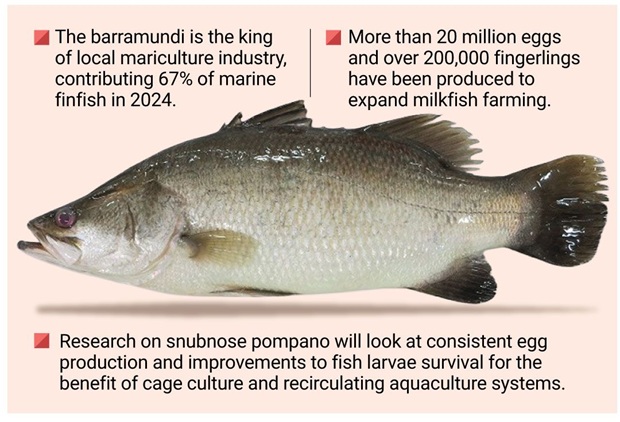
The department said barramundi remained the backbone of Malaysia’s mariculture industry, accounting for 67% of marine finfish production in 2024.
Marine finfish are bony fish with backbones and fins that live in saltwater (including brackish water), and covers many popular commercial species like grouper and snapper.
For milkfish, the Tanjung Demong institute has achieved a significant milestone by producing eggs through natural spawning.
“To date, more than 20 million eggs and over 200,000 fingerlings have been produced, with some supplied to 17 entrepreneurs under pilot projects to expand the milkfish farming industry,” the statement said.
Under the 13MP, milkfish research will continue to focus on developing locally bred broodstock, improving hatch rates and increasing the survival rate of larvae.
Research on snubnose pompano will focus on achieving consistent egg production and improving larval survival to support expanded production through cage culture and recirculating aquaculture systems for land-based fish farming.