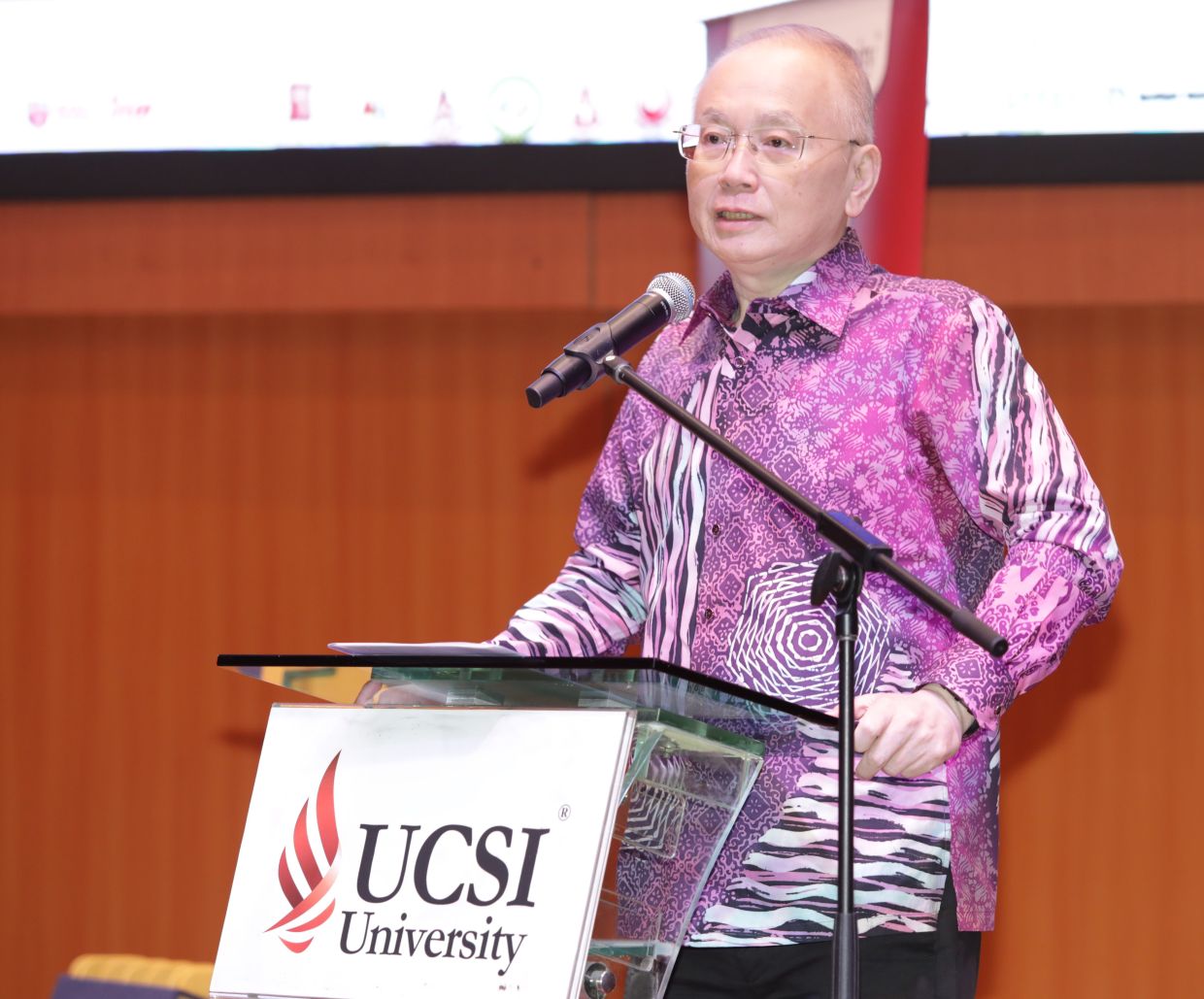
KUALA LUMPUR: Universities must continually adapt their curricula and work closely with industries to prepare graduates for emerging green industries and future workforce demands, says MCA president Datuk Seri Dr Wee Ka Siong.
He said Malaysia’s transition towards a green economy would create significant investment opportunities and demand for skilled talent, making education and human capital development critical to the nation’s future.
“The green economy will demand a new kind of graduate, one who is fluent in engineering and in sustainability, and who can read a balance sheet and a carbon footprint with equal proficiency,” he said at the launch of Weave the Future: Asean Youth Climate Action 2026 KL Launch at UCSI University yesterday.
Dr Wee said preparing talent for the green economy aligns with MCA’s longstanding emphasis on education.
“This brings me to the ground on which MCA has always stood, which is education.
“From the founding of TAR UMT to the establishment of UTAR, our conviction has never changed,” he said, referring to the Tunku Abdul Rahman University of Management and Technology and Universiti Tunku Abdul Rahman.
Dr Wee said human capital remains a nation’s ultimate wealth and universities have an important role in ensuring graduates possess both technical knowledge and sustainability competencies needed by emerging industries.
“This is why our universities work so closely with industry, continually adapting our science and engineering curricula and partnering with leading companies on real research,” he said.
Dr Wee said climate change is no longer just an environmental issue, as it also affects economic competitiveness and national security. At the same time, the global shift towards clean energy is creating new opportunities for growth and jobs.
Under the National Energy Transition Roadmap, Malaysia aims to achieve 70% renewable energy in its installed capacity by 2050, with coal progressively phased out.
Citing estimates by the Malaysian Investment Development Authority, he said the transition could generate investment opportunities worth between RM1.2 trillion and RM1.3 trillion and create about 310,000 green jobs by 2050.
“The ambition is real, and the question that should occupy all of us is whether we will have the people to deliver it,” he said.
Critical minerals, he said, would play an increasingly important role in the green economy, noting that electric motors, wind turbines and solar installations all depend on rare earths and other critical minerals.
While the region is rich in such resources, he said the real opportunity lies in moving further up the value chain through processing, refining and manufacturing activities that generate higher-value jobs.
“That is a question of sovereignty as much as economics, and it is precisely the kind of knowledge-intensive work for which we must prepare our young people,” he said.
He also highlighted the importance of cooperation between Asean and China in advancing the green economy, noting that the upgraded Asean-China Free Trade Area (ACFTA) 3.0 Upgrade Protocol, signed in October last year, places the green and digital economies, as well as supply chain resilience, at the heart of future collaboration.
The programme was organised by the United Nations Institute for Training and Research, Shanghai Climate Week and Prosperity Alliance Shanghai, with UCSI University as co-organiser. The Natural Resources and Environmental Sustainability Ministry and MCA were supporting organisations.
Also present at the event were Natural Resources and Environmental Sustainability Minister Datuk Seri Arthur Joseph Kurup, TAR UMT board of governors deputy chairman Datuk Chong Sin Woon, UCSI Group founder and executive chairman Datuk Peter Ng, UCSI Group Sustainability Office vice-president Leong Sat Sing and Shanghai Climate Week representative Zhang Xiaoyi.