Both government and society must play an active role
KOTA KINABALU: A community-centred effort underpins Malaysia’s dengue control strategy through the Komuniti Bebas Denggi (KomBeD) programme, says Health Minister Datuk Seri Dr Dzulkefly Ahmad.
He said the initiative adopts a “whole-of-government and whole-of-society” approach to tackling vector-borne diseases through three key components – Environmental Intervention, Community Empowerment and Entomological Surveillance.
Speaking at the Asean Dengue Day, World Malaria Day and National Mega Gotong-Royong celebration in Manggatal here yesterday, he said the Environmental Intervention component aims to create and promote clean, green communities through 3R practices, including systematic waste management, tree planting, beautification projects and energy conservation.
Under the Community Empowerment component, Dzulkefly said his ministry encourages communities to take an active role in identifying local issues, planning solutions and implementing preventive measures against dengue.
“Weekly 10-minute home inspections to eliminate mosquito breeding sites are being promoted as a nationwide habit,” he said at the programme held under the Agenda Nasional Malaysia Sihat 2026 tour.
Through Entomological Surveillance, he said scientific monitoring of mosquito populations, breeding indices and ovitraps enable authorities to detect risks early and optimise control measures.
From a regional Asean perspective, Dzulkefly said dengue infection patterns are cyclical, with outbreaks peaking every four to five years due to factors such as climate change, rainfall distribution and monsoon transitions.
“Regionally, Malaysia recorded 33,367 dengue cases this year as of June 13, an increase of 20.7% compared with the same period in 2025.
“Malaysia ranks third behind Indonesia (39,672 cases) and Vietnam (35,986 cases), but this is no reason for complacency. In fact, our incidence rate is the highest among Asean countries.
“Dengue-related deaths also rose by 43.75%, with 23 deaths compared with only 16 in 2025. Laboratory surveillance found an extreme serotype shift, with DENV-3 now dominating infections in Malaysia,” he said.
He added that chikungunya cases had surged to 163 compared with just 30 during the same period last year, representing an increase of 443%.
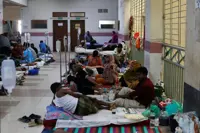
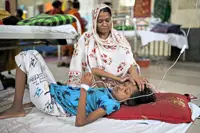
In Sabah, 2,866 dengue cases have been reported so far this year, a 50.4% increase from the corresponding period in 2025.
The five districts with the highest active transmission are Kota Kinabalu with 1,033 cases, followed by Tawau (578), Sandakan (500), Penampang and Putatan.
On malaria, he said Malaysia has made global public health history by maintaining zero indigenous human malaria cases since 2018 through the continued efforts of the government, healthcare workers and communities.
However, he said the country continues to face challenges from zoonotic malaria, or malaria knowlesi, which accounted for 80.55% of all malaria cases in 2025, involving 2,088 cases.
Only 504 cases involved human malaria, all of which were imported or introduced infections.