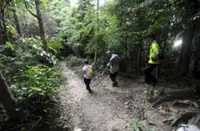
PETALING JAYA: As calls grow for a nationwide hiking registration system, seasoned hikers say permits alone will not prevent people from getting lost in the forest.
Recent incidents involving missing hikers have renewed calls for a more coordinated permit and registration system nationwide, similar to Selangor’s Seforest platform, which became mandatory this year for entry into permanent forest reserves.
Friends of Bukit Kiara co-founder Dr Pola Singh said registration systems are useful, particularly for more challenging trails where hikers can spend hours in remote terrain.
“It is a good idea because it provides records and allows authorities to know how many hikers are on a hill at the same time,” he said, though acknowledging that permits alone will not prevent hikers from getting lost.
“The real issue is attitude and behaviour. Hiking is a team activity. If you go up as a group, you should come down as a group,” he said.
Earlier this year, a 19-year-old female hiker who became separated from her group, was later found dead after a four-day search and rescue operation at Bukit Changkat Asa in Hulu Selangor, while the search for Jaslinda Saludin around Gunung Batu Putih near Tapah has entered the 12th day.
Dr Pola said many incidents occur when individuals get separated from their groups.
“Some hikers want to reach the summit first, and that is where the danger begins,” he said, adding that technology and permits can only go so far.
“You can register everybody, but if hikers refuse to stay with their group or follow basic rules, registration alone will not solve the problem.
“Safety starts with discipline, responsibility and respect for nature,” he said.
Malaysia Nature Society Pathfinders’ senior member Jimmy Chew agreed with the idea of a registration system as it offers benefits during emergencies.
“Registration contains details of hikers, including emergency contacts and home addresses, which can be useful during rescue operations,” he said, adding that it also helps authorities manage visitor numbers to prevent overcrowding in environmentally sensitive areas.
He noted that while registration can support search and rescue operations, response times also depend on factors such as terrain, distance and weather.
“If the system records intended hiking routes, it could further assist rescuers in narrowing search areas,” he said, adding that a harmonised system covering all states will make life easier for hikers, guides and organisers.
Currently, different states have their own permit application processes, websites and approval procedures, creating confusion for visitors.
Chew proposed a federated national platform linked to the Forestry Department that serves as a single source of information on permit requirements, guides and protected areas.
“This would be helpful for foreign hikers who often struggle to find the correct platform to apply,” he said, adding that while some may view mandatory registration as inconvenient, the benefits outweigh the inconvenience.