



PETALING JAYA: The continuous sale of unregulated vapes online and through private channels completely undermines efforts taken by legitimate sellers to comply with government regulations, say vape associations.
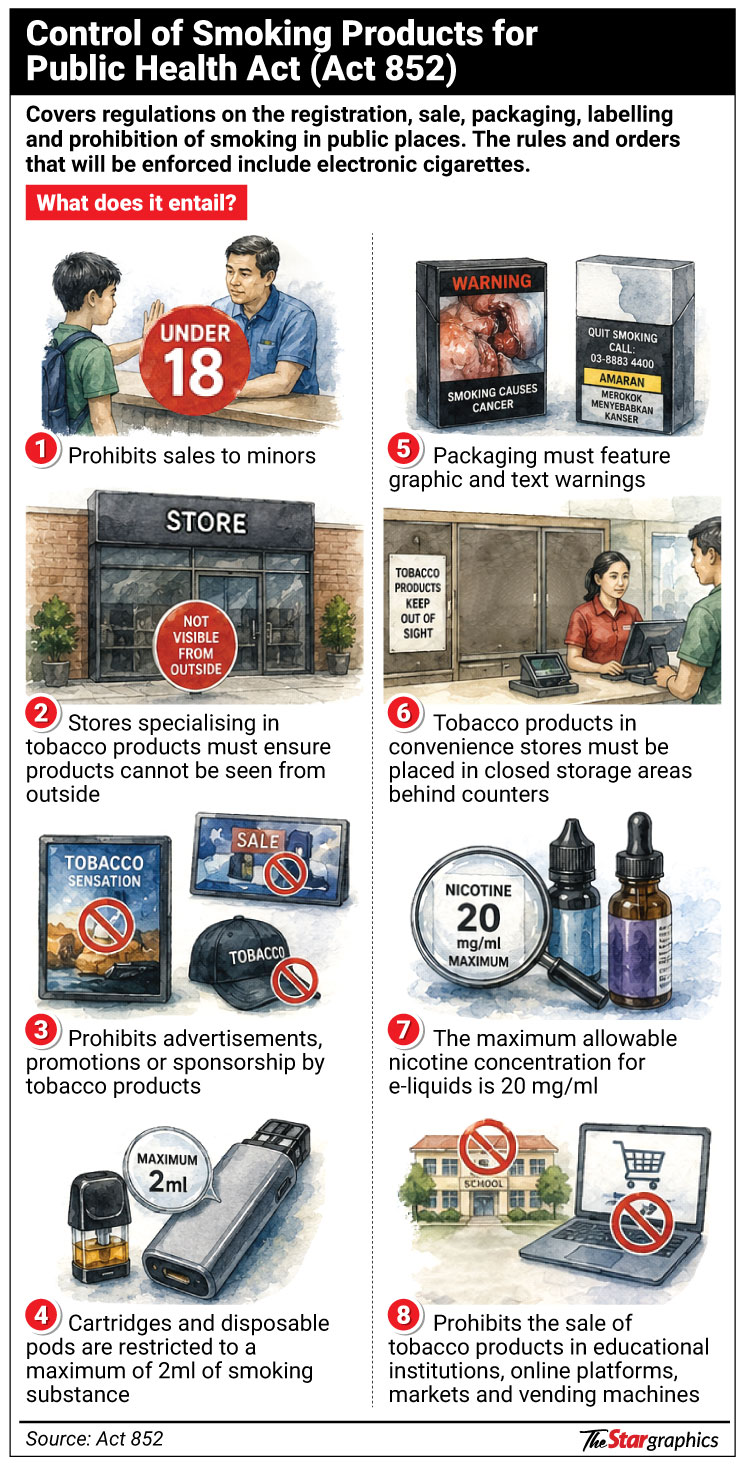
They say tougher crackdowns are needed, warning that a lack of enforcement weakens the objectives of Act 852 and negatively impacts compliant industry players.
The Malaysian Organisation Of Vape Entity (MOVE) president, Samsul Kamal Arrifin, expressed the industry’s firm opposition, saying that it has been going on for quite some time.
“These issues also persist on social media groups where members can only join based on invitations.
“We are completely against it and do not condone nor agree with this.
“These practices undermine conscious efforts taken by the industry to comply with existing regulations,” he said.
“The Malaysian Communications and Multimedia Commission must also take action. It’s not difficult to take down a website,” he added.
MOVE, he said, will also be carrying out a comprehensive campaign to educate retailers on current regulations and their penalties.
“At the end of the day, a consumer-friendly and risk-proportionate regulation framework is key,” he said, stressing that the proposal to ban vapes will give birth to a boom in the illicit sale of the products, further undermining public health efforts.
Malaysia E-Vaporizers and Tobacco Alternative Association (Mevta) president Mohamad Neezam Talib said industry players have consistently raised the sale of unregulated vape products through closed and difficult-to-trace channels with relevant authorities.
He said licensed manufacturers, distributors and retailers have made substantial investments to comply with regulatory requirements, including registrations with the Health Ministry, Sirim certification, excise tax payments as well as packaging and labelling standards.
“Unregulated products continue entering the market through hidden online channels with limited enforcement action, creating an uneven and unfair market environment.
“Businesses that comply with the law bear the full cost of regulation, while illegal operators continue to trade outside the regulatory framework without facing the same obligations.
“It also creates a misleading public perception that the entire vape industry operates without regulation, when in reality many legitimate local businesses are actively working to comply with the law,” he said.
He said Mevta supports clear regulation and fair enforcement of Act 852, stressing that it must be implemented consistently and effectively against non-compliant products and illegal sales channels.
“The main concern today is that enforcement remains too weak to effectively address the growing black market, including digital and closed-network sales,” he said.
A vape store worker who wanted to be known as Johan said he usually explains to customers seeking unregulated products that such items are already prohibited by the law.
“Those who sell through hidden channels or online groups are risking their safety because they know it’s wrong.
“We also have many coming to seek these products, but we always tell them they are no longer sold,” he said.
He also said physical retailers have become increasingly cautious amid possible enforcement checks and industry scrutiny.
