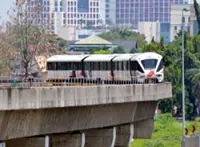
PETALING JAYA: Maintenance and monitoring efforts are being intensified on the Kelana Jaya LRT Line as passenger numbers continue to rise.
Rapid Rail Sdn Bhd chief operating officer for LRT Nor Azmi Mohd Yusof said the operator remained committed to providing reliable services without compromising passenger safety.
The Kelana Jaya Line, which spans 46.6km with 37 stations and 74 trains, has seen passenger numbers increase by more than 100% between 2020 and 2026.
Nor Azmi said the increase in ridership, particularly during peak hours, placed greater pressure on operations.
“Our load factor reached 109% in April this year. To manage this, we need to increase the number of trains used in operations,” he said during a media briefing on improvements to the Kelana Jaya Line.
He said Rapid Rail was also implementing crowd management measures and increasing safety monitoring at stations, including deploying auxiliary police personnel and introducing platform barriers.
Recent disruptions on the line have also drawn public attention, including incidents on May 12 and 18.
Train services on the Kelana Jaya Line experienced delays on May 18 following a component failure involving a train at Kelana Jaya Station.
Nor Azmi said investigations into the May 12 disruption found that it involved a damaged battery cable insulator, marking the first such incident since the line began operations in 1998.
He said while ageing trains contributed to some technical failures, not all disruptions were caused solely by the age of the fleet.
Some operational issues, he added, were linked to temporary instability during ongoing system upgrade works.
“When a system is being upgraded, it takes time before it reaches stability. Users may see minor glitches, but even minor issues can impact operations,” he said.
To reduce future disruptions, Nor Azmi said Rapid Rail adopted a more proactive “condition-based maintenance” approach instead of relying solely on fixed maintenance schedules.
“If we notice signs of wear earlier, we will replace the component even if it has not reached the timeline stated in the manual,” he said.
Nor Azmi also said 26 new trains are expected to arrive beginning 2029, with the replacement programme scheduled for completion by the end of 2030.