
PETALING JAYA: Influencers who promote online gambling platforms risk becoming “active accomplices” to illegal syndicates, with consumer groups warning that the growing number of gambling-related content online is increasingly targeting young social media users.
“Influencers hold immense social capital; using that capital to monetise addiction is an ethical failure and a legal ticking time bomb,” said Federation of Malaysian Consumers Associations (Fomca) vice-president Datuk Indrani Thuraisingham.
“Many content creators appear unaware that accepting sponsorships to promote gambling-related platforms could potentially expose them to criminal liability,” she said when met yesterday.
Gambling content, she said, is no longer confined to obscure corners of the Internet but is increasingly being pushed into mainstream social media feeds disguised as entertainment, gaming or “easy money” opportunities.
“This is highly predatory toward young users who may lack financial literacy.
“Repeated exposure could normalise gambling behaviour among minors and vulnerable users.”
Indrani added that Malaysia’s gambling laws, including the Common Gaming Houses Act 1953 and Betting Act 1953, were drafted long before the arrival of social media and online gambling platforms.
Still, authorities were increasingly relying on provisions under the Communications and Multimedia Act 1998 to tackle gambling-related digital content and promotions, she added.
She also welcomed ongoing efforts to introduce a comprehensive anti-online gambling law aimed at addressing modern cyber-gambling activities and enforcement gaps.
“Social media platforms should take more proactive steps to curb gambling-related content instead of relying solely on public complaints and post removals.”
She also urged parents and the public to remain vigilant, saying online gambling has evolved beyond a legal issue into a wider consumer protection and social concern.
Lawyer Joshua Kong said clearer and more up-to-date laws would give authorities stronger tools to tackle online gambling promotions and related activities.
“Clear laws to prohibit online gambling and the advertisement of online gambling will allow the authorities to have more tools to stop these activities,” he said.
Kong added that Malaysia’s gambling-related laws were drafted decades before online gambling existed, forcing authorities and courts to interpret older legislation to address illegal modern digital activities.
“If we use 1953 laws to police 2026 crimes, criminals may end up getting away with their crimes,” he added.
Deputy Communications Minister Teo Nie Ching, meanwhile, recently warned that promoting online gambling platforms could constitute an offence under existing laws.
In a Facebook reel explaining the legal position surrounding online gambling promotions, Teo cited provisions under the Common Gaming Houses Act, which prohibit not only gambling activities but also the promotion or solicitation of gambling.
“If you publicise or promote a gambling place or in any way encourage people to gamble, then you could have committed an offense,” she said.
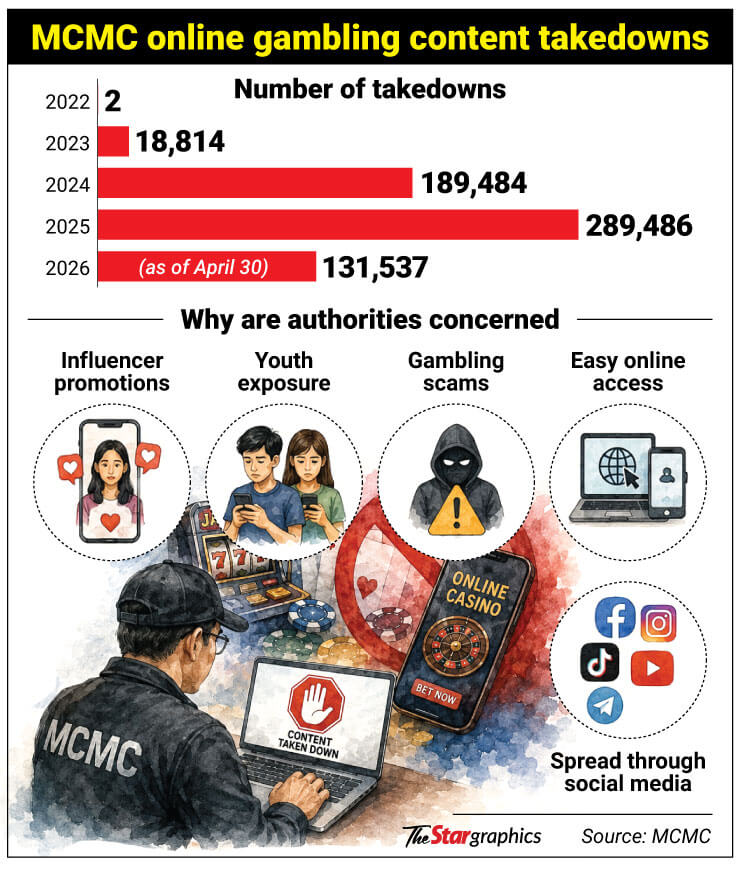
She also highlighted recent enforcement actions involving influencers and gambling-related content, saying authorities had intensified cooperation between the Malaysian Communications and Multimedia Commission (MCMC) and police to remove such material from social media platforms.
“Combating online gambling is everyone’s responsibility.
“We hope social media platforms will strengthen their monitoring to prevent gambling content from spreading widely online,” she added.