
PUTRAJAYA: Tourism Malaysia will recalibrate its strategy for international visitors, putting greater emphasis on Asia-Pacific markets while maintaining its presence in long-haul and Middle Eastern countries.
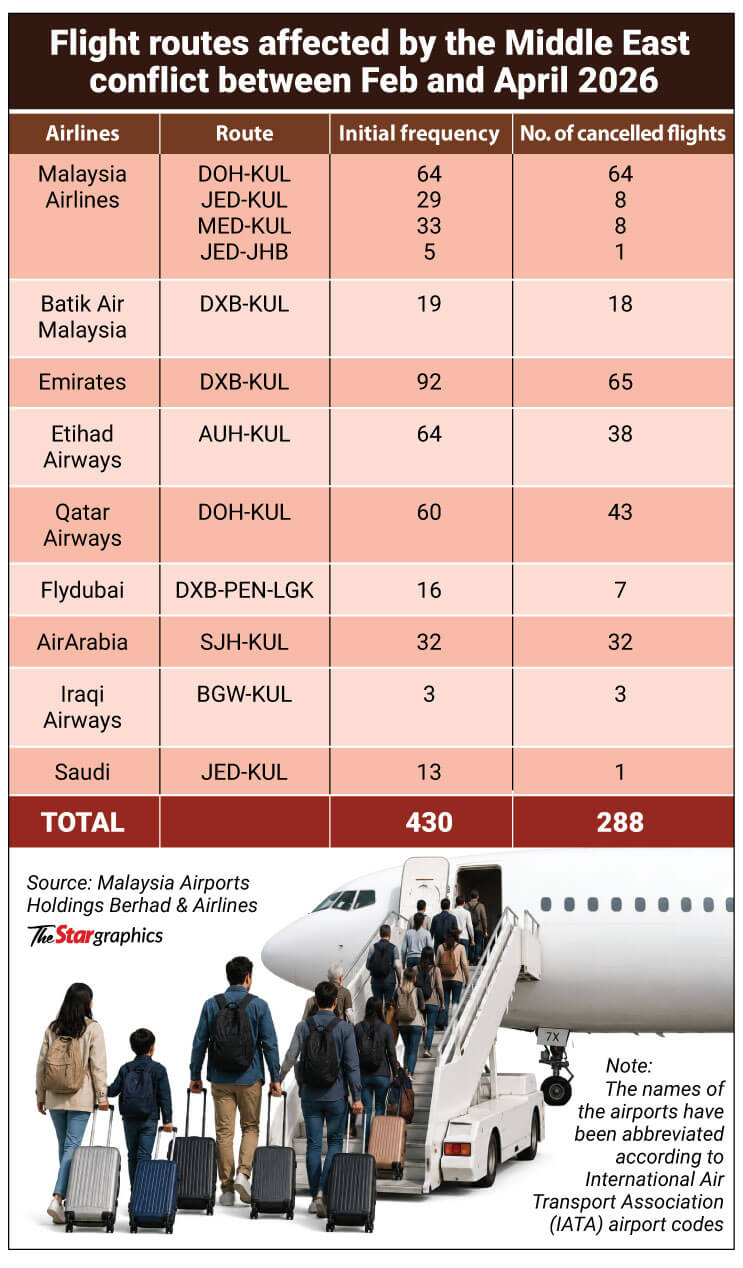
This move comes following the ongoing and prolonged regional conflicts, causing disruption to global travel.

“We’re strengthening our marketing in Asean, China, India, Japan and the wider Asia-Pacific region,” he said in an interview.
Mohd Amirul Rizal acknowledged that arrivals from and routed through the Middle East – traditionally a high-yield segment – had been affected as airlines adjusted routes and travellers became more cautious.
“We’re not forgetting the Middle East, but for now, our focus is more on maintaining visibility than running aggressive campaigns,” he said.
Malaysia is targeting 47 million tourist arrivals under Visit Malaysia 2026, which has now been extended into 2027 with a stronger focus on resilience and market diversification.
He described China and India as central to the effort.
“China and India each have a population of about 1.4 billion. If we get our strategies right, the opportunities are enormous,” he said.
Tourism Malaysia has long maintained a presence in major Chinese cities but is now extending its efforts to second-tier cities and provinces, including Henan, Hainan, Yunnan, Chongqing, Lanzhou, Wuhan, Changsha and Urumqi.
In India, the agency is also moving beyond major metropolitan areas to include cities such as Kochi, Kozhikode, Visakhapatnam, Coimbatore, Amritsar, Nagpur, Lucknow and Bhubaneswar.
Within Asean, Tourism Malaysia is stepping up engagement in emerging cities such as Chiang Mai in Thailand and Hanoi in Vietnam, where outbound travel demand is growing.
Mohd Amirul Rizal said both China and India remain heavily dependent on package tours and travel agents, helping support Malaysian tourism players during softer economic conditions.
At the same time, Malaysia is working to strengthen its long-haul connectivity.
“This October, Lufthansa will fly direct to Malaysia. When we have direct flights from markets such as London and Istanbul, we will continue investing there,” he said, adding that long-haul travellers tend to stay longer and spend more, helping offset weaker Gulf arrivals.
Malaysia recorded 10.6 million visitor arrivals between January and March 2026, a 5.4% increase compared with the same period last year.
The Asean market remained the largest contributor, accounting for 70.36% of total arrivals, followed by East Asia (16.98%) and Europe (4.70%), while notable growth was recorded from Central Asia (20%), East Asia (19.2%) and Oceania (10.9%).
Despite declines in arrivals from West Asia, Africa and South Asia due to ongoing regional conflicts, Malaysia still registered 3.43 million visitors in March 2026, up from 3.37 million in the corresponding month last year.
Since assuming his role on Dec 8 last year, Mohd Amirul Rizal has swiftly settled into his position as the agency actively promotes the Visit Malaysia 2026 campaign while addressing the challenges posed by rising fuel and energy costs.
“Honestly, I don’t get enough sleep,” he said.
Mohd Amirul Rizal said he prefers being on the ground, regularly visiting tourism hotspots and meeting industry players as his team works to keep Malaysia visible despite shifting global conditions.
Tourism Malaysia is also looking at opportunities in Europe and Central Asia, including London, Paris, Istanbul, Almaty and cities in Uzbekistan, supported by improved connectivity from airlines such as Lufthansa and Air Algérie.
Europe, he said, remains a market with room to grow as travellers from Britain, Germany and France increasingly look for direct services and alternative transit hubs into South-East Asia and Australia.
“For now, we have to be realistic about where the opportunities are and make sure Malaysia stays in travellers’ consideration sets – whether they are in Asean, China, India, Europe or the Middle East,” he said.
The conflict in the Middle East has disrupted global tourism flows, resulting in flight cancellations, airspace congestion and higher travel costs.