KOTA KINABALU: Sabah’s fight against wildlife trafficking received a global boost after its forensic laboratory earned international accreditation to help prosecute traffickers.
The Wildlife Health, Genetic and Forensic Laboratory (WHGFL), under the Sabah Wildlife Department (SWD), is now among only 13 laboratories worldwide recognised by the Convention on International Trade in Endangered Species of Wild Fauna and Flora (CITES).
These laboratories meet stringent international standards for wildlife forensic testing in legal proceedings.
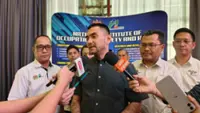
SWD director Mohd Soffian Abu Bakar described the inclusion of the laboratory in the prestigious global network as a proud achievement for Sabahans.
“By entering this exclusive directory, we are proving that our scientific evidence stands up to the highest level of international scrutiny.
“We are no longer just protecting our wildlife, we are providing the scientific evidence needed to convict international traffickers,” he said.
Established in 2013 at Lok Kawi near here, WHGFL is the first laboratory in Borneo and among a handful in Asia to attain such verification.
It is specialised in wildlife disease screening and the application of genetic tools to support wildlife law enforcement and biodiversity conservation.
The laboratory plays a key role in combating poaching and illegal trade involving species such as the Bornean banteng, Bornean elephant and Sunda pangolin.
The unit’s technical manager Dr Nurhartini Kamalia Yahya said local ISO accreditation and resident expertise significantly cut turnaround times by allowing the forensic samples to be processed locally in Sabah.
“It also eliminates the usual logistical delays, chain-of-custody problems and biosecurity risks associated with shipping biological evidence abroad,” she said.
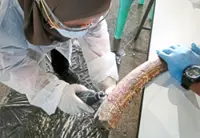
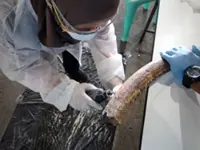
The unit has since helped to identify DNA from confiscated wildlife products, including pangolin scales and meat, sun bear bile and gallbladders as well as banteng meat.
“This DNA identification is important in providing proof for wildlife crime-related seizures to be used as evidence in court.
“The Forensic Unit has supported investigations and produced reports for almost 200 wildlife cases since 2021,” she added.
Dr Nurhartini said DNA testing had revealed that some sun bear bile and gallbladders sold on the black market were actually derived from pigs or chickens.
“By sharing this information, we hope to discourage demand for banned wildlife products and help curb local demand for them,” she said.
The unit’s coordinator Dr Milena Salgado Lynn, who is also Danau Girang Field Centre scientific advisor, said the laboratory’s journey to the global milestone was largely supported by funding from the US Department of State’s Bureau of International Narcotics and Law Enforcement Affairs.
Since 2019, the funding has been used to conduct two projects – “Boosting Enforcement and Forensic Capacity to Deter Wildlife Trafficking in Sabah” and “Sabah’s Harmonised Intelligence Enforcement and Legal Defence Against Wildlife Crimes”.
She also acknowledged the contribution of TRACE Wildlife Forensics Network and Conservation Medicine towards the laboratory’s success.
“We have transformed a local diagnostic centre into a world-class facility capable of managing complex wildlife disease surveillance and forensic investigations,” she added.