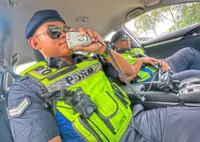
JOHOR BARU: Body cameras for firemen and dashboard cameras in fire engines are among the Fire and Rescue Department’s latest technological efforts to improve efficiency and response times.
Fire and Rescue Department director-general Datuk Seri Nor Hisham Mohammad (pic) said the RM47.74mil pilot project involved the introduction of body, head and dashboard cameras for operational use.

He said RFID-equipped hand-held scanners were also being used to track and inventory the more than 200 tools and equipment carried in a fire engine.
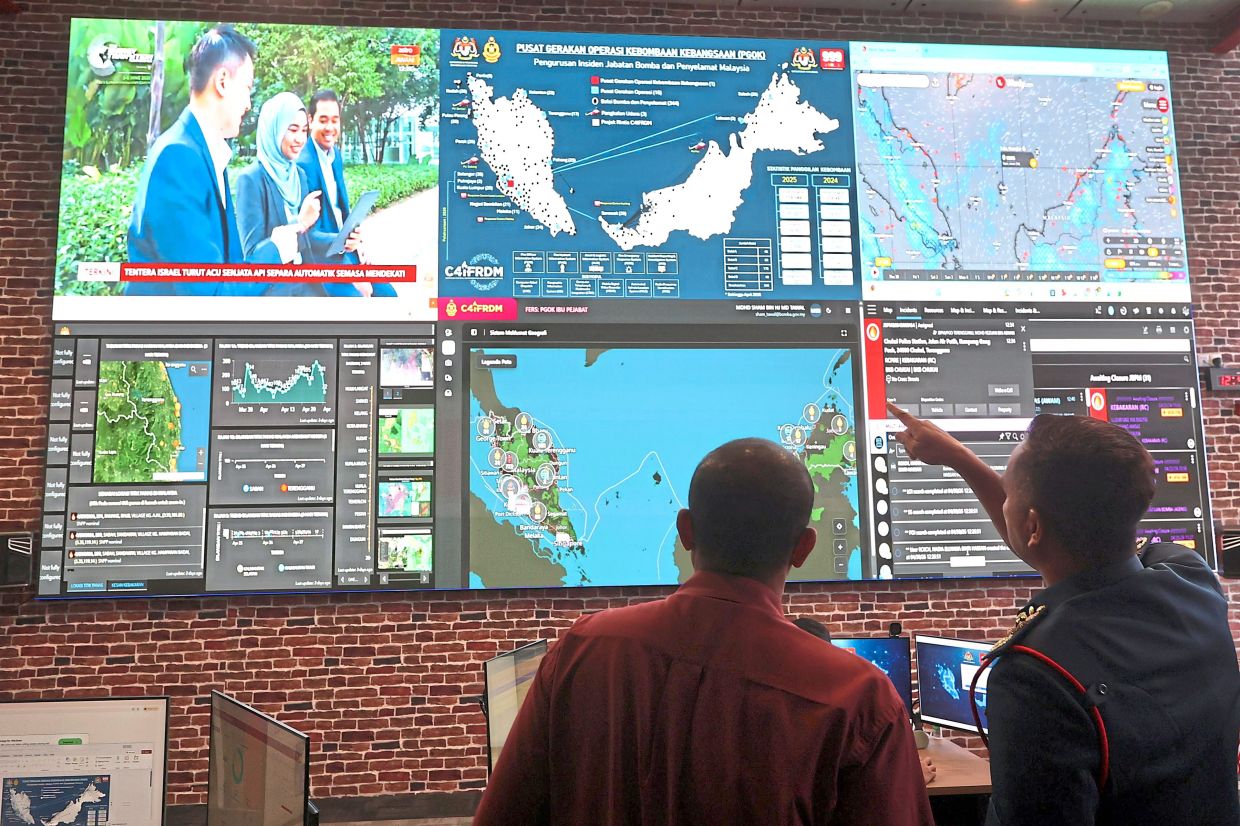
“All of this is part of the department’s modernisation efforts under its Command, Control, Communications, Computers and Intelligence System for the Fire and Rescue Department (C4iFRDM).”
ALSO READ: Firemen deserve tech upgrade
He said the C4iFRDM, completed after two years of development, was currently undergoing trials and integration with the next-generation 999 system.
“Under this system, emergency calls made to the 999 emergency hotline are relayed directly to five agencies – the police, Fire and Rescue Department, medical services, Civil Defence Force and Malaysian Maritime Enforcement Agency.
“Our pilot phase currently involves 60 fire stations in Kuala Lumpur, Selangor and Putrajaya, with two years allocated for testing and trial, before a nationwide rollout targeted for 2028.”
Nor Hisham said that in the initial phase, 240 body cameras had been deployed for first responders attending to fire incidents.
“The department also hopes to equip all its enforcement officers with body cameras in the future.”
He said the body cameras would enable the fire operations commander to better assess situations and direct teams based on visuals and audio captured.
Nor Hisham added that under the C4iFRDM, CCTV footage from all 60 fire stations could be accessed at the command centre in Putrajaya.
“We hope that in future we will be able to see what is happening at all 344 fire stations nationwide, including those in remote areas,” he said, adding that the department aims to position itself as a leading agency in the region, especially in digital emergency command and control capabilities.
In the past, he said, firemen at each station had to manually go through checklists to ensure all items and equipment in a fire engine were accounted for.
“Now with the RFID scanners, we can simply scan the fire engine within minutes to determine whether all equipment, such as chainsaws and cutters, are present.
“This saves a lot of time and improves asset management instead of having to manually identify each item. Previously, missing items were only reported after a few days,” he said.
Currently, the department is facing teething problems during the pilot period, particularly with internet connectivity, added Nor Hisham.
GPS trackers installed in fire engines, he said, were not only able to track the movement of each vehicle but could also determine the fastest route to the scene.
Regarding real-life reporting of the C4iFRDM, he said each call received at the command centre in Putrajaya was categorised from P1 to P9, with P1 the most urgent.
“We use this classification to provide a more structured and detailed way of prioritising incidents, as previously all emergency calls were treated the same.”
He said a major fire with trapped victims required a different response from a minor incident, a false alarm or assisting another agency.
He said in the long term, the combination of body cameras, vehicle cameras, GPS tracking, digital dispatch and real-time dashboards would help the department to be more coordinated in its response, as well as more accountable and intelligence-driven.