KUALA LUMPUR: Malaysia is ready to become China’s trusted strategic partner across key industries, including electric vehicles (EVs), battery technology and renewable energy, serving together as the true “engine” of future growth, says Datuk Seri Dr Ahmad Zahid Hamidi.
The Deputy Prime Minister said over the decades, Malaysia’s and China’s relationship has grown far beyond traditional diplomacy, adding that both countries must move beyond traditional trade, identifying electric mobility, battery technology, renewable energy, smart manufacturing, digital systems and talent development as key areas of collaboration.
“Malaysia brings strategic geography, a growing industrial base and a young, trainable workforce. China brings technological depth, industrial scale and proven leadership in new energy industries.
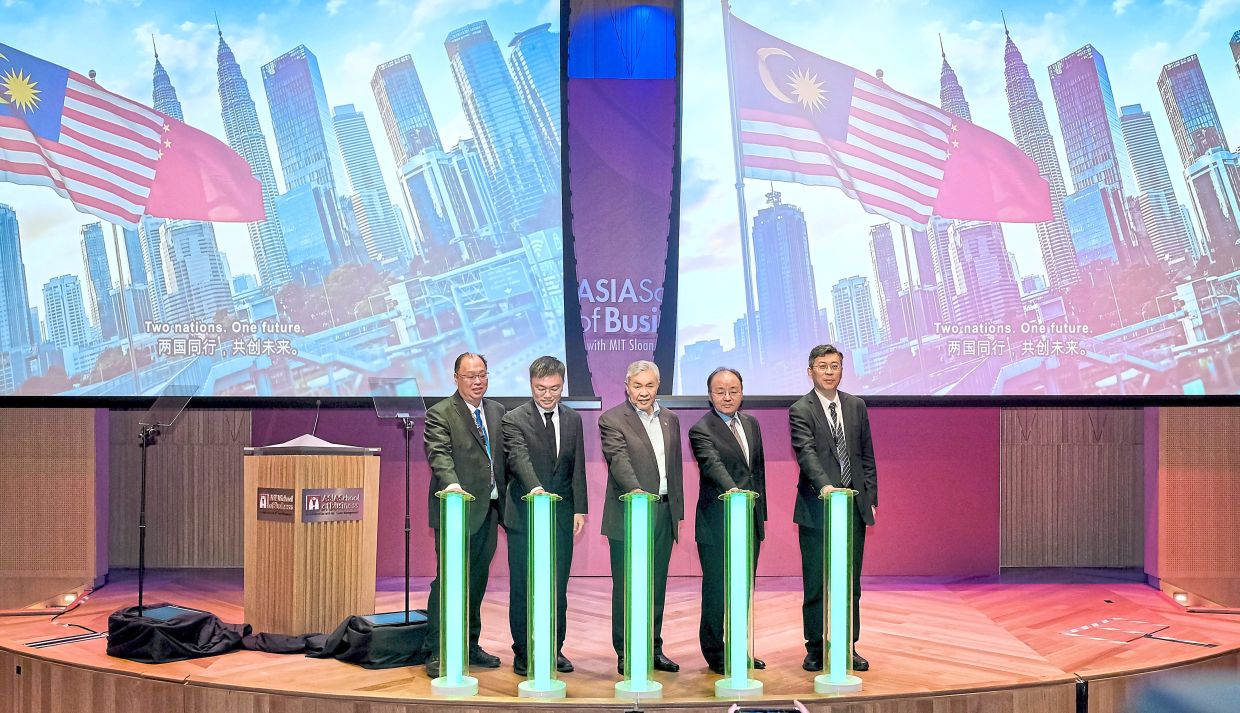
“Together, we can build more than bilateral success. We can strengthen regional value chains, support Asean’s industrial transformation and create a partnership that is not only good for Malaysia and China but also meaningful for the future of this region,” he said in his keynote address at the Malaysia-China Forum on EV, Battery and New Energy Talent Development and Innovation (MCEF 2026) at the Asia School of Business here yesterday.
Also present at the event was China’s ambassador to Malaysia Ouyang Yujing.
Ahmad Zahid said that in 2025, China was Malaysia’s largest trading partner for the 17th consecutive year, with bilateral trade reaching RM541.90bil.
“This reflects confidence and partnership that has stood the test of time and continues to grow with new strategic meaning.
“China brings technological depth, industrial scale and proven leadership in new energy industries,” he said.
The Deputy Prime Minister added that the transition towards EVs, battery technologies and new energy systems is moving at an unprecedented pace.
“This is no longer a niche environmental agenda. It has become one of the most important industrial revolutions of our time,” he said.
According to Ahmad Zahid, global EV sales reached about 21 million units in 2025 alone, making up one in every four new cars sold worldwide.
“China continued to lead this transition, producing more than 16 million new energy vehicles.
“Malaysia has made a clear decision; we do not intend to remain a passive consumer in this transition.
“We want to make an active contribution to the regional EV and clean energy ecosystem,” he said.
Under the country’s low-carbon mobility agenda, Malaysia aims for EVs to account for 15% of total industry volume by 2030 and 80% by 2050, he said.
At a press conference later, Ahmad Zahid said Malaysia is taking proactive steps to strengthen its Technical and Vocational Education and Training (TVET) ecosystem, with a strong focus on high-technology TVET to prepare students for future industries.
He stressed that cooperation with China is crucial in achieving these goals.
Malaysia and China, he explained, have been collaborating in TVET and new technology sectors since 2023, including providing Malaysian TVET students with exposure to new fields of study and advanced training opportunities in China.
“A total of 5,125 placements were offered, and all were fully taken up last year. This year, we are awaiting a new intake offer from China,” he said.
As part of the commitment between both countries, Malaysia and China have also established the Malaysia-China Institute, which differs from other institutions by focusing specifically on high-technology TVET and emerging technologies.