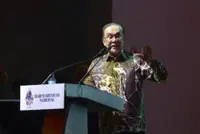
KUALA LUMPUR: The Malaysian media industry must adapt to rapid changes while upholding integrity and public trust, as highlighted at the Hawana 2026 Media Forum.
Bernama chief executive officer Datin Paduka Nur-ul Afida Kamaludin said the one-day forum successfully sparked meaningful discussions on current issues, including digital transformation, technological developments and the need for the media industry to remain relevant.
She said the forum received positive feedback from media practitioners, who described the topics discussed as timely and reflective of the industry’s current realities.
“This is the view of my colleagues. They said the topics brought up were timely. We are also facing a crisis due to the conflict in Middle East, and it has had a real impact on the world, journalism and the media industry,” she told Bernama after the forum yesterday.
Nur-ul Afida said the media industry must now focus on identifying the best strategies and plans to ensure its long-term survival amid mounting challenges.
“We now need to think about how to face these challenges and plan strategies to ensure the survival of the media industry,” she said.
Bernama chairman Datuk Seri Wong Chun Wai said media organisations must diversify their revenue streams to weather crises, rather than relying solely on advertising or government protocol work.
Speaking as moderator during the forum’s first session, titled “Sustaining Media in Times of Crisis: Challenges and Revenue Realities”, Wong said market competition now demands sharper strategies.
Citing Singapore Press Holdings as an example, Wong pointed out that the group moved early to broaden its income base by investing in property, despite scepticism from shareholders at the time.
He urged Malaysian media organisations to explore similar adjacencies that can generate predictable cash flows while safeguarding editorial independence, even during economic downturns.
Separately, Star Media Group Berhad chief content officer Datin Paduka Esther Ng said the Malaysian Media Council (MMC) is working to standardise complaint management mechanisms across major media organisations to position itself as the primary platform for resolving disputes involving the industry.
She said the council’s key performance indicator is to ensure the MMC becomes the “go-to forum” for all forms of media-related complaints, amid the current fragmented complaint-handling landscape.
“So, right now, we are in the process of getting all media houses to set up their own complaints bureaus. It is a massive exercise,” said Ng, who is also an MMC board member.
The forum attracted more than 250 participants, including leaders of media organisations nationwide, representatives of foreign news agencies in Malaysia and various industry stakeholders.
Across three sessions, participants discussed how newsrooms can embrace innovation, strengthen credibility and plan for sustainability in an environment shaped by rapid change.
Among the key issues highlighted were the pressures of digital transformation, the growing role of technology, geopolitical developments and the need for practical planning to ensure newsroom sustainability.
The forum was launched by Deputy Communications Minister Teo Nie Ching.
For the first time, the forum was held over a full day to encourage deeper discussions and more focused exchanges of ideas ahead of the Hawana 2026 celebration in Penang on June 20, themed “Media with Integrity, Credibility at its Core”.
Organised by the Communications Ministry, with Bernama as the implementing agency, Hawana serves as a platform to recognise the dedication and professionalism of media practitioners in Malaysia.