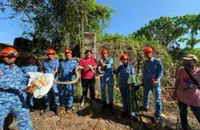
SANDAKAN: The public has been warned of a rise in zoonotic (monkey) malaria cases in Sabah, including one death, says Health Minister Datuk Seri Dr Dzulkefly Ahmad.
He said 357 cases were recorded in Epidemiological Week 16, with Tawau, Ranau and Kudat among the main contributors.
“The situation is quite serious. We should not take this lightly,” he added.
Dzulkefly stressed that early detection and immediate treatment are key, noting that all government clinics and hospitals are equipped to detect monkey malaria.
“All our facilities are able to detect these cases, and our trained personnel can carry out microscopic determination,” he said after launching the Sandakan Wellness Hub here yesterday.
Dzulkefly linked the rise in cases to increased human encroachment on wildlife habitats.
“It is not that the monkeys are attacking us, but rather we have taken over their habitat, causing increased contact and zoonotic transmission,” he said.
Dzulkefly said environmental management plays a critical role in reducing risk.
“We must reduce human interaction with monkeys, especially for those working in such environments. Controlled land clearing and sustainable environmental management are very important,” he said.
Dzulkefly also pointed to poor waste management as a contributing factor.
“Monkeys are attracted to garbage. If we manage domestic waste properly, we can reduce their presence,” he said.
Dzulkefly called for a “One Health” approach involving coordinated action across agencies.
“We need integrated surveillance and cooperation between all agencies, including wildlife, veterinary and forestry. It must be all hands-on deck,” he said.
“Although awareness has been carried out, it must be repeated. Changing human behaviour is not easy,” Dzulkefly said.
Monkey malaria, or zoonotic malaria, is a form of malaria transmitted from monkeys to humans through mosquito bites, most commonly caused by the parasite Plasmodium knowlesi.
It is prevalent in Sabah due to the state’s extensive forest cover and increasing human activity near forest areas, such as plantations and rural work, which brings people into closer contact with infected monkeys and mosquito vectors.
Regarding the shortage of doctors, Dzulkefly acknowledged that Sabah continues to face challenges, describing it as part of a nationwide issue involving both shortages and uneven distribution, which he said is a legacy problem.
“This is a major challenge, not just in Sabah but across the country, involving both shortage and maldistribution,” he said.
Dzulkefly added that 42 new house officers were recently posted to the Duchess of Kent Hospital in Sandakan, with about 70% of them Sabahans.
He said efforts are ongoing to improve incentives and career pathways, including extending contract-to-permanent appointments and strengthening specialist training through parallel pathways.