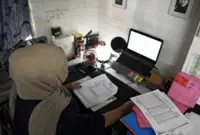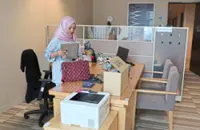
PETALING JAYA: Neesa is a working mother who lives some distance away from her office in Putrajaya.
The option to work from home (WFH) – which began yesterday – has come as a welcome reprieve for her, with rising travel costs and mounting time pressures.
However, she questioned the need for hourly check-ins, which is being done to ensure officers do not slack off.
“It’s troublesome because we have to check in every hour. Today, I heard there were system glitches and some locations could not be detected but I try to log in and record my login by taking screenshots as proof.
“Check-ins are quite disruptive when you’re in the middle of work, you have to set an alarm just to check in. Sometimes, you’re so focused that you don’t realise the time, and suddenly you have to stop to check in,” said the human resources officer.
Such a practice, she said, does little to boost productivity but creates additional administrative work instead.
“Even in the office, we manage our own time. There are moments when you step away to the pantry or attend to other matters.
“Now, you must always have your phone at hand. It’s as if we are not trusted, even after working for years,” she said.
Neesa also said three days of WFH per week is enough, as certain tasks still require her presence in the office.
“If we bring files home, there’s a risk they could be misplaced. So I will settle office-based work on Mondays and Fridays, and use the other three days to complete tasks from home.”
Sarah lives in Cheras, well away from her office in central Kuala Lumpur but she has been busier at home than when she worked in her office.
She said she was not able to take a break at all as she was expected to do her work and clock in hourly.
“There are the pros and cons of this WFH. Yes, I can avoid the morning traffic but the workload is so big that I had no time to take a break. I have yet to have lunch,” the 29-year-old said.
She is glad she has only one day of WFH a week.
Hamdan, 32, who works in Kuala Lumpur but stays in Petaling Jaya, also said the hourly check was very disrupting.
“There are meetings that can go on for hours but I have to excuse myself to check in. Why are we disrupting work just to do online check-ins?
He also proposed that work from home should strictly mean working from home, and not from anywhere outside the office.
“Malaysians tend to somewhat abuse the freedom of work from home and turning it into literally working from anywhere. That is an abuse of this privilege,” he said.
On Tuesday, chief secretary to the government Tan Sri Shamsul Azri Abu Bakar said that up to 200,000 civil servants would be involved in the government’s work-from-home arrangement.
It was part of the government’s response to the ongoing energy crisis following the Middle East conflict.