PUTRAJAYA: The Transport Ministry is in discussions with the Civil Aviation Authority of Malaysia (CAAM) and Malaysia Airports Holdings Bhd (MAHB) over the global energy crisis.
Transport Minister Anthony Loke said an engagement session with industry players will be held next week to discuss measures to address surging energy costs.
"I have met with CAAM and held discussions with MAHB over the past one to two weeks.
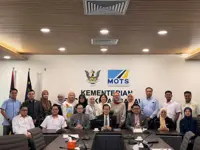
"We will continue engaging the aviation industry next week to outline measures to support its sustainability," he said at the ministry’s monthly assembly here on Thursday (April 9).
Loke said the ongoing geopolitical tensions in the Middle East is putting pressure on Malaysia’s logistics and aviation sectors, resulting in longer travel times and surging supply chain costs.
He added that the closure of airspace in conflict zones has forced airlines to reroute flights, particularly those heading to Europe.
"This has not only disrupted operational schedules, but also brought about significant cost implications," he said.
Loke also said the temporary suspension and cancellation of daily flights to the Middle East at he onset of the crisis had caused massive financial losses to the aviation industry.
The maritime sector has not been spared, he noted, with tensions in strategic waterways like the Strait of Hormuz, the Suez Canal and the Red Sea forcing commercial vessels to take longer alternative routes around the Cape of Good Hope in South Africa.
"This diversion adds between 10 and 15 days to voyage times, reducing vessel utilisation efficiency and driving up inventory costs," he added.
To compound matters, Loke said, shipping companies are not imposing additional risk surcharges for every container, while war risk insurance premiums have skyrocketed.
"These factors are placing immense pressure on the competitiveness of our national logistics sector, requiring us to act strategically and cohesively,"he said.
To cushion the effects of the energy crisis, Loke said the government, via the National Economic Action Council chaired by Prime Minister Datuk Seri Anwar Ibrahim, is monitoring the crisis to ensure supply chain security and economic stability.
Meanwhile, Loke also said a shift in commuter behaviour is expected, with more people turning to public transport and electric vehicles (EVs) with the global fuel uncertainty.
As such, he ressed that the ministry must ensure the public transport system operates with high efficiency, reliability and comfort.
In a related development, Loke said road safety remains a priority, with stricter measures and quicker responses needed to reduce accidents, especially those involving alcohol and drug use.
"We acknowledge this is a serious issue that claims lives and draws public attention.
"We must respond swiftly to ensure road safety. The ministry will continue to strengthen safety measures and review legal amendments," he added.