



GEORGE TOWN: The government announced a further RM5bil in low cost financing for small and medium enterprises (SMEs) as part of a broader push to accelerate economic transformation.
Entrepreneur and Cooperatives Development Minister Steven Sim, who made the announcement, said the funding aims to help businesses upgrade into high-tech operations, adopt automation and digitalisation, and align with the transition towards a greener economy.
"I call on SMEs in Penang to take advantage of these facilities and campaign by the government to power up, so that we not only survive the next 50 or 100 years, but be bigger, better and greater," Sim said during a book launch on Thursday (April 9).
The funding, he said, also seeks to strengthen sectors such as tourism, enabling SMEs to enhance their offerings, improve productivity and remain competitive in an increasingly technology-driven landscape.
Sim said the financing will come with rates as low as 3% to 5%, and would be channelled through all licensed banks, prescribed financial institutions and development financial institutions, including Bank Rakyat and SME Bank under his ministry.
The initiative comes under the broader Powerup 10K campaign for the year, which will ultimately release up to RM15bil in low-cost financing.
Sim said the aim is to help 10,000 Malaysian businesses at various levels scale up operations. In addition, at least RM100mil would also be deployed to train some 100,000 entrepreneurs via a range of capacity-building programmes.
These efforts are expected to strengthen the local SME ecosystem and drive the sector's total value beyond RM750bil. It should also enable at least 100 Malaysian companies to achieve annual revenues of RM100mil.
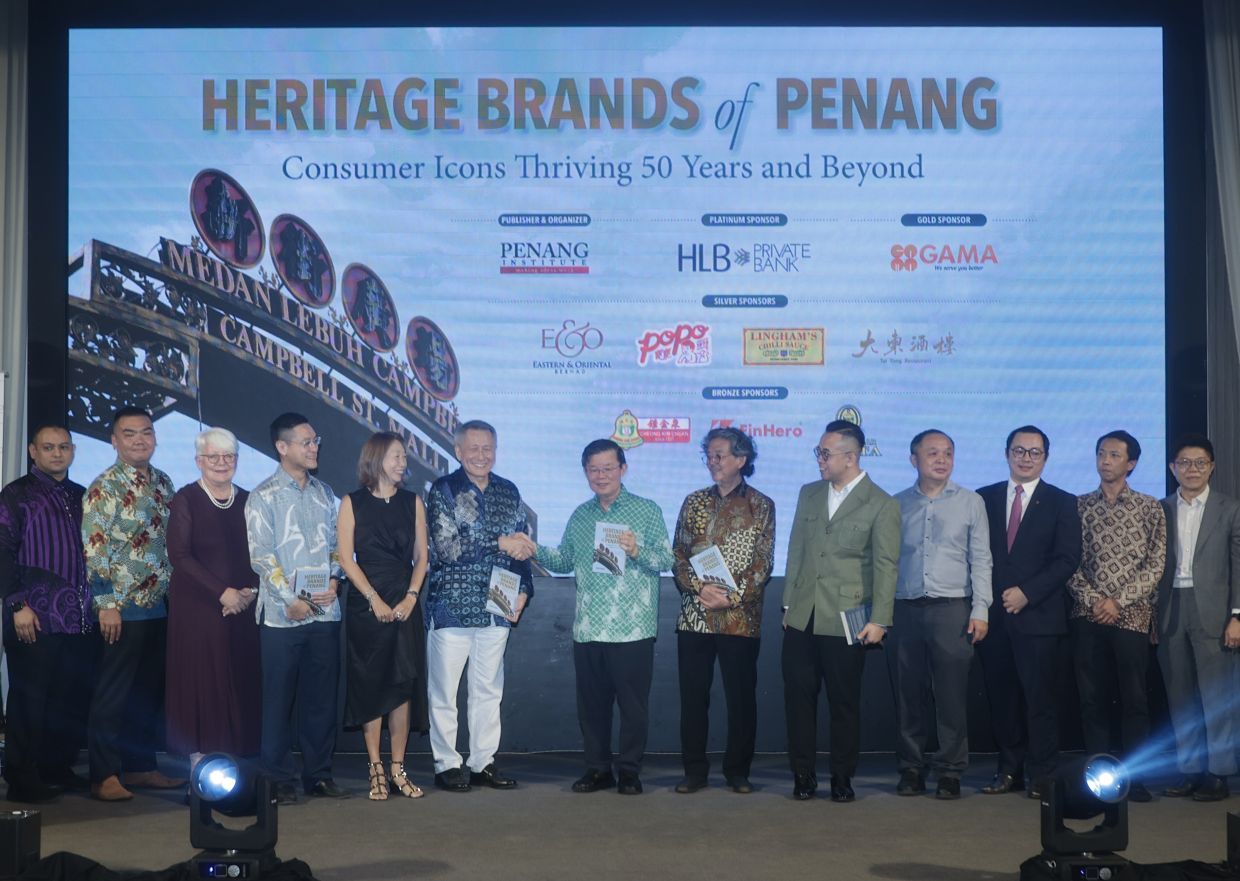
Sim was joined by Penang Chief Minister Chow Kon Yeow in launching the book titled "Heritage Brands of Penang".
Authored by Datuk Tony Yeoh and published by Penang Institute, the publication documents the journeys of 59 homegrown businesses whose legacies span five decades or more.
It explores the people behind the businesses, the challenges they overcame, and the values and decisions that have sustained them across generations.
Yeoh also highlights how these enterprises endured economic shifts, generational transitions and changing social contexts, while continuing to serve their communities and shape Penang's commercial life.

Among the brands mentioned is The Star, which started off as a provincial tabloid in Penang. Its first copy hit newsstands on Sept 9, 1971.
By 1976, it expanded to become a national daily, and soon after became Malaysia's most widely read English-language newspaper.
