



On a remote Sabah island, tourists come for the turtles, but stay for congkak, the cooking and the weaving.
IN front of a small grocery shop on Pulau Libaran, Sophia Killong arranges a congkak board on a wooden table as several tourists gather around to watch.
Not far away, 45-year-old Norliah Sanun stands over a wok of hot oil preparing penyaram – a traditional kuih known for its crisp edges and soft centre – while visitors wait eagerly to taste it fresh from the pan.
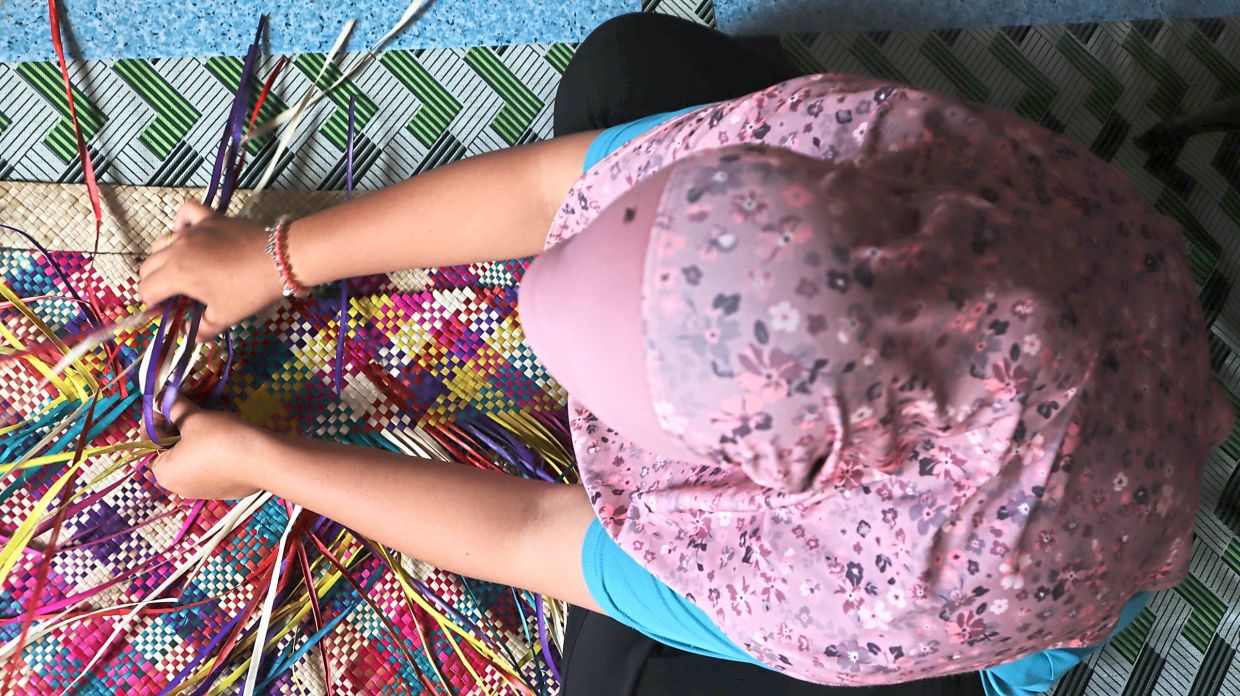
Further down the village trail, families demonstrate traditional weaving techniques passed down through generations, with handmade craft neatly displayed for sale inside their homes.
Located about an hour by boat from Sandakan on Sabah’s east coast, Pulau Libaran is best known for its turtle conservation efforts and surrounding marine biodiversity.
But for villagers on the island, tourism is no longer confined to turtle hatcheries or nearby resorts.
Increasingly, the kampung itself has become part of the experience.
Visitors arriving on the island are now brought through a community trail where they are introduced to village life, local food, traditional games and handicrafts – creating small but meaningful income opportunities for families living on the island.
Home to about 400 residents, Pulau Libaran remains a modest island community where many families still rely on fishing and small-scale livelihoods.

“Before this, tourism already existed here, but it mostly focused on the resorts,” Sophia said.
“Now, tourists are brought along a track like this and shown how villagers here live and what they do.”
Sophia, who demonstrates congkak during the village walk, said tourists often stop to learn the traditional game while browsing handmade items sold by villagers nearby.
The tourism activities are linked to conservation efforts on the island, where visitors are brought to experience not only turtle conservation but also the local community living alongside it.
Friends of Sea Turtle Education and Research (FOSTER) founder Alexander Yee said the tourism component only came later, after conservation work on the island began in 2012.
Initially, the project focused solely on turtle protection.
Only later did the idea emerge to bring tourists into the village itself as part of the experience, while creating income opportunities for residents.
“There is no point talking about protecting the environment when the local community within that space itself has got no food on the table,” he said.
Today, tourists visiting the island stop at several activity stations run by villagers, including congkak demonstrations, weaving activities and traditional food preparation.
The families involved receive allowances when tourists visit their activity booths, while also earning through handicraft sales and other products.
For Norliah, the cooking demonstrations have become a way to earn a side income while introducing tourists to a delicacy deeply rooted in local tradition.
Made using rice flour, wheat flour, glutinous rice flour, sugar, coconut milk and pandan leaves, the kuih is carefully fried until its edges turn crisp while the middle remains soft and fluffy.
Among the island’s Kagayan community, however, the kuih is locally known not as penyaram, but “penyam”.
As she cooked, Norliah also shared old beliefs surrounding the delicacy, including how those preparing the batter were once discouraged from talking too much while mixing it.
The tourism activities, she said, have slowly brought changes to the village.
For 48-year-old Mariaty Kelung, the programme has also become a platform to preserve traditional handicraft skills inherited from older generations.
Inside her home, family members demonstrate weaving techniques taught by their mothers and grandparents while tourists observe and occasionally purchase the finished products.
“We learned this from our mothers, then it was passed down to us, and now to our children and grandchildren,” she said.
The growing tourism activities have also gradually changed attitudes towards turtle conservation on the island.
Years ago, turtle eggs found along beaches were commonly consumed by villagers.
Today, residents interviewed by The Star said awareness about protecting turtles has grown significantly, although many stressed that conservation awareness on the island had already existed long before the current programme.
“Now people are more focused on protecting them,” Sophia said.
Norliah agreed, saying many villagers have accepted the need to preserve turtle populations for the future.
Still, residents acknowledge that not everyone benefits equally from the tourism activities.
Mariaty said some villagers hope opportunities can eventually be shared more widely among families on the island.
“If possible, more people should be given the chance,” she said.
The realities of island life also remain visible despite the growing tourism presence.
Many homes on Pulau Libaran still rely on privately owned diesel generators for electricity, with families often switching them on only at night to save costs.
Sophia said diesel prices fluctuate depending on supply and delivery from the mainland, while children seeking secondary education still have to leave the island to attend school elsewhere.
Yet despite the challenges, many villagers say the tourism activities have given them something valuable beyond income.
For years, tourists came to Pulau Libaran mainly to see turtles. Now, many are also coming to experience the people, traditions and everyday life that shape the island itself.
