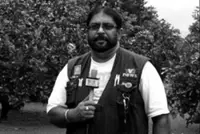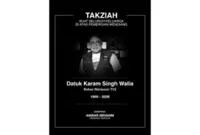
KUALA LUMPUR: Veteran broadcast journalist Karam Singh Walia died at his residence in Klang at 3.30am Monday (April 6). He was 66, Bernama reports.
His passing was confirmed by his younger brother, Jasbant Singh, who is also group managing editor (gme) of news and current affairs at Media Prima Bhd.
Born in 1959 in Teluk Intan, Perak, Karam began his career as a broadcast journalist with TV3 in 1995 before retiring in 2014 due to health reasons.
He was widely regarded as one of the country's most influential environmental journalists, having won the Seri Angkasa Award twice as well as the Malaysian Press Institute (MPI) Award for Best Environmental Television Journalist for four consecutive years from 2004 to 2007.
Communications Minister Datuk Fahmi Fadzil, in a Facebook post, said Karam's death leaves a profound impact on Malaysian journalism.
"He always coloured the news presentation with his own style. Anyone who watcheed Buletin TV3, particularly from the 1990s to 2014, would be well aware of his appearance, including the poem that ended all his reports... a unique identity that remains in the memory of many.
"I am also one of those who faithfully followed his reports and appreciate his dedication and contribution to the broadcasting world. May he rest in peace," Fahmi said in his post.
Former Media Prima TV Networks group editor-in-chief Mohd Ashraf Abdullah also expressed deep sorrow over the loss in a Facebook post Monday, describing the late journalist as an outstanding environmental reporter and a close friend.
“Datuk Karam Singh Walia was the finest environmental journalist and also a good friend of mine. I am deeply saddened by his passing. My condolences to his family,” he said in a statement.
Throughout his career, Karam became one of the most familiar faces in the country’s broadcasting landscape through his reports on TV3, with a distinctive delivery style that was firm, authoritative and memorable to viewers.
He was also often regarded as a pioneer of environmental journalism in Malaysia, introducing a deeper and more courageous form of field reporting, while consistently spotlighting issues that directly affected communities and future generations.
Condolences have continued to pour in from colleagues, media figures and members of the public who valued his contributions and legacy in advancing environmental awareness through journalism.