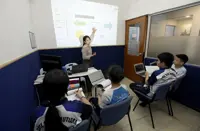
PETALING JAYA: While Malaysians are being more cautious in their spending as they brace against the economic impact of the Middle East crisis, there’s no skimping on education.
From hundreds to several thousand ringgit a month, parents are spending big on their children’s enrichment, hoping to give them a head start in life.
A woman, who wished to be identified as Sandy, spends up to RM3,500 a month on enrichment activities for her two sons.
She believes these classes help children discover their interests while sharpening their abilities.
“When they pursue something they are passionate about, it helps them improve. As they get better, it builds their confidence and helps them stand out,” she said, adding that most of the classes attended by her children were requested by them.
Another mother, Vanessa Lau, spends about RM2,000 a month on her three children’s enrichment, viewing the classes as opportunities for them to explore their talents and interests.
“These activities could develop into talents, career paths or simply hobbies they enjoy,” she said.
Shona Marcus, who spends a monthly average of RM1,000 on enrichment activities for her three children, admitted that comparisons with other parents can sometimes create pressure.
“But that’s something most parents feel, as we want our children to do well,” she said.
She urged the government to provide tax relief to help ease the cost of enrichment activities.
“The Education Ministry should better equip teachers with the right tools and resources, while reducing administrative workload so they can focus more on teaching and guiding students’ development in both academics and co-curricular activities,” she added.
Parent Action Group for Education Malaysia chairman Datin Noor Azimah Abdul Rahim said the trend reflects parents’ efforts to future-proof their children, even during uncertain economic conditions.
“Extracurricular activities – such as tuition, coding classes, music lessons, debate training and sports academies – have become shadow education systems,” she said.
Noor Azimah, however, warned that the trend runs the risk of widening the inequality divide, as families with higher incomes can purchase additional learning opportunities that improve skills, confidence and university prospects, while others cannot.
“Over time, these advantages (and disadvantages) compound. A child with enrichment opportunities often develops stronger soft skills, networks and confidence – not just better academic results (and vice versa),” she said.
A parent, who only wished to be identified as AZ, said he does not spend on extracurricular classes for his child, mainly due to financial constraints.
“It would be an extra cost that I can barely keep up with every month,” he said.
He also worries that his child would be overstretched.
“I see how tired they are these days. I saw my son’s friend carrying heavy school bags rushing from school to the next activity with almost no rest until evening,” he said.
Instead, AZ focuses on nurturing his child’s curiosity and creativity through everyday experiences.
Recently, he bought a pair of binoculars and a magnifying glass so they could observe birds and insects together around their neighbourhood and in nearby parks.
“I may not always have the answers, but we learn together,” he said.
He said he also encouraged his son to think critically by discussing everyday situations, often turning car rides into debates about problem-solving.
For parents with limited financial resources, AZ believes enrichment does not always have to come with a price tag.
“There are many alternative ways to enrich a child’s learning. What matters most is the effort and intention from parents to nurture their curiosity and creativity,” he said.