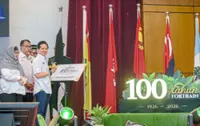
KUALA LUMPUR: Technology cannot replace humans in carrying out tasks in the judicial and legal profession, though it is useful as an aiding tool, says Chief Justice Datuk Seri Wan Ahmad Farid Wan Salleh.
“Technology cannot weigh compassion, it cannot exercise conscience, and it certainly cannot fully understand the human story behind every case that comes before us,” he said in his special address at the Commonwealth Legal Education Association (CLEA) Conference 2026 at Universiti Malaya yesterday.
Speaking on the theme “Lawyering 2030 – Skills, Strategy and Legal Education for a Changing Commonwealth”, he expressed concern for young lawyers who are tempted to rely heavily on technology, which may come at a cost.
The top judge said law is a discipline of careful thinking, clear articulation and meaningful engagement.
“They are the very foundation of advocacy, judgment and justice.
“There is no doubt that technology has made us lawyers use less of our mental faculties,” he said.
Wan Ahmad Farid noted that in today’s world, knowledge alone is not enough.
“The moment we think, ‘I’ve got this all figured out’ ... that is usually when the law humbly reminds us otherwise,” he pointed out.
“I have always found it interesting that we don’t say ‘I do law’ – we say ‘we read law’. And our friends at the Bar don’t say ‘I work as a lawyer’ – they say ‘I practise’. Which, if you think about it, is quite true.
“Because no matter how many years we have behind us, we are all still, in one way or another, practising,” he said.
Wan Ahmad Farid added that legal education cannot simply stop at graduation.
“It must continue consistently throughout our careers, whether we are just starting out or many years into the profession,” he noted.
“We need lawyers who can think, who can exercise judgment, who understand ethics and, perhaps most importantly, who understand why the law exists and not just what it claims.
“We must avoid outsourcing everything to our devices. So yes, let us embrace technology but let us do it wisely.
“In the judiciary, this is especially important. Technology must remain an aid, not a substitute,” he said.