
WHILE many spend Hari Raya Aidilfitri visiting loved ones, some mark the day differently, balancing brief moments at home with long hours on the road.
For bus drivers in Sandakan, Aidilfitri is not always a full celebration, but a series of choices shaped by responsibility, income and family.
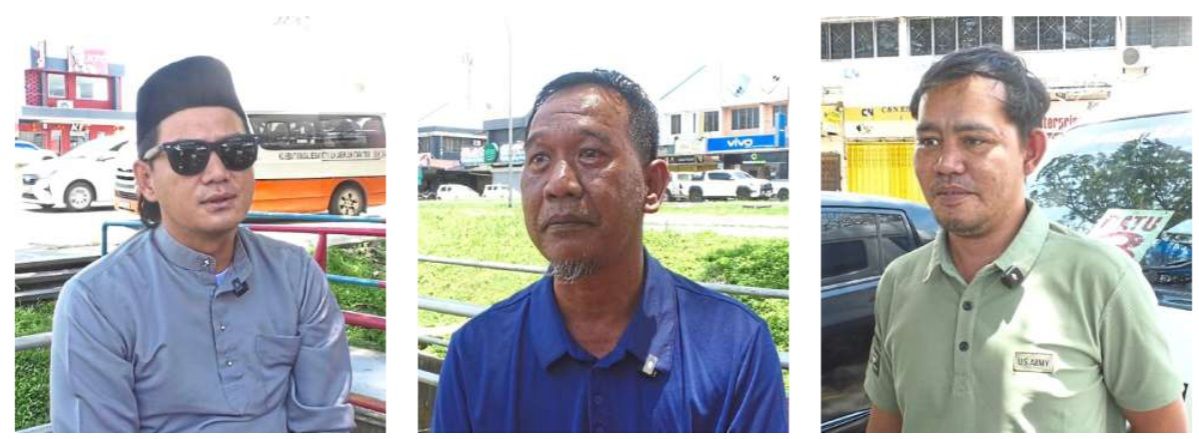
For Roslan Baktiar, 40, the celebration comes in small windows.
“We celebrate Raya for a while in the morning, then we continue working, helping people get to their families,” he said.
After prayers and time spent asking for forgiveness, he returns to the road by midday, when the flow of passengers begins.
Those few hours at home, he said, are enough before duty calls, even if it means cutting short visits with relatives.
For veteran driver Amri Latip, 48, however, one part of Aidilfitri remains non-negotiable. Unlike others, he refuses to work on the first day.
“Money can be earned anytime, but Raya is not always there,” he said.
For him, the first day is about being present with family, especially when relatives return from afar.
He said it is often the only time in the year when everyone gathers under one roof, making it a moment he is not willing to miss.
“I make sure I spend the first day with my family and visit my parents’ graves,” he said, describing it as a moment that cannot be replaced by anything else.
Only after that does he return to work, when the festive rush continues into the following days.
But for younger driver Amirul Gumpar, 32, the reality is different.
Aidilfitri, especially in the morning, is when demand is highest, and stepping away from work means losing valuable income.
“Life is more challenging now. You have to work more, even during Raya, to earn extra income,” he said.
His celebration, he added, is often brief, just enough to mark the occasion before returning to the road.
While their choices differ, all three are bound by the same reality – the need to keep going.
Yet even that reality is changing.
For many drivers, what used to be a peak season for income no longer guarantees the same returns.
“Back then, you could really feel the difference. Now, with e-hailing services and more people owning cars, it’s much harder to find passengers,” said Amri, who has been in the industry for over two decades.
Even during Aidilfitri, which once brought a steady stream of passengers, some drivers say demand has become less predictable.
For those who rely solely on driving, it often means working longer hours just to maintain a stable income.
Still, many choose to stay.
“This is what I’ve done all my life. It’s how I support my family, and I cannot imagine doing anything else,” Amri said.
Amid the challenges, it is the small, human moments that stay with them.
Roslan recalled one incident during Aidilfitri when a passenger, having eaten too much while visiting relatives, vomited in the bus during the journey.
“It happens during Raya. People eat a lot, then get into the van.
“Sometimes you end up cleaning up after that,” he said with a laugh.
Amri, meanwhile, remembers the anxious faces of passengers searching for belongings left behind.From wallets and identity cards to mobile phones, he said it is not uncommon for items to be forgotten in the rush of festive travel.
“Some would wait for hours, asking driver after driver. Luckily, most of the time, we manage to find the item and return it,” he said.
In between the journeys, the long hours, and the fleeting celebrations, these moments become part of the job.
As families move from house to house this festive season, few may notice the drivers waiting quietly by the roadside, ready for the next trip.
Yet for every reunion made possible, there is someone who chose the road, even if only for a while, so others can make it home.