SEPANG: Tourist arrivals in Malaysia surged by over 30% until February this year, primarily due to festive travel.
This increase has strengthened the country’s position to pursue its Visit Malaysia 2026 (VM2026) objectives, even amid global uncertainties.
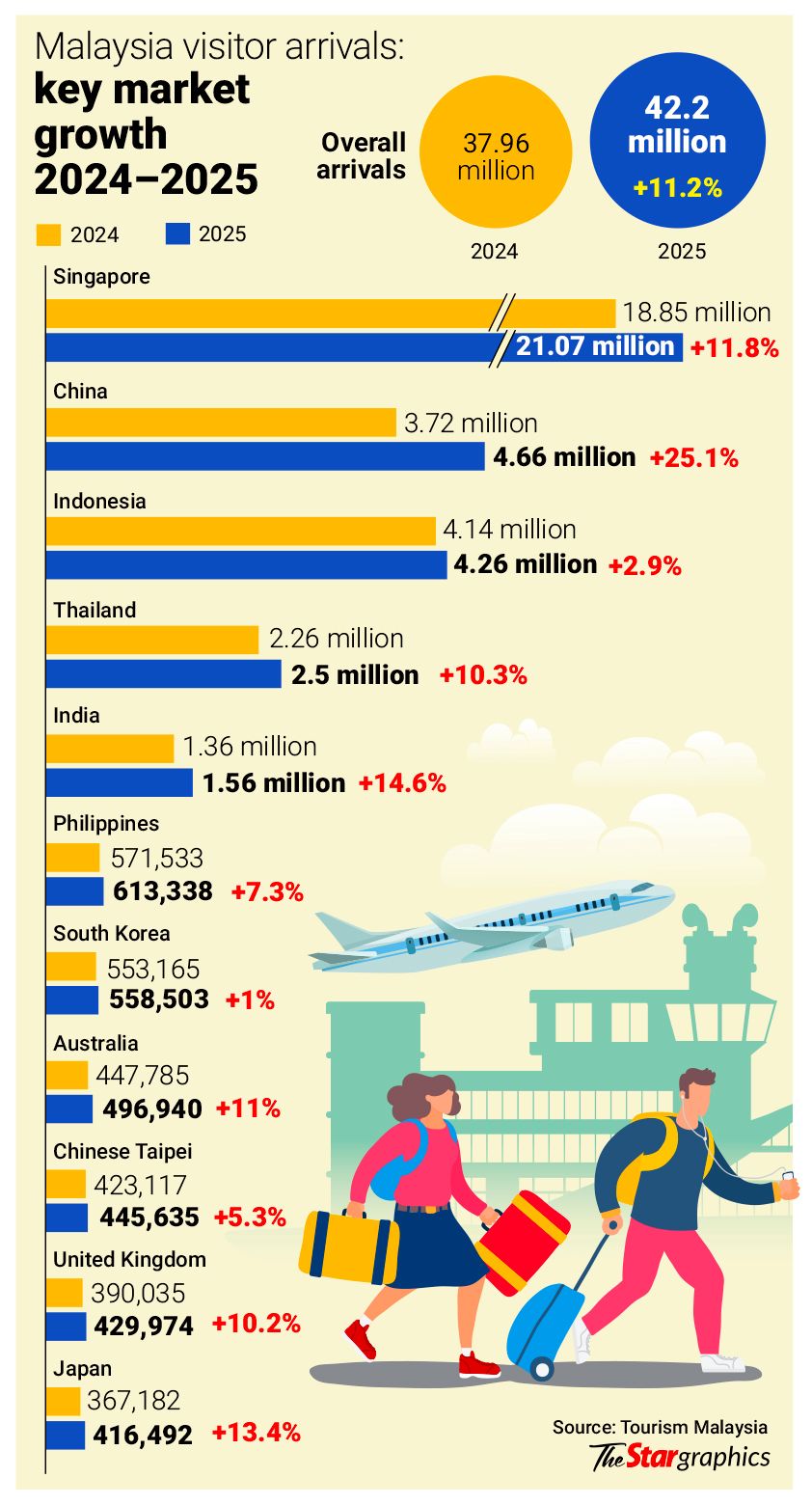
The Tourism, Arts and Culture Ministry’s deputy secretary-general for tourism, Chua Choon Hwa, said February’s figures showed a particularly strong performance, with a marked rise in visitors from China on top of solid growth from other regional markets.
“Up to February, during the Chinese New Year period, we recorded high inbound arrivals, exceeding the previous percentage by at least 30%,” he said.
“For March, we need to wait for the data and then, from all this data, we can do further analysis,” he said, adding that Chinese arrivals posted strong double-digit growth in February.
Malaysia is targeting about six million Chinese visitors this year.
“We are hoping for a good year. If it is quite difficult for them to go to the Middle East or beyond, maybe this destination is the place for them to come. In China alone, it’s billions of people we’re talking about,” he said.
Chua said Malaysia’s tourism base remains firmly rooted in regional markets, with about 75% to 80% of tourist arrivals traditionally coming from Asean countries.
He added that the conflict in West Asia and wider global uncertainty were prompting Malaysia to eye more nearby markets, such as China, South Korea, Japan and Asean, without abandoning long-haul markets like Europe, Africa and the United States.
“We’re still working on those markets because we have direct flights from there and other transit points. Yes, we are worried about the impact, but we are also thinking of new ways of bringing them over to Malaysia,” he told The Star.
Chua noted that, although air routes within Asia remain largely intact, higher fares are becoming a constraint.
“I think the only thing that is affecting travel right now is the price. Price increases are everywhere, not just in Asia.
“But if travelling somewhere else is much more expensive, maybe that will change their minds, and they will want to travel around this area rather than go beyond it,” he said.
One option under study is to encourage more long-haul passengers to use alternative hubs such as China to reach Malaysia instead of transiting through the Middle East.
Tourism Malaysia director-general Mohd Amirul Rizal Abdul Rahim said a shift in transit hubs would not happen overnight, as airlines must reassess routes, costs and connectivity.
“If a new hub is used, the connectivity must be adjusted because it involves costs, rerouting and other considerations. Normally, the Middle East carriers have good connectivity to the EU.
“Changes take time. It’s not our decision – it’s the airlines’ decision,” he said.
Chua stressed that policy choices will continue to be guided by data.
“We are quite hopeful, but we want to see the data to really be able to tell the story. We would rather not assume and then make a decision,” he said, noting that the ministry depends on figures from the Immigration Department and the Statistics Department before finalising its analysis.
“We can only be hopeful, and we are. Tourism, Arts and Culture Minister Datuk Seri Tiong King Sing and all of us are making a lot of arrangements. Hopefully, with these changes in strategy, we can still achieve what we aim for.”
The government has set a target of 47 million international tourist arrivals and RM329bil in receipts for VM2026 and is recalibrating its promotional efforts in line with how the Middle East conflict and other global developments affect visitor flows.