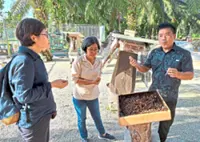
MUAR: Former mechanic Soh Yu Hock began keeping kelulut (stingless bees) 10 years ago in a desperate attempt to find pure honey for his cancer-stricken son.
However, his son, who was nine years old at the time, passed away from leukaemia before the honey could be harvested.
“I started beekeeping after reading that pure stingless bee honey has promising antibacterial benefits.
“My son’s passing did not cause me to give up on my venture. I decided to carry on in his spirit, in hopes that my honey could benefit others,” the 42-year-old said.
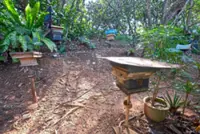
Soh eventually turned his experiment into a thriving farm with more than 600 bee colonies in Kampung Selanchar, Pagoh.
“I dropped out of school at the age of 13 and worked as a motorcycle mechanic to earn a living.
“Without prior knowledge or a mentor in beekeeping, I initially struggled and managed to harvest only small amounts of honey after a couple of years.
“I persevered and learned about bee hive structures, stingless bee ecology, breeding and honey harvesting,” he said.
He added that working among the bees also brought him a sense of peace and healing while mourning his son’s passing.
“At the same time, I realised that drinking pure honey helped relieve my own long-term struggle with gastric reflux.
“My wife, who often experienced indigestion, also found relief after consuming the honey,” he said, adding that the encouraging results led him to begin selling his honey to their friends.
He also obtained the Malaysian Good Agricultural Practices (MyGAP) certification through the Muar Agriculture Department five years ago. After that, he left his job as a mechanic to focus on beekeeping full-time.
“Having MyGAP certification is an important step to ensure my honey is of good quality, safe and environmentally-friendly.
“I currently have four species of stingless bees and various flowering trees and vines at my farm to ensure the bees have a year-round supply of nectar,” he said.
He added that the peak harvesting season for stingless bee honey was usually between February and June.
The colour and taste can vary depending on the flowers the bees collect nectar from during different seasons, he said.
Despite facing challenges such as unpredictable weather, pests and fluctuating food sources for the bees, Soh remains committed to improving his techniques.
His efforts have gained public attention, with several nearby primary schools approaching him to teach pupils about stingless bee farming, which is considered safe because the bees do not sting.
“I have now moved my focus towards education by opening my 0.8ha farm to the public to visit and learn about stingless bees for free to spread more awareness about their benefits,” he added.