A COMMUNITY garden and stingless bee honey project serve as a symbol of togetherness and thriving source of income at Apartment Presint 16 in Putrajaya.
Project manager Md Nasir Md Isa said the apartment’s Neighbourhood Watch Area (KRT) community garden idea emerged during the Covid-19 movement control order (MCO), when residents needed a safe space in which to relax and socialise.
“At first, we just cleared the area to grow vegetables for ourselves and the community.
“Over time, we saw its potential, as the area is surrounded by flowering trees ideal for nectar,” he said.
This then inspired the stingless bee honey project as an additional activity to generate income, beautify the area and reduce problems with mosquitoes and wild animals, he told Bernama.
A RM46,500 grant from the National Unity and Integration Department funded bee hives, harvesting tools and bottling and labelling equipment.
“We started with 10 hives as a pilot project.
“After three months, the results were promising, so we expanded.
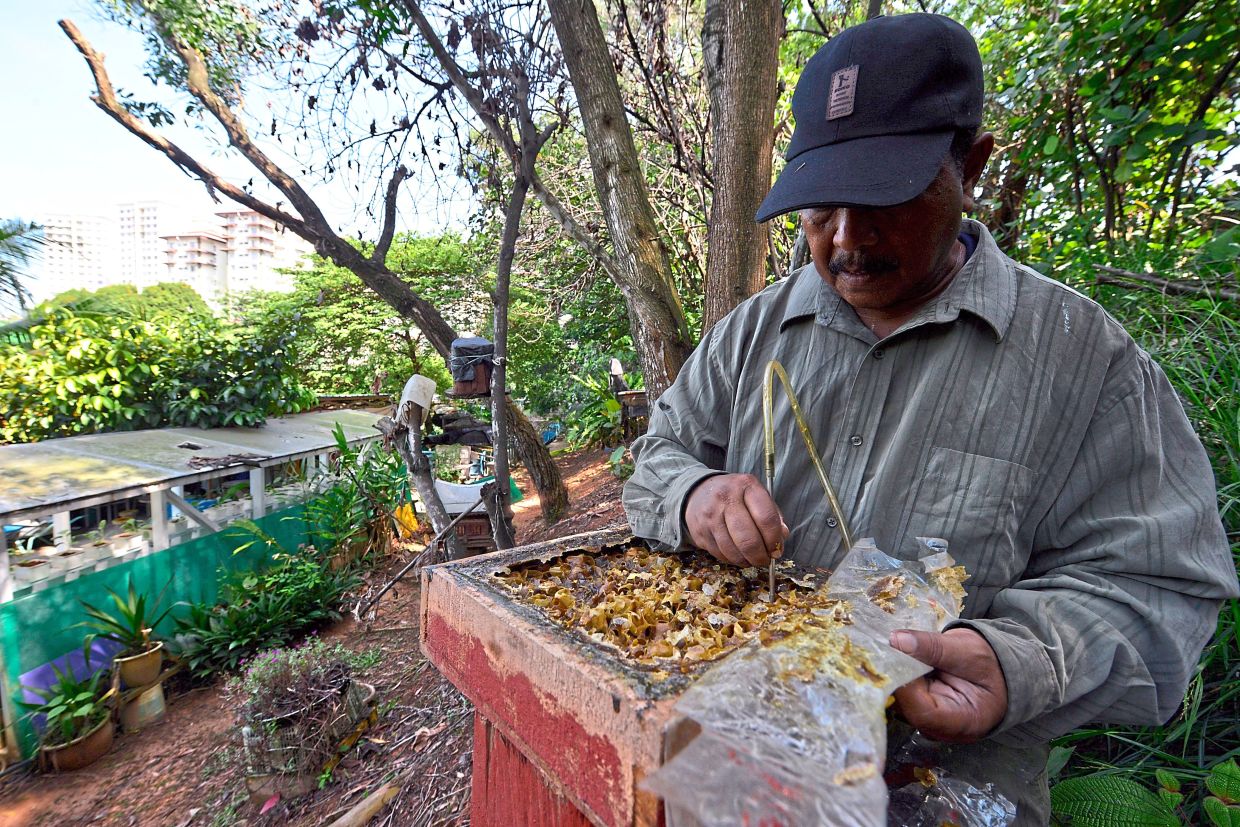
“We now have around 60 hives across six stingless bee species.”
He said the project yielded 30kg to 50kg of honey every six weeks, depending on the weather.
Bottled honey, he added, generated more revenue.
“If sold in 250ml bottles, one kilogramme of honey can fetch up to RM240, compared with RM120 to RM140 when sold in bulk.
“Project income has risen from around RM1,000 a month to about RM3,000,” Md Nasir said.
Aside from public sales, the project’s stingless bee honey is sought after as government souvenirs and sold at agency-organised events and carnivals.
“The biggest impact has been community participation,” he said.
“Men and women, the elderly, youths, children and even persons with disabilities are involved and able to access the area.”
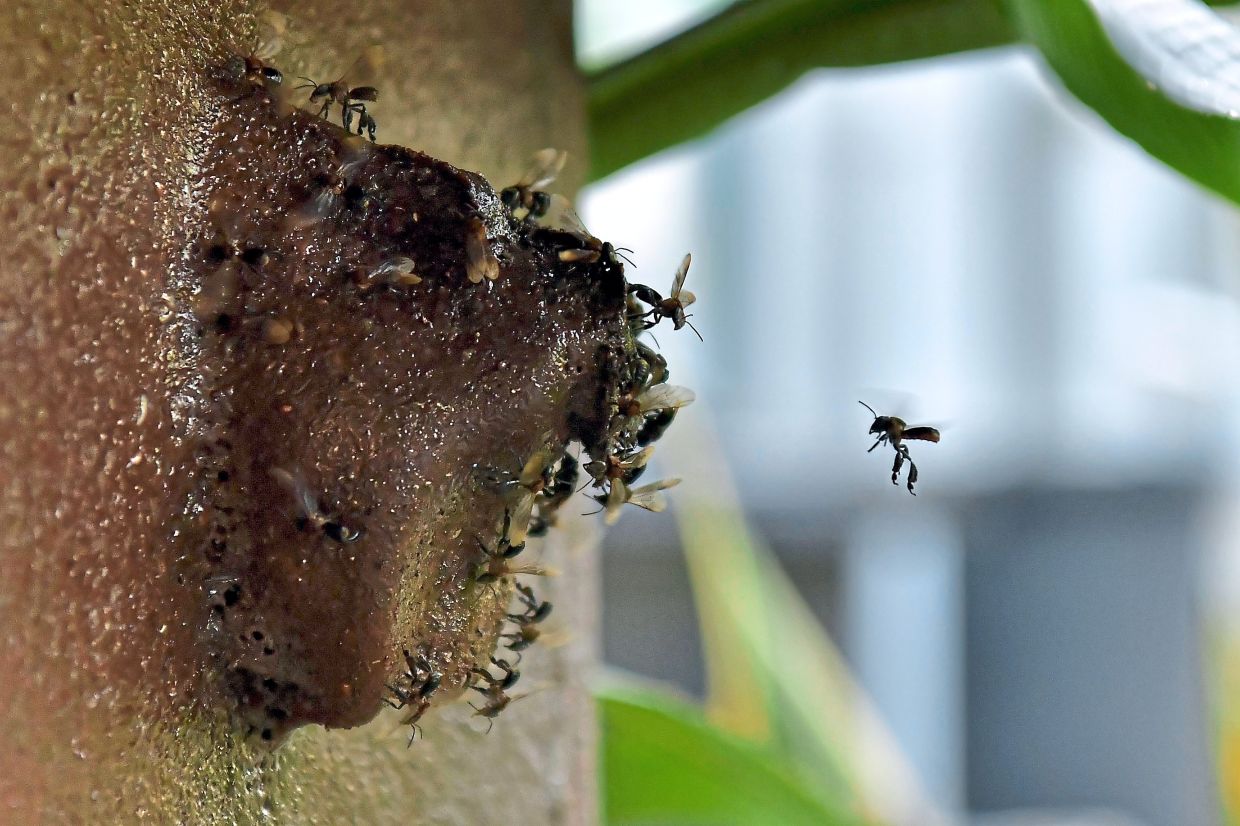
The garden had also become an informal learning site, he said, with nearby kindergartens and schools bringing students to learn about urban farming and stingless beekeeping.
Looking ahead, Md Nasir said they planned to develop downstream stingless bee products such as propolis, soaps and capsules and turn the garden into a training hub for other communities.
“We want the project to endure across generations, which is why we are training youths now to take over.
“Our hope is that this model can be replicated elsewhere,” he said.