PETALING JAYA: Despite the rise of e-wallets and urban living, many Malaysians continue to hold tightly to the traditions that define Hari Raya Aidilfitri.
From returning to hometowns to ketupat weaving and the lighting of pelita (oil lamps), these customs are cherished not merely as festive practices, but as emotional anchors that preserve identity, culture and heritage.
For Amalina Syaza Alyssa, 26, cooking traditional dishes together with her family is more than a festive routine.
For them, it is a way of remembering loved ones and expressing affection across generations, she said.
“Our must-have dishes include ketupat and lemang with rendang, meals we regard as staples that unite families and cultures during Hari Raya.”
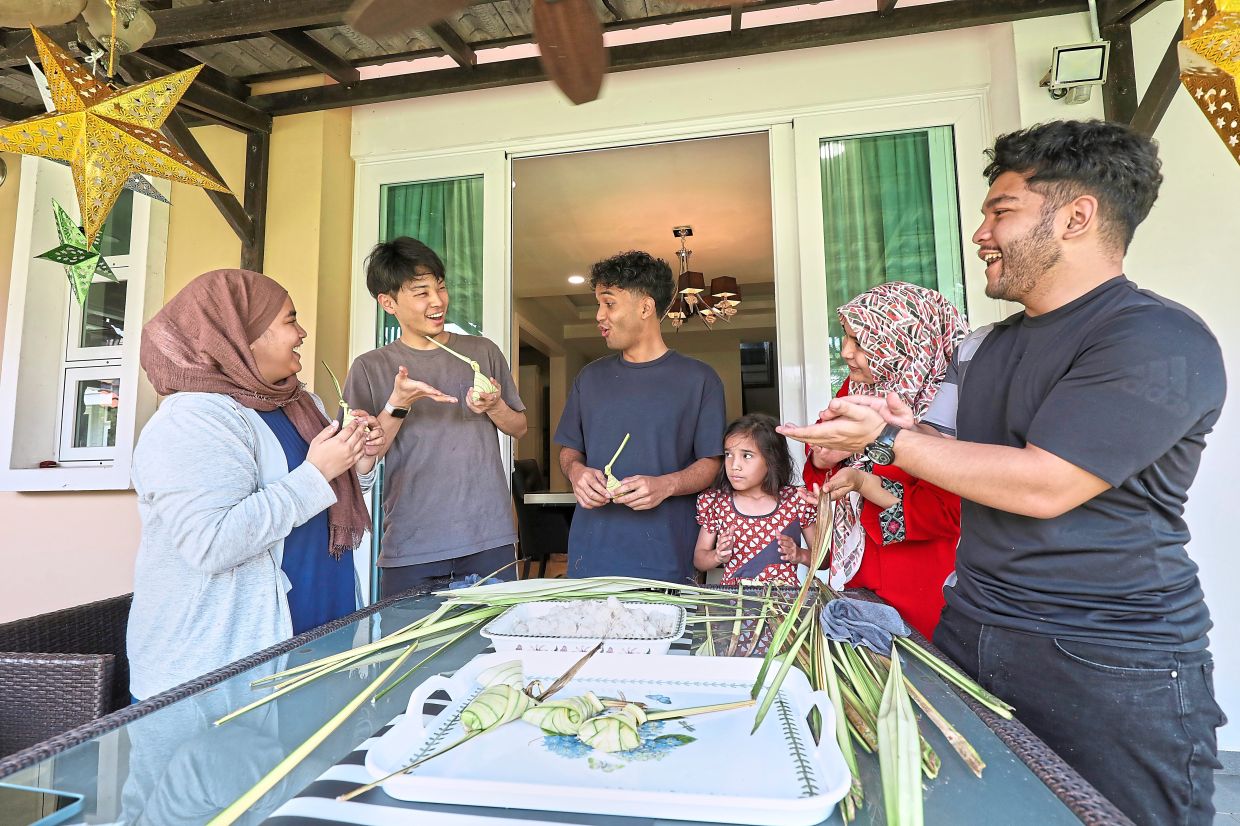
Ketupat weaving, a slowly fading tradition, is also dear to her, as she learnt it from her mother during the Covid-19 lockdowns, inspired by her late father’s Kedahan roots.
She has even shared the practice with her Japanese friend, Kusaba Reo, introducing him to the patience and pride that come with the tradition.
“I do not necessarily enjoy the process, but I am proud to say I know how to do it and I am happy to carry a piece of my father’s heritage,” she said.
Producer and social media manager Nor Aziah Mat Noh, 30, believes food remains central to the Hari Raya experience, serving as both a cultural anchor and a unifying force.
“Dishes like rendang and ketupat are not just festive staples; they carry stories and traditions passed down through generations.
“In many households, the preparation itself becomes a bonding activity as families gather in the kitchen, sharing responsibilities, exchanging stories and preserving recipes.
“It is in these moments that the true spirit of Hari Raya is felt,” she said.
Nor Aziah, who is from Dungun, Terengganu, also pointed to the nostalgic charm of pelita, noting that while their presence has diminished, their significance endures.
“Though increasingly rare, the gentle glow of oil lamps around homes creates a sense of communal warmth that modern lighting cannot replicate,” she said.
Similarly, for Azureen Zainal, 25, the lighting of pelita continues to hold deep cultural and sentimental value.
The creative writer, who grew up in Segamat, Johor, recalls how her family home would be illuminated by rows of oil lamps throughout Ramadan, creating a distinctive atmosphere that defined the season.
“To me, the pelita symbolises the heart of Malay tradition during these iconic months. There is a sense of calm and nostalgia when you see them flickering at night.
“I remain passionate about keeping this practice alive because I want the next generation to experience and appreciate its beauty, not just read about it,” she said.
For research officer Atikah Mohammad, 30, Hari Raya is inseparable from the long-standing tradition of returning to her hometown, a journey she describes as both emotional and grounding despite the demands of her career.
“It is non-negotiable. No matter how busy work gets, it just does not feel complete without going back to my parents’ house.
“It is not just about the celebration; it is about reconnecting with family and remembering our roots,” she said.
Atikah also remains firmly rooted in the practice of giving physical Hari Raya money packets.
While digital transfers have become common, she believes they lack the emotional warmth of the gesture.
“It feels more sincere compared to e-wallet transfers. There is something meaningful about handing it personally, especially to children.
“You see their excitement and smiles, which keep the festive spirit alive in a way that technology cannot replace,” she said.
Private-sector executive Shauqi Shabudin, 32, emphasised the importance of visits, describing them as the essence of Hari Raya, which goes beyond the material aspects of the celebration.
“Hari Raya is about human connection. Taking the time to visit relatives and friends, to sit together and catch up, is what truly matters.
“Sometimes, it is not the grand gestures that matter most; it is simple presence, warm smiles, and conversations that leave a lasting impact,” he said.