On track for the future with RTS, HSR and ECRL


Latest updates: Loke speaking during the interview session at Menara Star in Petaling Jaya. — FAIHAN GHANI/The Star

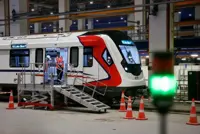
WITH several mega-rail projects at various stages of development, Transport Minister Anthony Loke provides critical updates on the Rapid Transit System (RTS) Link to Singapore, the status of the High Speed Rail (HSR) and the operational strategy for the East Coast Rail Link (ECRL).

Here is the Q&A on what commuters and stakeholders can expect.
> With the RTS Link set to be a game-changer for cross-border travel, has the fare been decided? Will it be affordable for the average Malaysian worker?

Loke: Whether it is affordable or not is subjective. The fare will be decided in the second half of this year. It will be determined by the operating company before being submitted to the governments of both Malaysia and Singapore. Since the RTS is a joint venture, the fare must be jointly agreed upon.

Of course, we have to take into consideration commercial viability and the sustainability of operations. But at the same time, the fare must be comparable to the cost of crossing the Causeway using private vehicles such as motorcycles. It has to be competitive.

You can see the Singapore government has announced that the Vehicle Entry Permit (VEP) fees for cars and motorcycles will increase starting Jan 1 next year. That is part of their policy to discourage motorists from driving into Singapore daily. The RTS is the important alternative. Therefore, the fare will be structured to be comparable to or lower than the cost of driving.

> Can the Bukit Chagar station actually handle the massive influx of daily commuters?

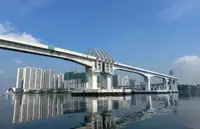
Loke: The station and the whole system are designed for 10,000 passengers per hour, per direction. If you look at the schedule and service frequency, the complex is definitely big enough to cater to that ratio.

Our challenge will be the traffic dispersal outside of Bukit Chagar. For medium to long-term, the Johor government is looking at an Autonomous Rapid Transit (ART) system.

However, immediately after the RTS completes next year, our solution for dispersal is to enlarge our stage bus system. We will add more buses to cover the initial period, so the public can take buses from residential areas outside Johor Baru directly to Bukit Chagar and vice versa.

> How will immigration clearance work? Has the SOP been finalised?

Loke: That is part of the agreement from day one. Recently in Parliament, we passed a new law to allow Singapore immigration to be stationed on the Malaysian side and vice versa.

This “co-location” of Customs, Immigration and Quarantine (CIQ) is a key element of the RTS. The principle is to make it as seamless as possible. If you are at Bukit Chagar, you will clear both Malaysian and Singaporean immigration in the same building, under the same roof. The moment you clear immigration, get on the train and reach Woodlands, you can just walk off.

> What is the current status of the KL-Singapore HSR? When will we see a concrete update?

Loke: I think it is still premature to talk about it with Singapore because we have not really come to a conclusion yet. The Prime Minister has set the principle that it must be private sector-led. If any private sector party is willing to fund the entire project and operate it under a concession model, then we are prepared to look into it.

We have asked for information from interested private companies over the past year or two but as of now, there is no major progress. We have not raised any specific proposal with the Singapore government yet at this point in time.

> If the private funding model fails, is the government ready to step in and fund it?

Loke: Not at this point. I don’t have any mandate to talk about government funding right now. As mentioned by the Prime Minister, the current Madani government’s priority is to address fiscal issues and reduce our debt-to-GDP ratio. Any big infrastructure project funded by the government would definitely add to our debts.

That is why we want to push it as a private-led project. If a consortium believes they can fund the project and recoup investments from operations and revenue streams, we will look at the proposal.

> Has any consortium expressed interest?

Loke: There has been interest by various consortiums. However, the moment you say it has to be entirely borne by the private sector including land costs, construction and so forth, they have to go back to the drawing board.

It is not as simple as the previous model where the government funds it and calls for tenders to construct it. When you talk about a pure Private Finance Initiative (PFI) where the private sector funds it entirely, that is a different ballgame.

> The ECRL relies heavily on freight to be profitable. How is the government ensuring there is enough cargo volume?

Loke: It is ongoing. For example, the Malaysia Rail Link (MRL) has an MOU with Perodua, one of our major customers. They intend to ship cars from their plant in Serendah to the East Coast via ECRL. We are even talking about using Kuantan Port to ship cars to Sabah and Sarawak by utilising the ECRL.

We are also targeting steel factories in the East Coast, specifically in Terengganu and Kelantan, as steel products are ideal for rail transport. The Transport Ministry is actively pushing a “road to rail” policy and strictly enforcing laws against overweight lorries to encourage manufacturers to consider rail as a better, compliant option.

> If the ECRL operations don’t reach the target capacity, will the government subsidise the losses?

Loke: We have to look into this when operations start but bear in mind that the ECRL operation is a joint venture with China. This was the result of the renegotiations in 2018.

One of the key components of the deal is that the operational risk is shared 50-50 between the Malaysian and Chinese sides. If the operation is loss-making, the Chinese side bears 50% of the risk. However, if we make a profit, the Malaysian side will get 80% of the profit.

The risks are spread out now. We don’t want to talk about subsidies when operations haven’t even started. Our goal is to make it operationally sustainable to at least break even. Recouping the RM70bil to RM80bil investment cost will take a long time, perhaps 100 years but in terms of daily operational efficiency, we must strive to break even.


Follow us on our official WhatsApp channel for breaking news alerts and key updates!

Next In Nation

Sabah floods: Number of evacuees rises to 6,732
DPM Zahid pledges assistance for surviving siblings of Raub fire incident
A moving display of sahur solidarity
Training death lands three officers in dock
Siti Nurhaliza stays cool over telekung issue
Five SIM cards per telco provider
State exco man denies hurting wife
From missing parts to murder charge
Great news for 34 media outlets with RM10.3mil boost
Government mulls RCI

Others Also Read