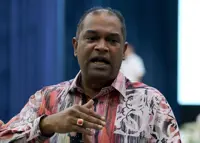
JOHOR BARU: The escalating tensions in the Middle East could pose fresh geopolitical challenges to the global economy, says Economy Minister Akmal Nasrullah Mohd Nasir.
He said it was still too early to determine the full economic impact following reports that Iran had been attacked by Israel and the United States.
He acknowledged that the situation warranted close monitoring.
"We need to wait for official statements," he added.
"The Prime Minister has issued a statement on his social media platform and Wisma Putra will also state Malaysia’s position on the matter."
Akmal Nasrullah said this in a press conference after attending a Muslim Youth Movement of Malaysia (Abim) community programme held at PPR Sri Stulang here on Saturday (Feb 28).
From an economic standpoint, Akmal Nasrullah, who is also the Johor Baru MP, said two key areas would require attention.
These are the direct economic ties of Malaysia with Iran and the broader geopolitical implications on the global economy.
He noted that geopolitical risks had been identified as one of the main challenges heading into 2026, particularly amid global uncertainties.
"At this stage, it is still early for us to assess how severe the disruption will be to the global economic ecosystem," he said.
"However, one of the areas that will certainly be evaluated is oil and gas production, as Iran plays a role regionally and globally."
He added that the ripple effects on the overall global supply chain would also need to be examined, given the interconnected nature of international trade and energy markets.
Commenting on concerns that global crude oil and gas prices could rise, Akmal Nasrullah said the Government would monitor market mechanisms as well as production decisions made by oil-producing countries.
He pointed out that Malaysia is involved in various international mechanisms related to energy production and pricing.
These would serve as a reference point in managing any potential impact on the domestic market.
"At the national level, we cannot take lightly any external disruptions," he said.
"At the same time, we must continue strengthening our domestic economic fundamentals so that global challenges do not significantly affect the country’s economic stability."