KUALA LUMPUR: Peak hour operations for Rapid Rail trains have been extended to accommodate passenger travel behaviour during Ramadan, says Anthony Loke.
The Transport Minister said peak hour operations in the morning will last from 6.30am to 9.30am whereas the evening peak hour travel period will last from 4pm to 8pm.
In comparison, the regular peak hour travel periods during other months are from 7am to 9.30am and from 5pm to 7.30pm.
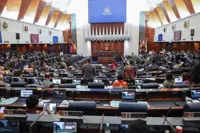
“These steps are taken to ensure smoother operations, improve passenger comfort and accommodate crowds utilising Rapid Rail trains as their preferred travel medium when heading to break fast,” he said during question time in the Dewan Rakyat on Monday (Feb 23).
Loke also noted that the extended peak hour operation measures are carried out annually during Ramadan.
He was responding to Syahredzan Johan (PH-Bangi) who asked if there are plans to update Rapid Rail peak hour operations during Ramadan, and what the new set hours would be.
Syahredzan also asked about Rapid Rail’s preparedness in managing train disruptions during the fasting month.
To this, Loke stressed Rapid Rail’s year-round preparedness, adding that predictive and preventive maintenance are constantly carried out.
“This can reduce the possibility of any technical disruptions. However, we cannot predict when disruptions can happen.
“Regardless, we are working hard to reduce this,” he said.
Loke added that there are also technical personnel present on trains to take immediate action in the event of disruptions.
Station personnel too are trained to conduct crowd control efficiently to reduce possible congestion.
Loke also pointed out that the number of technical disruptions has reduced drastically between 2022 and 2025.
According to him, there were about 220 incidents reported in 2022 with the number dropping to less than 50 last year.
“Improvements reflect how our maintenance measures are paying off. But, we are not satisfied with this yet.
“To say there have been no improvements is unfair,” he added.
The minister said disruptions also include any instances where a train does not move for five minutes.
“Our benchmark is to ensure rectification works are carried out as fast as possible,” he said.
Loke said this in response to a supplementary question by Dr Abd Ghani Ahmad (PN-Jerlun) who asked about the effectiveness of preventive maintenance in reducing asset failure.