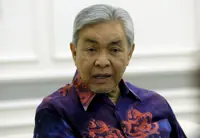
KUALA LUMPUR: History must not be distorted, and Malaysia needs proper archival management to ensure future generations receive an accurate account of the past, says MCA president Datuk Seri Dr Wee Ka Siong.
He said many of MCA’s contributions to the nation and the Chinese community remain unfamiliar to younger Malaysians, leaving them vulnerable to distorted narratives and misinformation.
Dr Wee noted that the party has long faced one-sided criticism and misrepresentation, but often struggled to respond effectively due to the absence of a comprehensive archival system.
“Even more distressing is the lack of professional management of organisational archives in our country, which has resulted in the loss of many valuable documents related to founding leaders such as Tun Tan Cheng Lock and Tun Lee Hau Shik to overseas institutions.
“We now find ourselves having to consult Singapore’s ISEAS–Yusof Ishak Institute to access materials related to our own nation’s founding history,” he said after witnessing the signing of an Archives Management Agreement with Universiti Tunku Abdul Rahman (UTAR), under which the university will take the lead in preserving, organising and digitising the party’s historical records.
Dr Wee cited several examples which, he said, illustrated how MCA’s historical role has been misunderstood or selectively portrayed.
He said MCA’s third president, Tun Tan Siew Sin, has long been wrongly perceived as unsupportive of Chinese and mother-tongue education.
“In reality, it was his firm insistence that led to the inclusion of Article 152(1)(a) and 152(1)(b) of the Federal Constitution,” he said.
Article 152(1)(a) provides that no person shall be prohibited from using, teaching or learning any language other than for official purposes, while Article 152(1)(b) safeguards the right of the federal or state governments to preserve and sustain the use and teaching of the mother tongues of various communities.
“These constitutional guarantees remain the cornerstone of the survival of Chinese education today,” he said.
Dr Wee also referred to the Barisan Nasional government’s 2017 “10+6” plan for the construction and relocation of Chinese primary schools, which included nine newly built schools named after Chinese pioneers, describing the move as meaningful and unprecedented.
However, he said that during Pakatan Harapan’s first term in government, SJK(C) Tun Omar Ong Yoke Lin was renamed SJKC Gamuda Cove without a reasonable explanation.
“Certain parties even went so far as to label Tun Omar Ong Yoke Lin, a founding leader of MCA, as a ‘traitor who sold out the Chinese community’, arguing that a Chinese school should not bear his name,” he said.
“In fact, he was one of the contributors to Malaysia’s independence, served as health minister, president of the Senate, and was later appointed ambassador, rendering significant service to the nation,” Dr Wee added.
On public university admissions, Dr Wee said figures for the 2025/2026 academic year showed that non-bumiputra students accounted for only about 11% to 12% of intake, with Chinese students possibly making up less than 10%.
“When this information emerged, some falsely blamed the situation on 60 years of Barisan rule and claimed it was a legacy left behind by MCA. Many young people, unfamiliar with historical facts, readily believed this misleading narrative,” he said.
He explained that in the 1960s and 1970s, many outstanding non-bumiputra students were unable to enter public universities, and that MCA, as a Barisan component party, had pushed for a more balanced intake policy.
“In 1978, MCA negotiated and announced a policy allocating 55% of university places to bumiputra students and 45% to non- bumiputra students. Today, under a different government, access to public universities for non- bumiputra students has become increasingly difficult,” he said.
Dr Wee reiterated that there were many more MCA contributions that remain little known to younger Malaysians.
He invited party members, when ready, to submit relevant materials to MCA headquarters or the archives for proper preservation so that, through collective effort, “we can build a more complete and richer historical record, allowing future generations to encounter a multidimensional and truthful MCA when they turn the pages of history”.