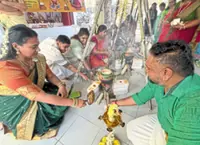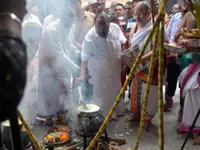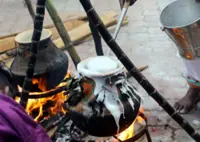
PETALING JAYA: While Ponggal is widely celebrated by Malaysian Indians, the centuries-old Chitty community (also known as Chetti Melaka) observes the harvest festival in a distinct, temple-centred manner that reflects its deep ancestral roots.
Chetti Melaka Community secretary T. Sithambaram Pillay said the Chitty Ponggal differs significantly from mainstream Indian practices, particularly in its food offerings and rituals.
One key difference is the serving of nasi lemak on banana leaves as part of the Ponggal offering, a practice unique to this Indian-Peranakan community.
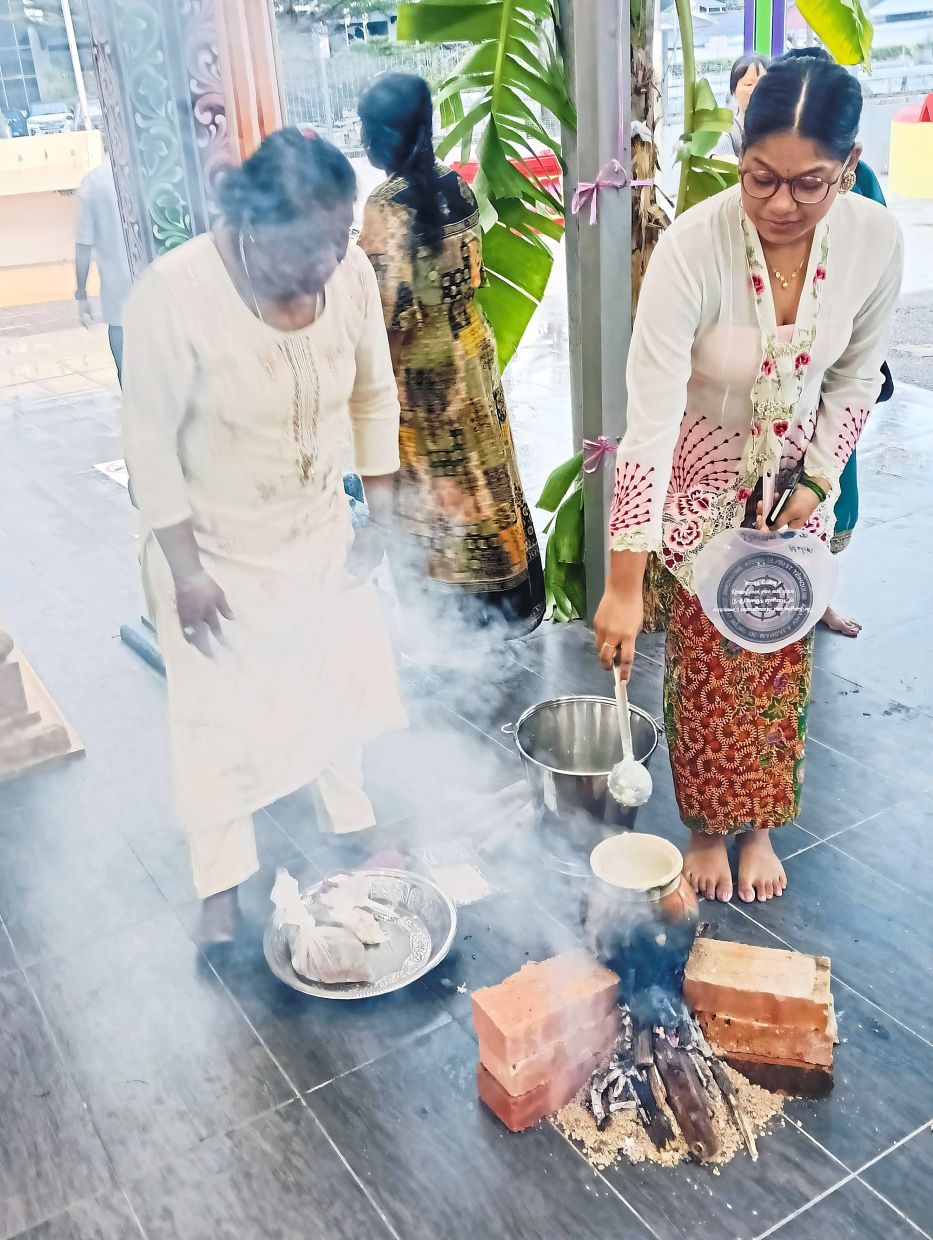
“This is Parchu Ponggal, a ritual performed to the ancestors a day before Ponggal.
“During the ceremony, about 15 dishes, including non-vegetarian food, are prepared and laid out on banana leaves, with nasi lemak forming a key part of the offering,” he explained.
The dishes include pindang ikan (fish soup), eggs and fish sambal, cucumber sambal, mutton curry and fried prawns.
Sithambaram, who is also secretary of the Sri Poyatha Vinayagar Moorthi Temple, said family members are not allowed to taste the food until the prayers are completed.
“So if the food lacks salt or seasoning, we wouldn’t know,” he added.
He said the banana leaf servings must be in odd numbers, depending on the number of generations and families involved.
“It can range from one to seven leaves,” he said.
Milk rice is also served with fruits such as ciku, watermelon, cempedak, jackfruit, longan, pineapple and apples.
The offerings usually begin between 6.30pm and 7pm, after which families gather to eat together.
“This is when we find out whether the food is properly seasoned,” Sithambaram said.
Sithambaram explained that nasi lemak reflects the Peranakan food heritage embedded within the Chitty culture.
“Unlike other Indian communities, we do not prioritise vegetarian food during Ponggal,” he said.
He added that the Chitty community also does not observe Bhogi, which involves discarding and burning old items to symbolise renewal.
“We do not practise decluttering or burning old items,” he said.
Another key difference is that Ponggal rice is not cooked in individual homes.
Instead, one Ponggal is prepared by a temple trustee at Sri Kailasanathar Kovil in Melaka, representing the entire community.
“Before heading to the temple, households hang mango leaves at their doorways.
“Other Indians usually hang five to seven leaves, but we hang according to the length of the doorpost, which can go up to 27 or 29 leaves,” he said, adding that the number of mango leaves must also be odd.
On the third day, known as Mattu Ponggal, cows are bathed, decorated and honoured for their role in agriculture and milk production.
A cow is brought to the temple, fed, bathed and adorned with garlands before being led around Kampung Chetti in Jalan Gajah Berang.
“Homeowners may leave food outside for the cow, but it is not compulsory,” Sithambaram said.
The final day, Kanni Ponggal, is dedicated to unmarried girls who have reached puberty.
“This ritual is meant to bless them with good future spouses,” he said.
On this day, the girls prepare Ponggal themselves and serve it at Sri Muthu Mariamman Temple.
Sithambaram added that vegetarian practices during Ponggal vary among Chitty households, with some observing it and others not.