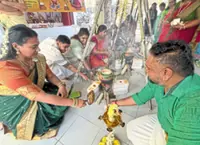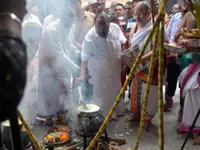
BUKIT MERTAJAM: For K. Muniandi, cows are not just livestock – they are living links to faith, family and survival.
A fourth-generation cowherd, he has been tending cattle since the age of six.
“I grew up among cows. This is what my father did and his father before him,” said Muniandi, 51.
The bond between Muniandi and his cattle takes on a deeper meaning during Ponggal, especially Mattu Ponggal, a day dedicated to honouring cattle for their role in agriculture and rural life.
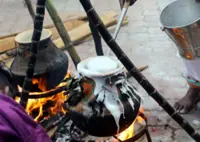
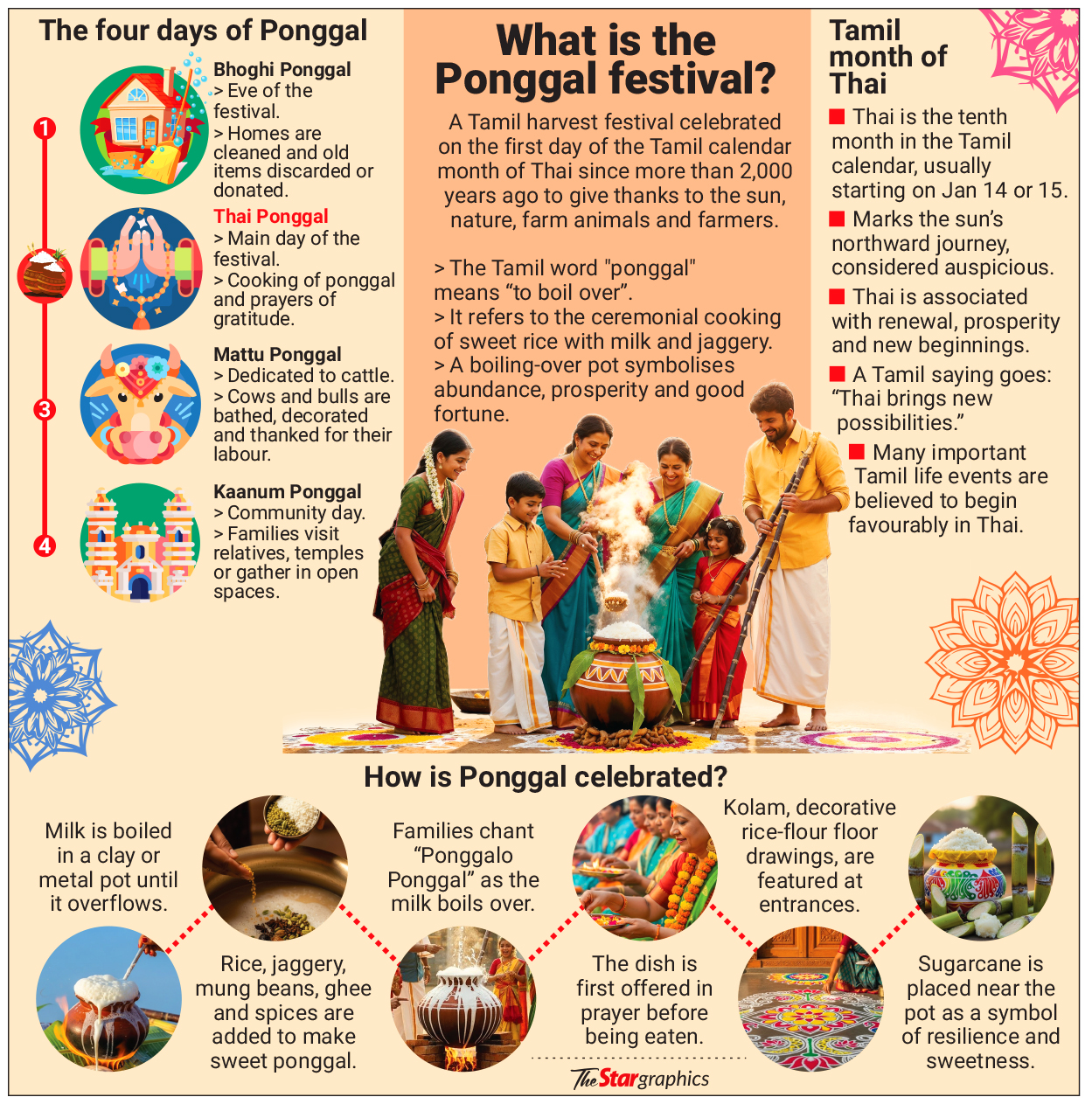
Ponggal, which means “to boil over” in Tamil, is celebrated from the last day of the Tamil month of Margazhi (December to January) to the third day of the Thai month (January to February).
Farmers celebrate it on the first day to represent the first harvest of the year and as a form of thanksgiving for an abundant harvest.
The second day, Mattu Ponggal, is devoted to cows, regarded as sacred animals, while young women are celebrated on the third day, Kanni Ponggal.
In Hindu tradition, cows are revered as sacred, symbolising nourishment and selfless service – values Muniandi believes are overlooked in modern society.
“Herding cows is not an easy job, but it teaches patience and responsibility,” said Muniandi, who is a full-time civil servant but also looks after about 40 cows in Bukit Tengah.
The father of four was among five cowherds here who were presented with certificates of appreciation for their efforts in preserving the traditions of the Ponggal celebration yesterday.
S. Ganesh, 48, chose to remain a full-time cowherd despite opportunities for better-paid work elsewhere.
He is clear about wanting to continue a tradition handed down by his father and grandfather.
“This is a noble profession. Cows play an important role in our religion and are central to the Ponggal celebration,” he said.
He said the recognition he received is not just a personal honour, but a sign of appreciation for the wider cowherd community whose contributions often go unnoticed.
“It represents all cowherds, not only in Penang but across Malaysia,” he added.
According to Ganesh, there are currently around 200 active cowherds in Penang.
The cowherds received the recognition at a Ponggal celebration event held at the Raviraj Sdn Bhd headquarters in Alma, Bukit Mertajam yesterday.
The recognition was aimed at acknowledging the often-overlooked role of cowherds in supporting traditional farming practices and cultural heritage.
It also aimed to encourage the continuation of the tradition, particularly among younger generations, as the number of people involved in livestock rearing continues to drop amid urbanisation.
Raviraj's managing director V. Rajendran said the annual event, which is into its second year, marks the first time it was held at the company’s headquarters in Penang, after being organised in Kedah previously.
He said organising the event is part of the company’s corporate social responsibility aimed at giving back to society.
“We are here to contribute to the community in meaningful ways. One of those is by preserving and introducing our culture, ensuring that it is not forgotten, and educating the younger generation about its values," he said.
This year's four-day Ponggal celebration began on Jan 14.