



PETALING JAYA: For 28 years, a former corporate staff member has dedicated her life without salary to ensure patients continue to receive proper care after they leave the hospital.
Adrine Lee Mooi Keow has become the bridge between hospital and home for those struggling to care for their loved ones.
“Recovery doesn’t stop at the hospital door. Families need guidance and support once their loved ones are discharged but many are left on their own.
“That’s why post-discharge care is so important. It helps patients recover safely while easing the emotional and financial burden on families,” she said.
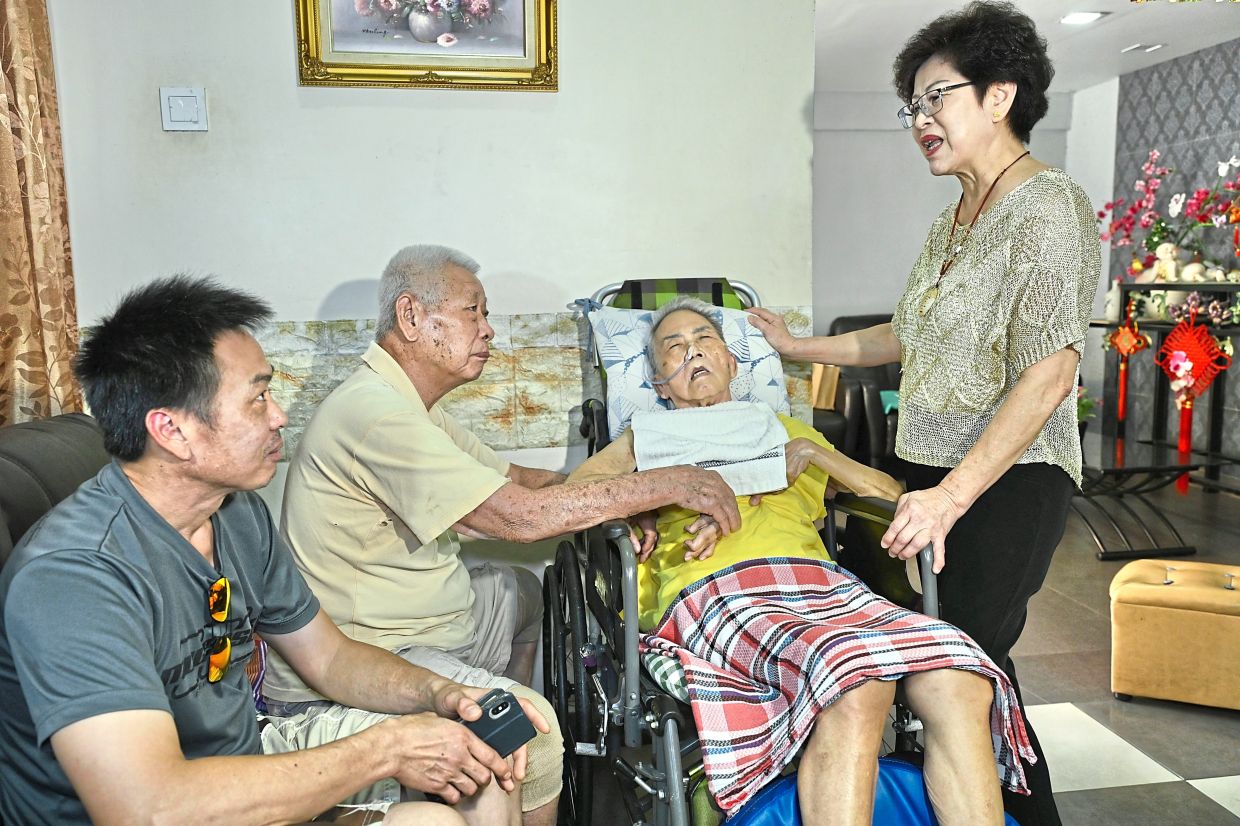
Her turning point came when she realised post-hospital care was needed when her mother had a debilitating illness but not many who took care of them knew what to do.
“When my mum was bed-bound, we weren’t lucky enough to have someone to teach us how to care for her.
“We needed simple things like a ripple mattress, which is very important for bedridden patients to prevent bedsores.
“We didn’t know about this even though it cost less than RM500 at that time as my family of 10 siblings could afford it.

“That’s when I realised how important proper guidance and education are for families caring for loved ones at home,” she said.
Lee not only provides post-discharge home care services through a service called Lifelink Homecare, but she also supplies essential medical equipment such as oxygen tanks and ventilators whenever hospitals reach out to her.
“I also run a small care centre where we look after a few patients who require closer, long-term support and care planning.
“Sometimes, I make home visits to check on patients after they are discharged when the families call me.
“There’s no charge for the initial visit but if they need continued support, I’ll recommend suitable care services or equipment based on their needs,” she said.
Lee also provides guidance on nutrition and feeding regimes, including teaching families how to manage feeding tubes safely within a few hours of training.

.“Our society really needs this kind of service because many people are suffering at home after being discharged from the hospital.
“Hospitals are doing diagnosis, treatment and all the necessary procedures but eventually, patients need to return home for recovery.
“When they’re back home, it’s a completely different scenario,” she said, adding that families are left to look after the patients.
Lee described the gap between hospital and home care as “two different worlds”.
“Without proper guidance and support, families suffer emotionally and financially, which I have personally experienced during my mother’s predicament in 1995.
“Since then, I realised that Malaysia needed a bridge between hospital and home, and I wanted to offer this through Lifelink Homecare,” she said.
On how she can continue the effort without getting a salary, Lee said: “With my high-paying job, I can dress well and live better but these are not as important as helping the community in providing support to people in their times of need and moments of uncertainty.

“I once earned well and lived comfortably but those things fade over time. What remains is the joy of knowing I’ve helped others in their darkest hours.”
Lee also said her willingness to learn is her strongest point.
“I have handled patients with faeces in the bag. I began with knowing nothing about medication as I am not a doctor or a nurse. But I read a lot, find out a lot and talk a lot to doctors, professors and nurses.”
Lee said that because of her diligence in learning, she can understand what illness someone has based on the medication the patient takes or is prescribed.
“I have even been taught by dietitians and nutritionists on how to count the calories required for each patient.
“Wound care nurses also guided me on how to do dressing,” said Lee, who also learned to work round the clock.
She said helping patients to spend their final days in comfort and dignity is one of the greatest gifts.
“For families who cannot afford care, I will find a way to secure donors. Compassion should never depend on affordability.
“At times when we cannot afford the assistance, we work with various partners-in-service to provide the appropriate support,” she said.
According to her, the challenge now is scaling the proven infrastructure nationwide.
“This mission requires robust collaboration such as financial, operational and moral support from all stakeholders, including the government and the private sector.”
Since 1997, Lee said she has cared for 15,000 patients and wishes to continue her initiatives.
For her noble efforts, Lee is named as one of the 10 winners of the Star Golden Hearts Award (SGHA) 2025.
SGHA is an annual award by The Star that honours everyday Malaysian unsung heroes.
For details, visit sgha.com.my.
