SIMPANG RENGGAM: Singapore-based company OTS Holdings Ltd is committed to supporting Johor as a hub for regional halal food manufacturing.
The opening of a new halal food manufacturing plant in Simpang Renggam under the company’s subsidiary, Ellaziq (Malaysia) Sdn Bhd, is a testimony to its long-term growth in Malaysia.
“We want to play our role to further strengthen Malaysia’s standing as a global leader in halal food production,” said OTS Holdings managing director Ong Bee Chip.
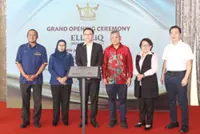
He said this at the opening of the Ellaziq Malaysia halal food facility by Johor investment, trade, consumer affairs and human resources committee chairman Lee Ting Han on Tuesday.
Also present at the event were Malaysian Investment Development Authority (Mida) Johor director Mohamad Reduan Mohd Zabri, Mida deputy director of food technology and resource-based industries division Wan Hariati Wan Salleh, OTS Holdings executive director Ong Chew Yong and OTS Holdings non-executive chairman Dr Yu Lai Boon.
The RM50mil plant is located at Jalan Kampung Pisang, Bukit Keremoiyang here, about 76km from the Johor Baru city centre.
In late 2023, Ellaziq Malaysia acquired a factory in Johor on behalf of OTS Holdings to expand its halal product manufacturing capabilities in the country.
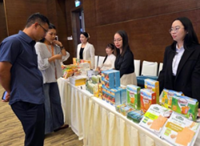
“We will continue to strengthen our partnership and develop more innovative products to support our strategy to expand our halal food market business,” said Ong.
He said the opening of the plant is not just about machines or infrastructure – it is about people and the dedication behind every achievement.
Meanwhile, Lee said the company’s decision to establish its Malaysian manufacturing base in Simpang Renggam is a powerful vote of confidence in Johor’s strategic advantages.
“Our strengths are our strong connectivity to Singapore and regional markets, a reliable logistics network, a skilled and trainable workforce, and a transparent and supportive business ecosystem,” he said.
Lee added that the new plant also represents confidence, collaboration and continuity, particularly confidence in Johor’s competitive environment and collaboration between Singaporean and Malaysian expertise.
He said the facility will enable the company to expand production, strengthen export capabilities and contribute to Malaysia’s ambition of becoming a leading global-halal food hub.
“Our vision is to make Johor a global destination for high-value, halal-certified manufacturing,” Lee said, adding that Malaysia and Singapore are currently the two main markets for the company’s halal food.
In the larger scheme, they are looking at the Gulf Cooperation Council (GCC) countries as a new market for their products.
The GCC countries are Bahrain, Kuwait, Oman, Qatar, Saudi Arabia and the United Arab Emirates, all located along the Persian Gulf.
“The setting up of the halal food facility in Simpang Renggam proves that economic opportunities are not limited to urban centres, but are being extended across Johor’s heartland,” said Lee.
He added while the southern corridor around Iskandar Malaysia continues to grow rapidly, the state government is equally focused on developing every district in Johor.