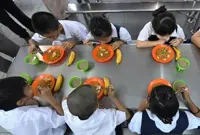
PETALING JAYA: School canteen operators have been complying for several years with the prohibition on 12 categories of food and drinks in schools as part of efforts to promote healthier eating habits among students, says Khairuddin Hamzah.
The Malaysian School Canteen Operators Association president said this compliance has been achieved through continuous monitoring by the Education Ministry and Health Ministry.
However, he acknowledged that there are still a small number of operators who continue to sell prohibited items due to market pressure.
ALSO READ: Experts: Balanced diet boosts kids’ immunity, brain function
“This regulation poses challenges to canteen operators from several angles, as revenue has declined because students are less interested in healthy food compared to fast food.
“Although most canteens no longer sell unhealthy food and drinks, students can still buy them outside the fence and eat them at the school canteen.
“There are also many students who bring sausages, nuggets and instant noodles from home because the canteen only provides ‘Health Ministry recommended food’ instead of ‘student favourite foods’, which is in high demand,” Khairuddin told The Star.
In terms of cost, he said preparing healthy food is indeed more expensive and requires greater effort compared to fast food, as it involves more labour.
However, he said, the association fully supports the ban, though several improvements are needed.
This includes banning such food from entering the school through the gates, as there are cases of cooperatives, teacher clubs and students taking advantage of selling these types of food, he said.
Additionally, he said a healthy menu should be made available for all students, similar to the school milk programme.
“We also believe that Pakatan Harapan’s 15th General Election manifesto for a Free Breakfast Programme in all Education Ministry schools is the right approach to educate students about healthy eating.
“This programme has already undergone a successful pilot project; as such, we hope the government can implement this long-forgotten manifesto.”
SJK(C) Pandamaran A, Klang, School Governing Board (LPS) chairman Datuk Seri Teh Meng Huat agreed that the restrictions on unhealthy food are beneficial for students, as there were too many processed foods being sold in the school canteen.
“This is the right thing to do because kids are getting too accustomed to such food, which can lead to obesity. School is a place of education, so it is vital that we teach healthy eating habits.
“We may not be able to control what they eat outside the school premises, but as long as they are in school, we want them to adopt healthy habits.
“Processed food costs more than fresh ingredients, but because kids request these items (processed food), the operators tend to comply.
“So we constantly give instructions to stop the sale of such unhealthy items by working with the parent-teacher association,” he said.
SKJ(C) Ting Hwa, Melaka, LPS chairman Datuk Shaun Lee said over the past two and a half years, after implementing healthy menus in their school canteen, they have seen more vibrancy among their students.
He said the school took proactive steps to serve healthy food while eliminating processed food, despite it being a favourite among students, and switched to using thermal and stainless steel containers.
“Previously, canteen operators sold unhealthy food and drinks because it was profitable, but we wanted the kids to start eating fruits and vegetables. We also wanted to go beyond just slogans.
“As such, food preparation is monitored by both ministries, with vetting by a licensed nutritionist.
“Operators are required to send pictures of the food they are preparing for approval before cooking.
“We also don’t allow kids to bring processed food into the school, working closely with parents to ensure this. Following these measures, we’ve seen changes among students – they are more alert in class and feel less tired,” he said.
Lee did point out that there was an increase in the cost of preparing the food, but they managed to introduce more affordable pricing to address the issue.
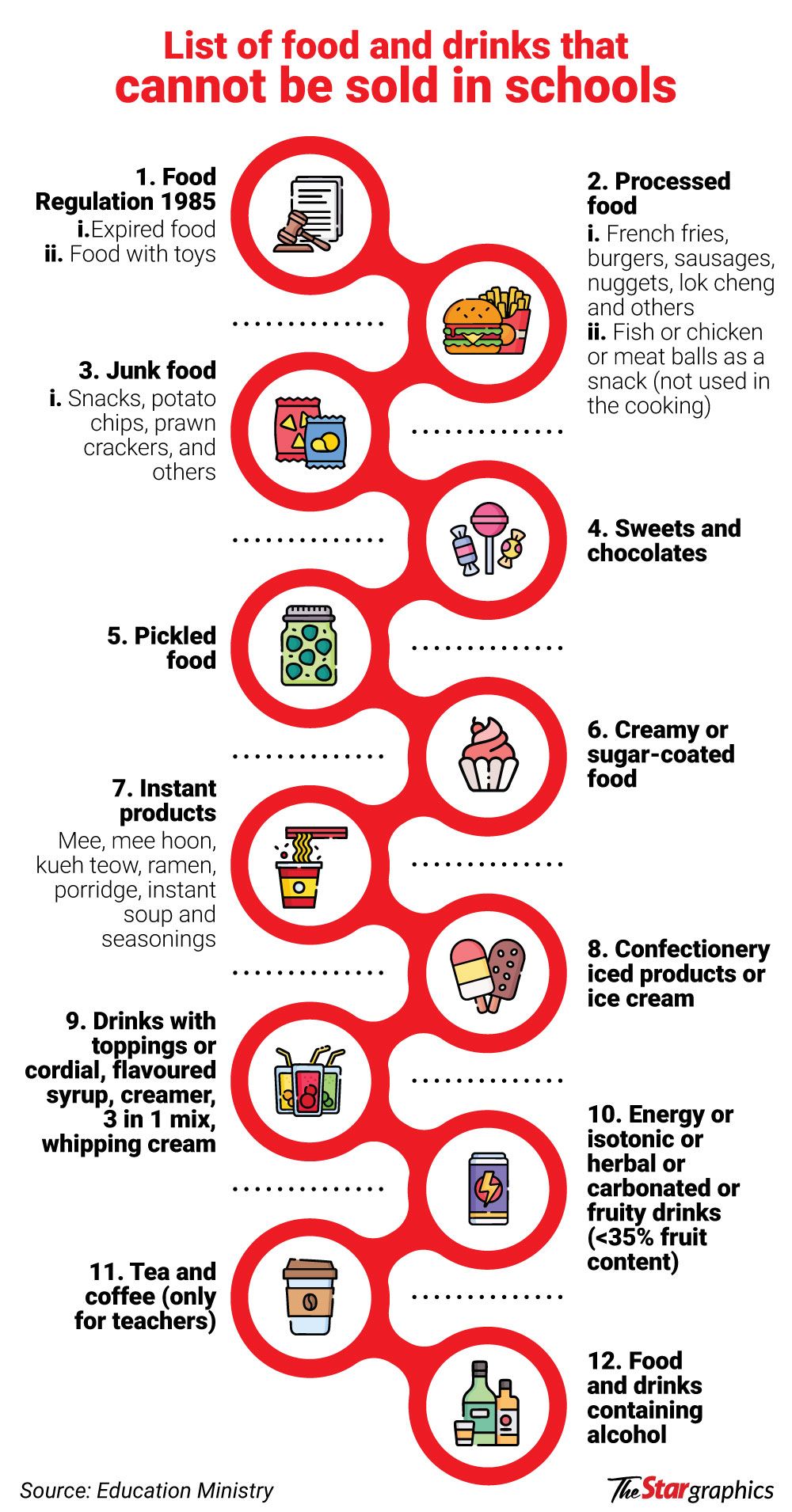
On Sept 23, the Education Ministry announced on its Facebook page the collaboration with the Health Ministry’s Nutrition Division, outlining 12 types of food and beverages that are prohibited from being sold in schools.
This ban is one of the ministry’s efforts to ensure that students develop healthy eating habits and support good growth and development.