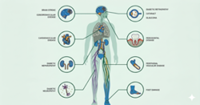
IPOH: Diabetic retinopathy, an eye complication caused by diabetes, has emerged as a major cause of blindness in Malaysia.
Health Ministry medical development division director Datuk Dr Mohd Azman Yacob, who revealed this, said early detection and referral of diabetic retinopathy cases are crucial.
“There is a need for stronger collaboration between ophthalmology and public health disciplines,” he said at the World Sight Day 2025 celebration here yesterday.
Dr Mohd Azman said data from the National Eye Survey IV (NES IV) 2025 revealed that moderate visual impairment increased from 6.3% in 2014 to 6.8% in 2025, mainly due to uncorrected refractive errors (poor vision caused by the need for glasses).
He also emphasised the importance of glaucoma screening, a leading cause of irreversible blindness, saying the ministry planned to expand glaucoma services to all states.
On a brighter note, Dr Mohd Azman said blindness rates among Malaysians aged 50 and above in the northern states dropped, from 1.5% in 2014 to 0.7% in 2025.
He said the ministry welcomed the World Health Organization’s recommendations on the MySPECS 2030 project to provide vision screening for schoolchildren and communities as well as improve access to affordable spectacles.
The ministry project, which aims to meet the needs of those with uncorrected visual impairments by 2030, is implemented in partnership with providers who participate in the initiative.
Perak Health Department director Dr Feisul Idzwan Mustapha said the rise in diabetic retinopathy presented a new challenge together with Malaysia’s growing non-communicable disease burden.
He said the priority moving forward is prevention, with diabetes being effectively managed.
Globally, Dr Feisul Idzwan said, 2.2 billion people suffer from vision problems, adding that about half the cases could have been prevented or treated.
The two main causes are untreated refractive errors and cataracts, which, if treated early, could change a person’s life.
Dr Feisul Idzwan said NES II (2014) reported that the blindness rate among adults in the country aged 50 and above was 1.2%, with untreated cataract (58.6%) as the main cause, followed by diabetic retinopathy (10.4%).
With Perak being an ageing state and Ipoh and Taiping often called retirement towns, this resulted in a growing demand for ophthalmology services.
“At Hospital Raja Permaisuri Bainun (HRPB) in Ipoh, over 3,598 cataract surgeries and 73,000 outpatient visits are recorded annually, which is among the highest in Malaysia.”
To manage the high caseload, he said non-complex cataract cases have been decanted to Hospital Sungai Siput, allowing HRPB to focus on complex cases and reduce waiting times.