Talks go smoothly as both sides push for stronger economic ties
KUALA LUMPUR: Trade talks between Asean and the United States have gone smoothly, and more new deals could be finalised in the coming months.
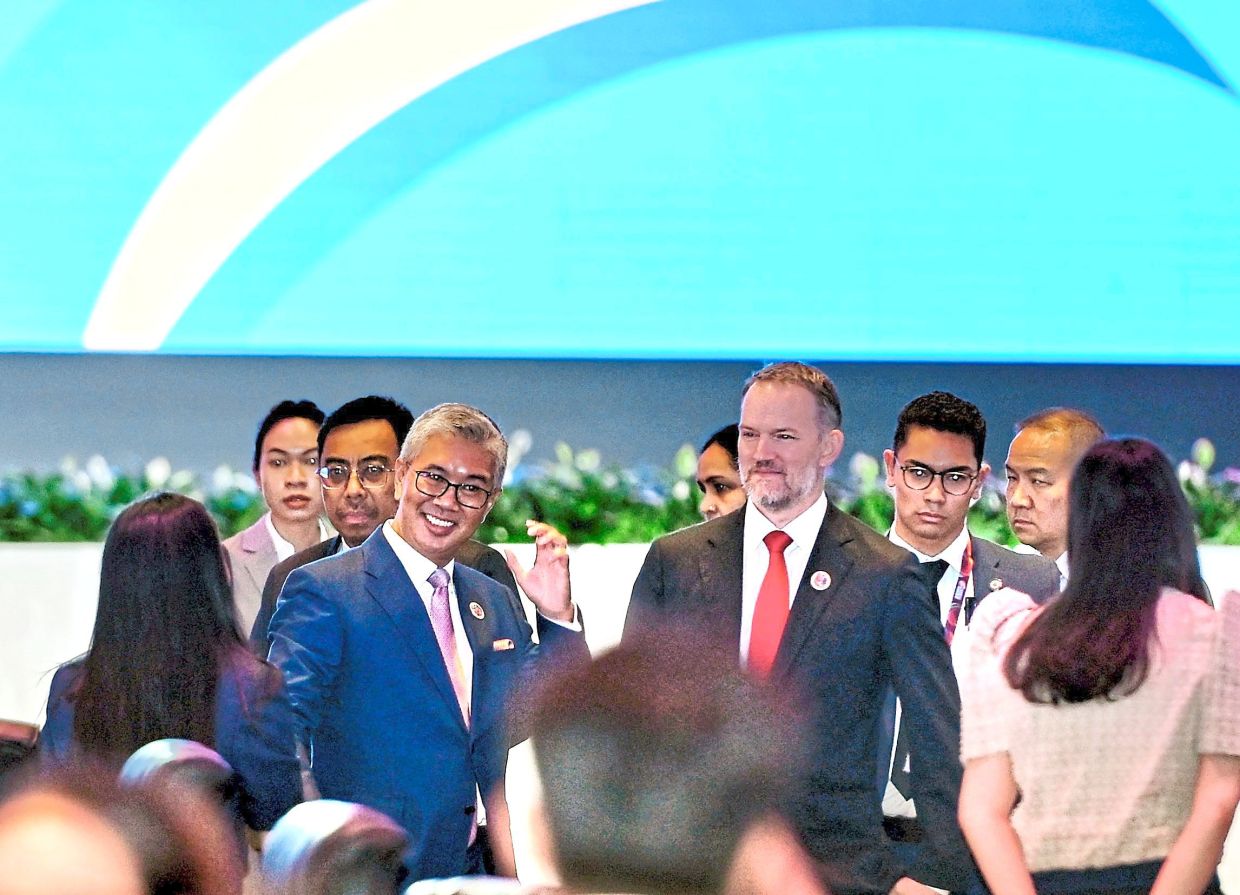
United States Trade Representative (USTR) Jamieson Greer, who attended the Asean Economic Ministers (AEM) meeting for the talks, said the United States is hoping for more balanced and reciprocal trade with South-East Asian nations.

“President Trump and I are proud of the work we have done together on these deals and expect to finalise these agreements in the coming months or even weeks for some,” he said in his opening remarks during the AEM-USTR consultation yesterday.
Greer said the United States aims for balanced and reciprocal trade with Asean, adding that the regional grouping is also regarded as an important trading partner.
“Our combined population is over one billion, and as you mentioned, total trade in goods and services is nearly half a trillion dollars,” he said.
“We believe there are many areas where our interests align and we can work together to achieve shared goals of bringing reciprocity and balance to the global trading system,” he added.
Investment, Trade and Industry Minister Tengku Datuk Seri Zafrul Abdul Aziz said total trade between Asean and the United States reached a record US$453bil last year.
Tengku Zafrul said Asean exports to the United States have surged to US$312bil during the same period, which is an increase of about US$42bil from the previous year.
“That is nearly a 16% increase from the previous year,” he said in his opening remarks.
Tengku Zafrul said the same is seen in investment figures, as the United States was Asean’s largest source of foreign direct investment with inflows exceeding US$42bil last year.
“That is not just capital, it is a clear word of confidence in Asean’s future and in the opportunities that our region provides.”
Tengku Zafrul also said Asean-US ties go beyond trade and investment, as there are 4.6 million Americans visiting the regional grouping, which has 10 member countries.
“These are not just tourists, but students, entrepreneurs, innovators and families. They strengthen the bonds that unite our regions together,” he said.
Speaking to reporters after the Asean-USTR Consultation, Tengku Zafrul said the meeting with the United States was good.
“We had a good session and consultation where both Asean and USTR discussed issues regarding trade.
“It was very constructive, productive and we look forward to serious engagement with the US,” said Tengku Zafrul.
He also said the meeting with the United States had reviewed the Trade and Investment Framework Agreement and the US-Asean Enhance Economic Engagement Initiative work plan and exchanged views on challenges shaping the global economy.
“It’s a timely conversation, because we all feel the winds of change, whether it’s supply chains, digital transformation or the global push for greener, more sustainable growth,” added Tengku Zafrul.
For most Asean countries, tariffs rates have been set at 19% and 20%. Singapore has a 10% tariff.
Malaysia has a 19% rate after it was reduced from 25% following a series of negotiations with the United States.
Only Laos and Myanmar have been hit with a 40% tariff rate.
According to estimates by the United Nations Development Programme (UNDP), Vietnam, the world’s sixth-largest exporter to the United States, risks losing US$25bil (RM105bil) annually as a result of the 20% tariff imposed on its goods.
UNDP said the tariffs will make Vietnam the worst-hit economy in the region.
Yesterday marked the first time that the Asean nations spoke to Greer as a group.
Previously, the 10-member Asean group had engaged in separate tariff negotiations with the United States.