PETALING JAYA: The recent presence of venomous jellyfish along parts of Terengganu’s coastline is linked to seasonal environmental conditions that favour their growth, says a marine scientist.
Prof Datuk Dr Mazlan Abd Ghaffar said two species of fire jellyfish – Sanderia spp. and Morbakka spp. – are commonly found in the warm coastal waters of the South China Sea, particularly off Kuala Nerus.

The marine researcher at the Institute of Climate Adaptation and Marine Biotechnology, Universiti Malaysia Terengganu, said high sea surface temperatures, nutrient-rich waters and complex current systems along the Terengganu coast support frequent seasonal blooms, with patches currently detected in parts of Kuala Nerus.

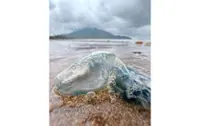
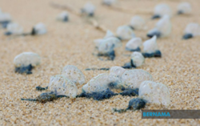
It was previously reported that the Portuguese man-of-war, locally known as ubur-ubur api, had washed ashore at several beaches in Terengganu, including Pantai Pandak in Cendering and Pantai Paka in Dungun.
“Their increasing numbers pose health risks to swimmers, fishermen, tourists and local communities engaging in beach activities,” he said.
Prof Mazlan warned that jellyfish washed ashore remain dangerous even when they appear dead.
Their tentacles contain microscopic stinging cells, known as nematocysts, which can continue injecting venom after the animal is detached or dead.
Contact can cause immediate burning pain, redness, swelling and raised welts.
More significant stings may cause muscle cramps, headaches, nausea or dizziness.
“Although rare, severe reactions can include breathing difficulties or heart complications,” he said.
Delayed effects, which may appear days or weeks later, include skin discolouration, scarring, prolonged sensitivity, allergic reactions or secondary infections if not properly treated.
Children are particularly vulnerable due to their smaller bodies, while individuals with allergies, asthma, heart disease, or weakened immune systems face a higher risk of severe reactions.
Emergency treatment should be sought immediately if symptoms, such as difficulty breathing, swelling of the lips or throat, chest pain, fainting, or worsening pain, occur.
In discussing first aid, Prof Mazlan said that not all widely used remedies are appropriate.
Vinegar may help with box jellyfish stings, but it can worsen stings from other species.
Warm water immersion, between 40°C and 45°C for 20 to 45 minutes, has strong evidence of supporting pain relief.
He advised rinsing affected areas with seawater to remove tentacles and avoiding fresh water, rubbing or traditional remedies, such as urine or alcohol, which can trigger further venom release.
Beach visitors are urged to wear footwear, avoid handling stranded jellyfish and seek prompt medical attention if they are stung.