JOHOR BARU: Since midnight on Monday (Sept 22), thousands of drivers have begun using the new QR code system for passenger cars at Malaysia’s two land checkpoints with Singapore.
The new National Integrated Immigration System (NIISe) – currently limited to passenger cars – is open not only to Malaysians and Singaporeans but also to foreign nationals.
Travellers from 63 countries may use the QR code to enter Malaysia, while citizens of 71 countries can use it for departure.
State works, transportation, infrastructure and communication committee chairman Mohamad Fazli Mohamad Salleh, who inspected the rollout at the Bangunan Sultan Iskandar Customs, Immigration and Quarantine (CIQ) Complex in Johor Baru, said at least 16 car lanes – eight for entry and eight for exit – have been fitted with the system there.
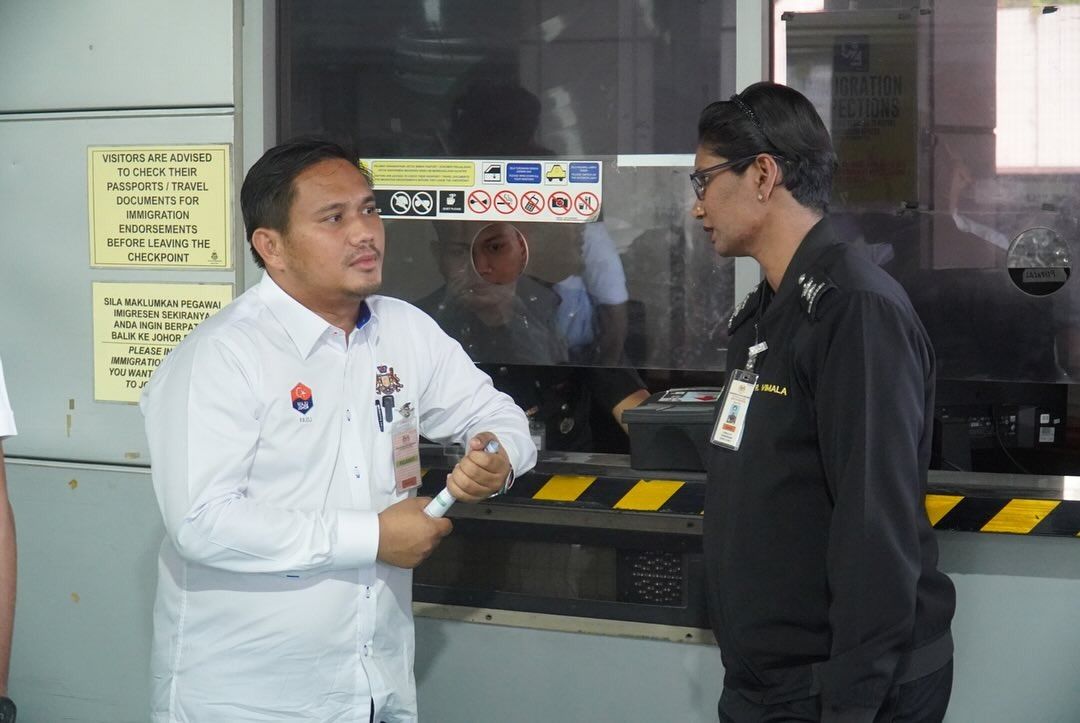
At the Sultan Abu Bakar CIQ Complex (KSAB) at the Second Link, 12 car lanes (six each for entry and exit) are also in operation.
“Everything is running smoothly at the moment, with people giving their thumbs up. However, there have been some complaints about generating the QR code in Singapore,” Mohamad Fazli said, adding that the vendor had dispatched a team to look into the issue.
According to the Home Ministry, the trial will be expanded in stages to five international airports: Kuala Lumpur International Airport (Terminals 1 and 2), Penang International Airport, Kuching International Airport and Kota Kinabalu International Airport.
The exercise will run until Feb 28 next year. During the trial, the existing QR code system and the MyBorderPass app will remain valid for entry and exit.
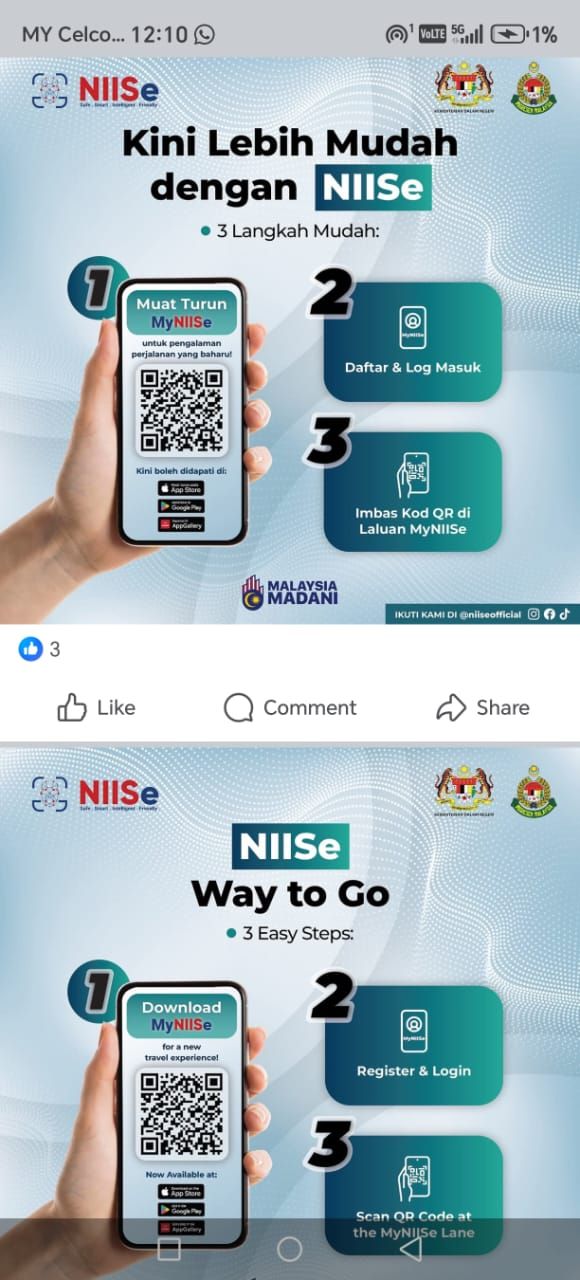
However, the public – including foreign visitors – is encouraged to download the new MyNIISe mobile app, available on the Apple App Store, Google Play Store and Huawei AppGallery.
The ministry stressed that valid travel documents or passports are still required for immigration clearance under the Immigration Act 1959/63.
“NIISe is a key reform initiative under the government’s agenda. Its implementation has been brought forward to September from the original target of March 2026.
Once the trial ends, NIISe will replace the current QR code system to improve the efficiency of automatic security checks at the country’s entry points,” the ministry said.