Medicinal treasure at risk from overharvesting
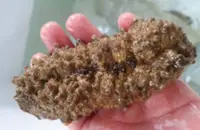
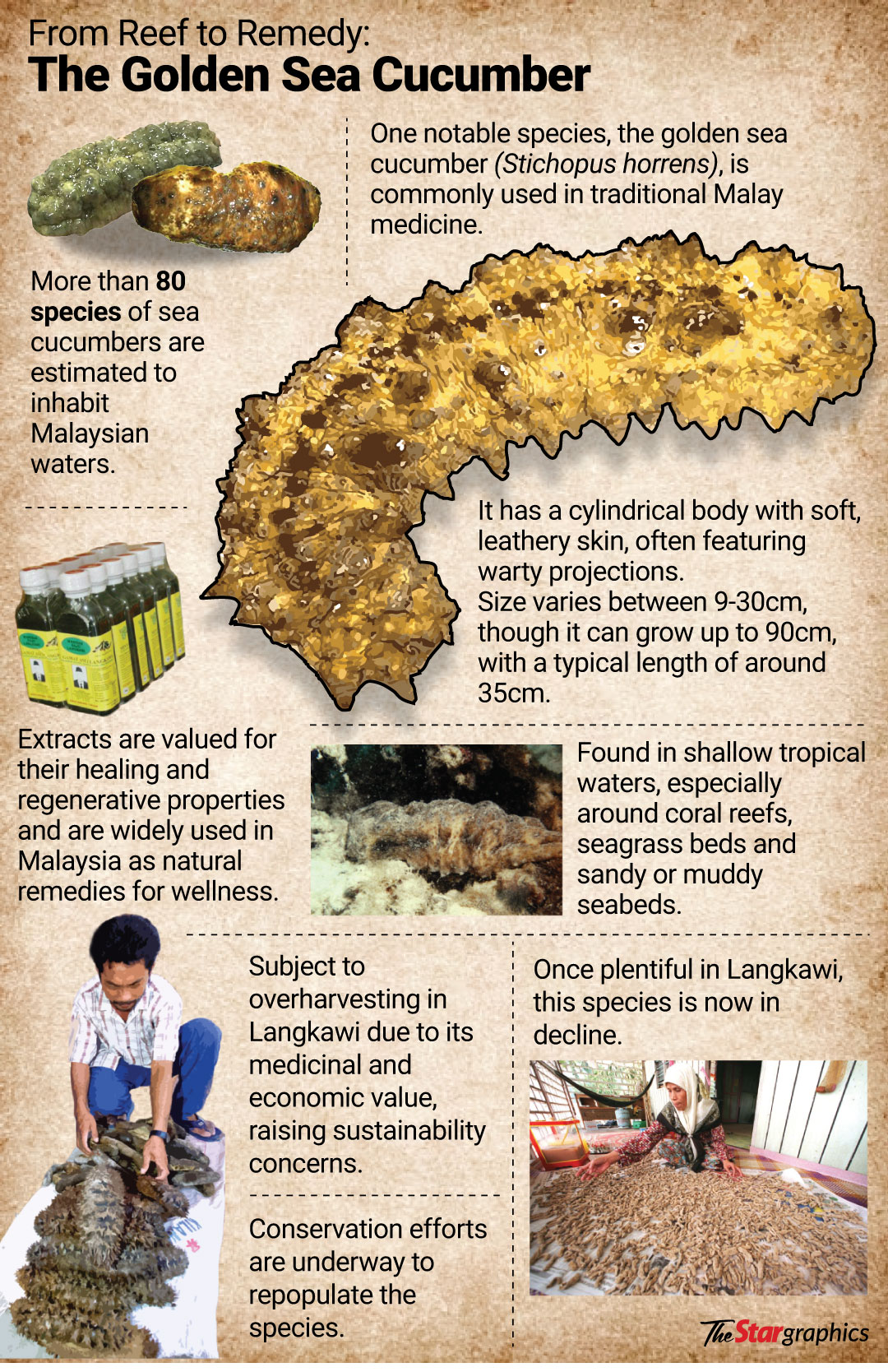
LANGKAWI: A prized sea cucumber with high medicinal values is facing extinction due to overharvesting, a rising demand and habitat loss, says an expert.
Universiti Sains Malaysia (USM) Centre for Marine and Coastal Studies (Cemacs) director Prof Datuk Dr Aileen Tan said in Langkawi, demand for Gamat Emas (Stichopus horrens) has surged due to its health benefits.
“Their gamat population has drastically depleted, yet they remain highly sought after in tourism and the traditional medicine market,” she said.
Cemacs has started conservation efforts since last August and successfully bred and released its first batch of juvenile gamat at Teluk Datai.
Prof Tan said in May, two restoration plots were also identified for biodiversity and reef monitoring.
“A dedicated hatchery is now being set up in Langkawi, alongside ongoing habitat rehabilitation. Early trials are also underway to develop premium gamat-based products using UV technology,” she said yesterday.
“Once the rehabilitation centre is fully established as a pilot project, we will scale up juvenile production for release at confirmed sites, and train local communities in Gamat Emas production.”
Considered a national marine treasure, the Gamat Emas extracts have also been used to treat cuts, burns, surgical wounds and aid postpartum recovery.
Prof Tan added that sea cucumbers were also harvested for oils, water bioactive compound extract, production of balms and soaps, and other traditional remedies.
She further explained that sea cucumbers, which lie on the seabed, play a vital role in marine ecosystems.
“Sea cucumbers act as underwater vacuum cleaners, recycling nutrients and maintaining sediment health, which in turn supports coral reefs,” she said.
“Over-exploitation disrupts this balance and reduces reef resilience to threats such as coral bleaching and biodiversity loss.”
To safeguard the species, the Ministry of Science, Technology and Innovation has launched the Gamat Emas rehabilitation and conservation programme, through engagement with USM and Universiti Malaysia Terengganu, with Yayasan Inovasi Malaysia as the executing entity and Akademi Sains Malaysia as the monitoring entity.
Prof Tan, who is coordinating the programme, said it combines sustainable aquaculture, habitat restoration and community-based innovation.
“At its core, the programme focuses on breeding and rehabilitation through controlled aquaculture, from spawning and larval rearing to broodstock management and conservation.
“Complementary components include social innovation to develop sustainable Gamat Emas-based products and ecosystem restoration to support long-term recovery,” she said.
Researchers have also identified criteria for selecting release sites, according to Prof Tan.
Criteria for these sites include diversity of native sea cucumber species, water quality, substrate type, sedimentation, depth, currents, food availability, coral reef health and the absence of invasive competitors.
Traditionally, Gamat Emas is also believed to help with gastric ailments and internal ulcers, with demonstrated anti-inflammatory and analgesic properties.
Its bioactive compounds, including collagen, saponins and glycosaminoglycans, are increasingly extracted for applications in cosmeceuticals and functional food products such as food-grade gelatin.
According to the Annual Fisheries Statistics 2012-2018, the sea cucumber industry saw a peak in both production and value in 2016, when the total sea cucumber production, combining caught fishery and aquaculture, surged to nearly 1,000kgs, pushing the industry’s value to an all-time high of RM28mil.