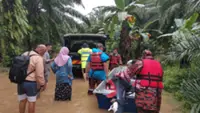
KOTA KINABALU: Tucked away in Sabah’s eastern coastline, Pulau Keniogan is home to over 1,200 villagers who rely on rainwater, murky wells and costly bottled water for their survival.
Their dream for clean water may finally be answered if the plan by a team of researchers from Universiti Malaysia Sabah (UMS) to install a solar-powered micro water treatment system is realised.
The system can pump 460 litres of groundwater per hour, operating for seven to eight hours daily to yield 3,600 litres of clean water – enough to meet the World Health Organisation’s recommended minimum of three litres per person per day in hot climates.
Fellow researcher Dr Mohamad Zul Hilmey Makmud said the system is designed for sustainability, using solar energy with a battery back-up to ensure operations, even with limited electricity on the island.
“We want the community to have access to clean water without relying on diesel generators or waiting for assistance during power cuts,” he said.
The initiative follows a technical assessment by the university’s Rural Water Supply (Ruwas) Living Lab, which found that the island’s groundwater is dangerously contaminated.
Lead researcher Prof Dr Kawi Bidin said water samples showed turbidity levels of 43 Nephelometric Turbidity Units (NTU), far exceeding the 5NTU limit for safe drinking water.
Iron content was recorded at 10.5mg/L – more than 30 times the acceptable limit of 0.3mg/L – while ammoniacal nitrogen levels also surpassed safety thresholds, he added.
“The water is clearly unsuitable for drinking without proper treatment. Boiling may kill bacteria but it doesn’t remove chemical contaminants like iron, which can affect the digestive system,” Prof Kawi said.
Pulau Keniogan is located in Beluran, one of the 10 poorest districts in Malaysia, where infrastructure development remains limited.
Due to the island’s hilly terrain and ongoing land disputes, constructing a reservoir is not viable, leaving groundwater as the only feasible long-term option.
Village chief Azmi Madlis said residents have endured years of hardship and unanswered appeals to elected representatives.
“There were proposals before – gravity systems, filtration – but nothing happened. We all hope that this time, it does,” he said.
UMS has previously implemented similar systems in four remote villages in Pitas – Kampung Pituru Timbang Taun, Kampung Mengkampun, Lok Dangkan and SMK Bongkol – with support from agencies such as Perbadanan Baitulmal Negeri Sabah, and the Science, Technology and Innovation Ministry.