
PETALING JAYA: Malaysia’s decision to ratify the United Nations Convention Against Cybercrimes marks a pivotal step forward in the nation’s efforts to bolster cybersecurity and enhance international cooperation, experts say.
Taylor’s University Malaysia’s Assoc Prof Datuk Dr Husin Jazri said Malaysia’s ability to combat cybercrime would be enhanced as the convention encourages cross-border cooperation.
“By signing this convention, Malaysia will be more effective in tracing and countering cybercrimes across borders, especially cybercrime-related matters as stipulated in the articles proposed by this legal convention.
“Most digital crimes tend to operate cross-border, and Malaysia becoming one of the signatories is a step in the right direction in our effort to combat cybercrimes such as online scams and more,” he said.
Prof Husin added that the majority of the convention’s articles are already in line with Malaysia’s existing laws or can be easily harmonised.
He said this alignment ensures that Malaysia’s legal framework meets international standards, further strengthening its cybersecurity posture.
“However, certain aspects, such as Extradition Requests and Mutual Legal and Technical Assistance, may require additional clarity and resources for them to be implemented effectively,” the cybersecurity expert said.
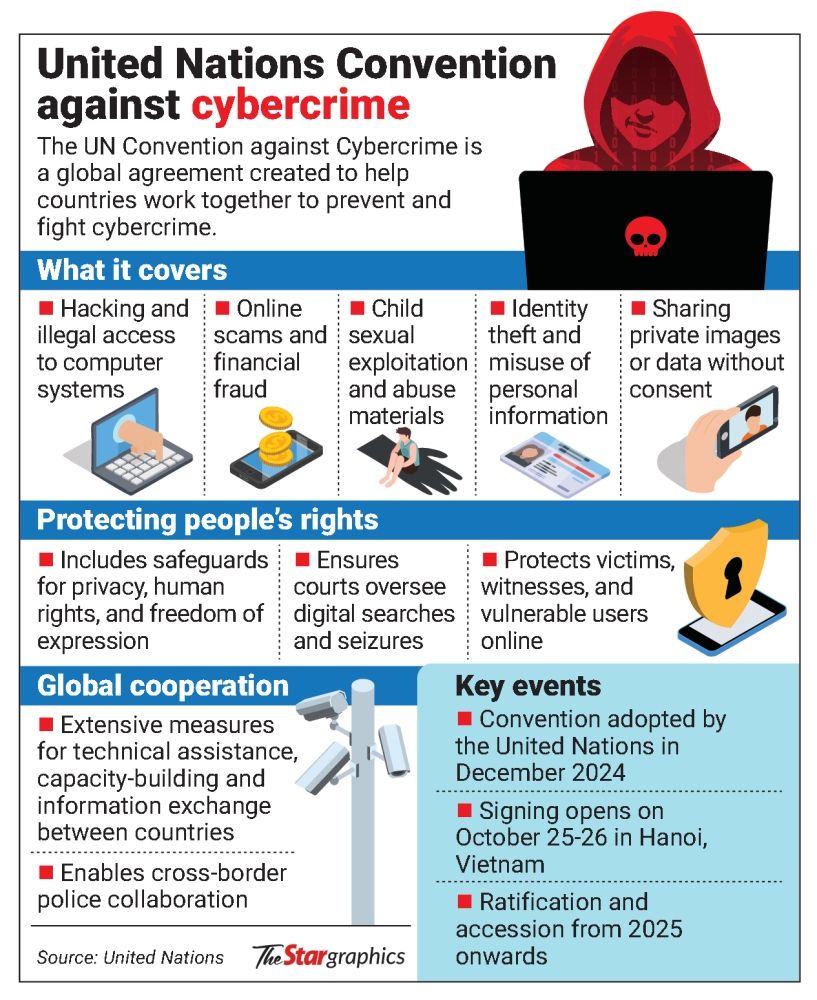
Adopted by the UN General Assembly last December, the convention would be the first comprehensive global treaty in dealing with cybercrime.
The convention also provides member states with a range of measures to be undertaken in preventing and combating cybercrime.
Among the key areas covered are requiring countries to criminalise hacking and illegal access to computer systems, online scams and financial fraud, child sexual exploitation and abuse materials, and identity theft.
Home Minister Datuk Seri Saifuddin Nasution Ismail told the Dewan Rakyat last week that Malaysia will ratify the convention this October in Vietnam.
Cybersecurity expert Fong Choong Fook said the government’s decision is a positive and timely step.
“Cybercrime is inherently transnational and often operates across borders, exploiting jurisdictional gaps.
“By aligning with a global framework, Malaysia gains the legal tools and international cooperation mechanisms necessary to pursue cybercriminals more effectively,” he said.
He added that ratifying the international legal framework would also enhance cross-border evidence sharing and streamline extradition processes.
However, Fong highlighted several challenges in implementing the convention in Malaysia, especially in terms of capacity and expertise.
“Investigating cybercrime requires deep technical skills – such as digital forensics, threat intelligence and malware analysis – which remain in short supply.
To overcome these, Malaysia must invest not only in legal reforms, but also in technical training, cyber threat intelligence platforms and public-private partnerships, said Fong.