
JOHOR BARU: Two enforcement officers at the Customs, Immigration and Quarantine (CIQ) Complex at the Sultan Iskandar Building (BSI) here have been detained for alleged involvement in the “flying passport” activity.
The Malaysian Border Control and Protection Agency CIQ BSI commander, Roszita Dim, said the male suspects, aged 31 and 49, were picked up on Friday during an operation by its compliance unit that began at 3pm.
“Suspicious activity was first detected around 7.30pm at the vehicle zone counter of the entry point.
“Investigators observed several questionable entries of visitor data using the login credentials of an officer posted at the counter, including data linked to foreign nationals flagged as problematic visitors.
“These entries triggered manual data correction actions by one of the suspects,” she told a press conference yesterday.
Roszita said that around 9pm, the unit detected another instance of suspicious data clearance involving a problematic visitor, this time using the user ID of a supervisor stationed at the motorcycle zone.
A search at the vehicle zone counter uncovered RM2,800 cash and two mobile phones in one of the suspects’ possession, she added.
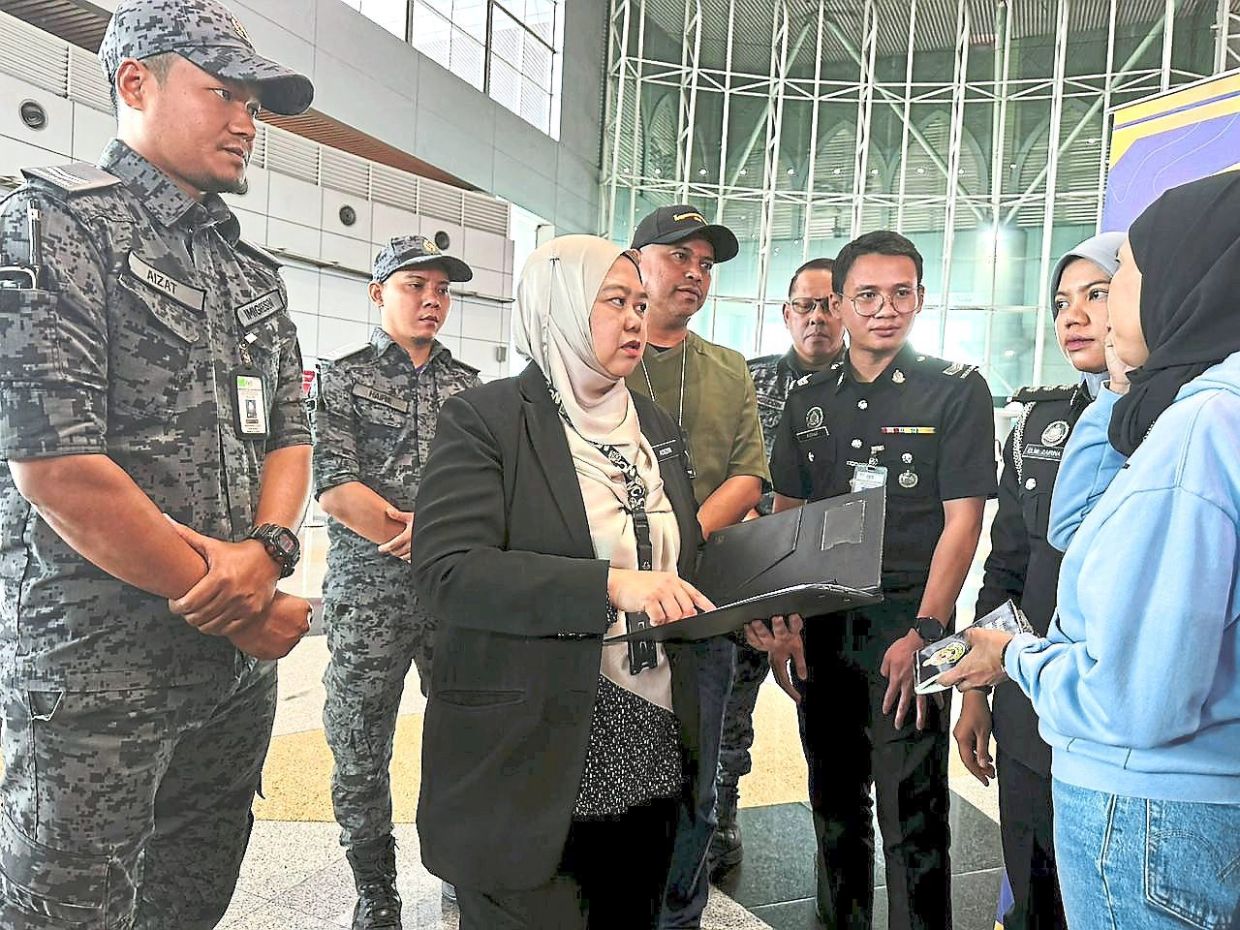
She said the investigation then led to a concealed stash of 14 foreign passports – 11 issued by China and three by Indonesia – hidden inside a black bag above the ceiling at another counter.
Further inspection at the motorcycle zone revealed two additional mobile phones belonging to the other suspect, she added.
Roszita said both suspects were handed over to the Malaysian Anti-Corruption Commission in Johor at 10am yesterday.
She said the agency’s integrity unit head in Putrajaya had been notified of the arrest, and that an investigation is ongoing to determine if the act was syndicated.
Roszita emphasised that the agency is committed to upholding integrity and rooting out misconduct, particularly corruption among enforcement officers and department personnel at the country’s border entry points.
“Flying passport” refers to an illegal immigration tactic in which passports are carried – often by third parties – across borders without the physical presence of their holders.
The passports are then returned to their owners, who had entered the country through unauthorised channels.
This method allows problematic individuals to bypass immigration checks and security protocols undetected.