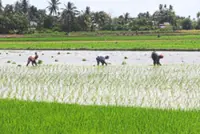
PETALING JAYA: Despite the government’s announcement of a new padi floor price of RM1,500, farmers say that rising costs remain a burden for them.
“We thank the minister for the padi floor price, but it is insufficient to cover rising costs, particularly due to the removal of diesel subsidies and the increase in seed prices last year,” said Malaysia Padi Farmers Brotherhood Association (PeSawah) chairman Abdul Rashid Yob.
He said the organisation, which represents padi farmer associations, had sought a floor price of RM1,800 per tonne, which he described as reasonable and justified in view of the rising cost of living, as well as other challenges faced by rice farmers in ensuring the country’s rice production continues.
“We urge the minister to reconsider our request and take more concrete steps to support rice farmers. We propose an additional RM300 incentive on top of the new RM1,500 floor price and a reduction in the controlled price of certified rice seeds from RM58 to RM35, which was the price before the increase in March 2024,” he said when contacted.
Yesterday, Agriculture and Food Security Minister Datuk Seri Mohamad Sabu said the padi floor price, which refers to the minimum price rice millers will buy from farmers, had been adjusted from RM1,300 to RM1,500.
Abdul Rashid said PeSawah hoped the government would understand their concerns and provide the necessary support.
“Without adequate assistance, the sustainability of rice production in Malaysia could be at risk,” he added.
Abdul Rashid said government subsidies, which amount to billions of ringgit, only benefitted rice farmers to a small extent.
“Only 20% of the subsidies go directly into the pockets of farmers in the form of padi price incentives. The remaining subsidies are allocated to vendors providing seeds, agricultural inputs and machinery services,” he noted.
He also pointed out that the price of rice had not been reviewed for 17 years.
“This is why subsidies have to increase every year – to absorb the cost of maintaining the controlled price of rice,” said Abdul Rashid.
Kemubu Agricultural Development Authority chairman Khalid Samad said the long-term solution is to increase productivity so that the country can achieve an output of eight to 10 tonnes per hectare, doing so in five seasons in two years.
“The government is doing its best to assist the farmers. We try to meet their request on prices, but we must consider the impact of the final price on the market and ensure that consumers do not suffer in the end.
“This is what the ministry is working towards,” he added.
Furthermore, he said Malaysia’s padi production is the most subsidised in the region, partly due to its low production per hectare.
Malaysia Rice Grain Wholesalers Association deputy secretary Allen Lim called on authorities to enforce strict measures to prevent the mixing of local rice with imported varieties.
With local white rice priced at RM2.60 per kilo and government subsidies in place, he said enforcement agencies should keep a close watch.