
PETALING JAYA: Using a water filter and boiling drinking water could minimise environmental damage caused by improper disposal of medications, said health experts.
“Traces of pharmaceuticals in drinking water can pose long-term health risks, including antibiotic resistance and hormonal disruptions.
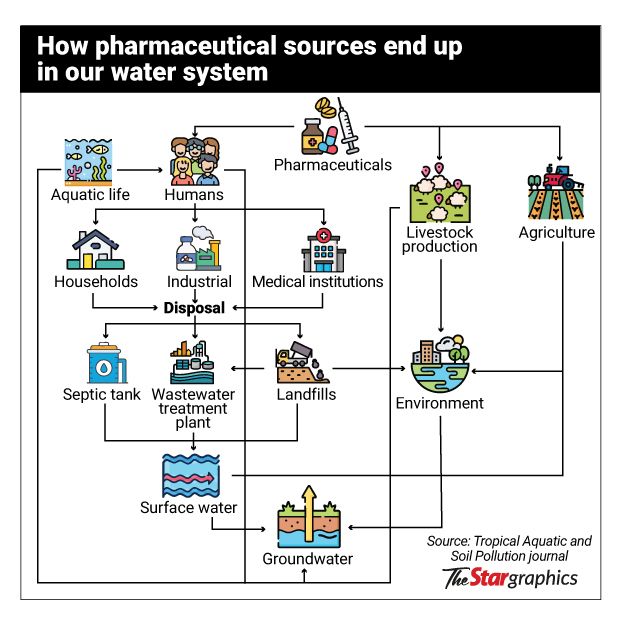
“Wastewater treatment plants often cannot fully remove pharmaceutical compounds, and their presence in rivers, lakes and groundwater can pose health risks to humans drinking such contaminated water,” said Malaysian Pharmacists Society president Prof Amrahi Buang.
ALSO READ: Antibiotic, painkiller traces found in drinking water, study shows
Asked how consuming contaminated drinking water can affect people, Amrahi said it will only cause problems if consumed in large amounts.
“There is not much study on this, but we can expect fish to be affected and (eating them) will harm us.
“To mitigate the effect, we can boil the water or use filters, which will help in some way – but again, there aren’t many studies on this either,” he added.
Public health expert Datuk Dr Zainal Ariffin Omar said pharmaceutical traces, if found in tap water, may affect the human physiology and metabolism as well as increase antibiotic resistance.
As such, he advises using water filters either outdoors or indoors.
ALSO READ: Creating healthier drug disposal habits for all
“Many people usually put them (medicines) in a plastic bag and throw them into rubbish bins.
“Only a few people actually return their unused medications to healthcare facilities.
“There are those who also flush them down the toilet, thus they end up in the drain and water system.
“Unopened, unused and out-of-date medicines should be returned to pharmacies or clinics for disposal,” he said.
Pharmaceuticals have emerged in surface water, riverbanks, drinking water, sewage or water treatment plant effluent, and even hospital effluent, according to a study titled “Assessing the Impact of Pharmaceutical Contamination in Malaysian Groundwater: Risks, Modelling, and Remediation Strategies”.
In 2010, the Health Ministry’s Pharmaceutical Services Division implemented the Return Your Medicines Programme that allowed patients to return their unused or excess medicines kept at home for safe disposal.
This was because every year, tens of millions of ringgit worth of medicines dispensed by government health facilities remain unused by patients.
More recently, the ministry has its MyMediSAFE programme (https://mymedisafe.org.my).
Meanwhile, the Alpro Foundation, the corporate social responsibility arm of Alpro Pharmacy, launched the Safe Medication Disposal Campaign in 2021.
This initiative aims to raise awareness and encourage the proper disposal of unwanted and expired medications among Malaysians.
“We’ve observed a significant increase in clinics bringing in unneeded medications, highlighting the urgent need for more education and advocacy.
ALSO READ: Here’s how to handle your pharmaceutical waste
“By fostering awareness and providing accessible solutions, we’re not only protecting our water sources but also paving the way for a healthier and more sustainable future,” said Alpro Foundation chief executive officer Ostwin Paw.
To date, the foundation has collaborated with over 600 schools nationwide, reaching more than 300,000 students, including university attendees, to educate them on safe medication disposal practices.
It has also provided safe medication disposal bins, which are available at the over 300 Alpro Pharmacy outlets nationwide.
For this year, the foundation is embarking on a new initiative after signing a memorandum of agreement with Universiti Teknologi Mara for a two-year research and community education programme involving members of the public and pharmaceutical companies.
It also plans to equip families with the knowledge and tools to dispose of medications safely, targeting 250,000 families through school talks and community outreach programmes.
Additionally, the foundation is constructing a visible landmark called the “Little Red House” outside its headquarters.
The public can dispose of their medications responsibly at the house, where a QR code will provide further information on safe disposal practices.
For more information on the Safe Medication Disposal Campaign and to find a disposal bin, visit https://www.alpropharmacy.com/services/medication-disposal-service/.