PETALING JAYA: Irresponsibly discarded antibiotics, steroids, hormones and painkillers, as well as high blood pressure, asthma, antibacterial, anti-inflammation and infection medications are making waves in our drinking water sources.
Such pharmaceuticals have emerged in surface water, riverbanks, drinking water, sewage or water treatment plant effluent, and even hospital effluent, according to a study titled “Assessing the Impact of Pharmaceutical Contamination in Malaysian Groundwater: Risks, Modelling, and Remediation Strategies”.
According to the study, published in the “Tropical Aquatic and Soil Pollution” journal on Techno Scientifica in June last year, among pharmaceuticals most commonly found in water samples were amoxicillin, atenolol, acetaminophen, caffeine, dexamethasone, chloramphenicol, metoprolol, ciprofloxacin, sulfamethoxazole, diclofenac, theophylline and triclosan.
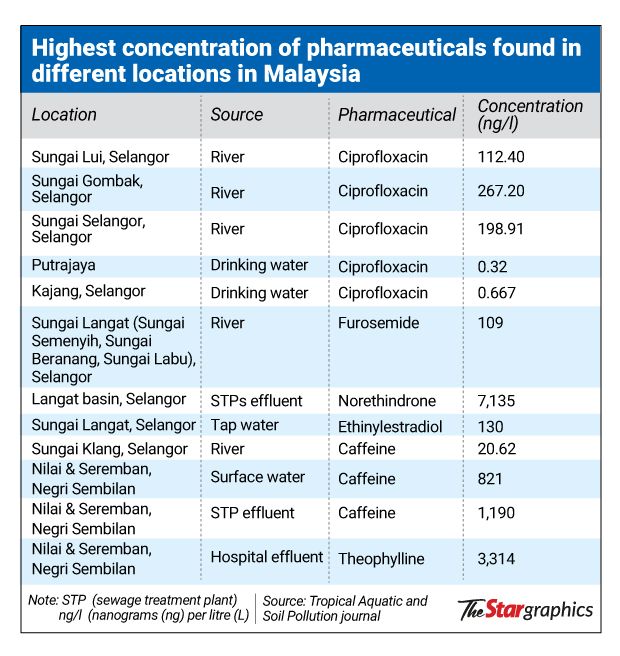
The highest concentration of pharmaceuticals was found in different locations in Malaysia, but the study said the bulk of it came from Selangor and Negri Sembilan. However, this was mainly because there were insufficient studies in other states.
ALSO READ: Silent danger in our life source
These locations include Sungai Lui, Sungai Gombak, Sungai Selangor, Sungai Langat (Sungai Semenyih, Sungai Beranang and Sungai Labu), Langat basin, Sungai Klang, Kajang in Selangor and Putrajaya, as well as Nilai and Seremban in Negri Sembilan.
In recent decades, pharmaceutical evolution has become a growing concern as potential bioactive chemicals in the groundwater have increased.
“Pharmaceuticals in Malaysia’s groundwater are a growing concern as they can potentially affect the environment and human health negatively.
“They have found their way into the food chain and exhibit toxicity and hazard to aquatic ecosystems,” the study said.

It added that the presence of pharmaceuticals in aquatic ecosystems can adversely alter the ecological function and negatively impact the different organisational levels of aquatic life.
This means they can be ingested through the intake of fish, meat, vegetables and fruits, the study noted.
However, the study indicated that the toxicity of pharmaceuticals to humans has yet to be investigated despite strong evidence of possible negative impacts.The intake of these pharmaceuticals in a lifetime only surpasses the limit of certain doses, which is lower than the recommended daily level.
But there are concerns about the accumulated effect on people consuming pharmaceutical mixtures in food and drinking water.
The study also said based on a household survey in Selangor, only 25.2% of people return their household pharmaceutical waste to healthcare institutions.
It added that the rest of the people dispose of their pharmaceutical waste by binning it, flushing it down the toilet or drain, burying it or burning it.
Despite clinical waste disposal being available in the country, there is still a lack of awareness among the public on the proper disposal of medicines.