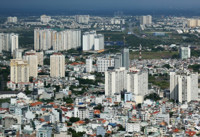
PETALING JAYA: The success of Vietnam in becoming an Asean powerhouse should serve as a lesson to Malaysia on how to improve its policymaking process and stop political instability, say experts.
They were commenting on the latest US News and World Report, which ranks Vietnam 30th among the world’s top powerful countries in 2022, while Malaysia stands at 46th place.
With a gross domestic product (GDP) of over US$363bil (RM1.6 trillion) and a population of more than 98.2 million, Vietnam stands only behind Singapore (26th position) among the Asean countries.
Associated Chinese Chambers of Commerce and Industry of Malaysia (ACCCIM) treasurer-general Datuk Koong Lin Loong said Malaysia’s overly protective policies for local brands have become a major barrier to enticing foreign investment in the country.
“Malaysia has one of the highest Foreign Source Income (FSI) tax rates in the South-East Asian region at 24%, compared to most countries like Vietnam, whose FSI tax rate is only 20%.
“While 4% may not seem like a big difference, it adds up to a lot of extra money, especially for huge multinational companies that deal with billions on a daily basis.
“The overly protective approach to policy for local brands also hurts Malaysia’s international market credibility, such as when the government proposed to implement restrictions on foreign vehicle imports to protect the interests of national carmakers in 2018,” he said.
Malay Economic Action Council president Dr Abdul Halim Husin said Malaysia’s image has been dented by a combination of political instability and policy reversals after the 14th General Election.
“There was also the 5G rollout controversy over the unprecedented and untested decision to entrust a single newly-formed government entity, Digital Nasional Bhd (DNB), to build new 5G infrastructure instead of just upgrading existing Internet infrastructure nationwide.
“The decision drew backlash from locals and foreign investors alike over the allegations of allowing DNB to form a monopoly over the 5G market,” he said.
However, despite Vietnam proving itself on the world stage, Malaysian Retailers Association president Datuk Andrew Lim pointed out that many fail to see the risks the country poses for businesses and people alike.
He said many quarters attribute its success to its huge population, resulting in a bigger production market, but forget that the Vietnamese dong currency is controlled by its central bank.
“Many Malaysian companies have suffered forex (foreign exchange) losses with the up and down value of the Vietnamese dong, which is at the discretion of the central bank. The consequences are that the dong is not freely traded, so there is a risk.
“The laws of the country are also not based on common law, unlike in Malaysia, so companies in Vietnam would not get legal redress.
“Also, as a communist country, the whole society is under centralised command, whereas we have a democratically-elected government,” Lim said.
He also said that Malaysia, which is now run by a unity government, is still the best option for investors.
Already a subscriber? Log in
Get 20% OFF The Star Digital Access
Cancel anytime. Ad-free. Unlimited access with perks.