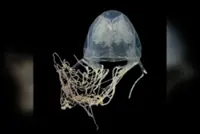
PETALING JAYA: Beachgoers taking a dip in Sabah waters during the holiday season should be extra careful as the deadly box jellyfish is back.
In the past month, at least six people were stung, killing one of them, a seven-year-old child from Kota Belud.
The Borneo Marine Research Institute in University Malaysia Sabah (UMS) warned that the dry and hot weather allowed these species to increase in numbers from now until June.
UMS scientists on field trips collecting marine samples of Sabah’s coast have sighted the species.
From their observation, the jellyfish can be found near Tanjung Aru and Kota Belud beaches, said UMS Assoc Prof Dr BA Venmathi Maran.
“Swimmers and beachgoers should be careful of this deadly jellyfish. They are dangerous and can kill those stung by it if no immediate medical attention is given, ” he said.
Box jellyfish are transparent and it is difficult to spot in the water. Its sting can cause cardiac and respiratory arrest, aside from excruciating pain.
“As such, there is a high chance that swimmers would be unaware of their presence until they are stung, ” he said.
He said they can anticipate the population of jellyfish to be higher, affecting Sabah waters due to the weather in the coming months.
Prof Maran said there is little research on this jellyfish species but from what they know, dry and hot weather would allow them to increase in numbers until June.
The box jellyfish can kill a human within minutes, depending on the number of tentacles that come into contact with the victim’s body and for how long.
There have been cases of victims dying within five minutes.
There are at present two known types of box jellyfish found in Sabah – Chironex yamaguchii and Chironex indrasaksajiae.
Both are deadly.
He said UMS is undertaking a study on the box jellyfish.
Malaysian Society on Toxinology president and Remote Envenomation Consultancy Services consultant Assoc Prof Dr Ahmad Khaldun Ismail said swimmers should not remove the tentacles with their hands or wet sand after being stung as this could cause the jellyfish to discharge and release more venom into the body.
“Pouring vinegar onto the affected area can help stop further venom discharge from these stinging cells before touching or removing the tentacles, ” he said.
He said pouring water on to the tentacles would only encourage the jellyfish to release more venom into the victims.
“Use a tweezer or towel to remove the tentacles to prevent any further direct contact with the jellyfish and get medical help quickly, ” he said.
Already a subscriber? Log in
Get 20% OFF The Star Digital Access
Cancel anytime. Ad-free. Unlimited access with perks.