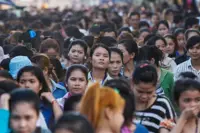
PETALING JAYA: Ethnic Chin refugees in Malaysia are being driven to depression – some to the brink of suicide – due to a change in policy, which could be the difference between life and death for many of them.
Over eight months, The Star’s R.AGE team recorded over 50 cases of Chin refugees and asylum seekers whose UNHCR cards were withheld when submitted for renewal.
Without the cards, the refugees would effectively become illegal immigrants vulnerable to arrests, fines, whipping and deportation to Myanmar.
R.AGE journalists found at least two cases of suicide within the Chin community, with unconfirmed reports of others, as well as a sharp increase in depression, anxiety and suicide ideation cases.
One of the suicide victims, Maung (not his real name), had exhibited symptoms of paranoia after his UNHCR card expired on June 26.
A friend said he was trembling, afraid that he would be arrested and deported back to Myanmar, where civil unrest drove him to flee to Malaysia in 2010.
On June 29, Maung’s body was found by a security guard on the ground floor of his apartment block.
Neighbours claim they saw him climbing the stairs to the top floor the night before, although he lived on the sixth.
The new policy is in line with the UN High Commissioner for Refugees’ (UNHCR) announcement in June 2018 that the Chin population will no longer be considered refugees come Jan 1, 2020, and all protection for Chin refugees will end accordingly.
According to UNHCR, years of ongoing assessments have led them to determine that the Chin state is now safe for return.
“In our assessment, the conditions that would normally produce refugees no longer exist,” said Richard Towle, the UNHCR Representative for Malaysia.
“There is a long period of peace and stability, and people are able to go about their business of living, practising their religion in a safe and fair way.”
Consultant psychiatrist and co-founder of Health Equity Initiatives Dr Xavier Pereira said his organisation has noticed an increase in the levels of depression, anxiety, stress and thoughts of suicide among the Chin community since UNHCR’s announcement.
“The refugees suffer from post-traumatic stress disorder and it affects them as well as the people around them, resulting in negative behaviour and self-harm.
“Losing their refugee status may make them feel more anxious and hopeless, which is an easy spiral to suicide,” he added.
The loss of a UNHCR card also creates a life or death situation for those with serious medical conditions, such as Esther, a four-year-old who requires medical care to stay alive – care which her family can no longer afford to pay for.
Without a UNHCR card, refugees have to pay the full foreigner’s rate for medical care (double what they would pay with a card), and finding a proper job becomes almost impossible.
“(Without a UNHCR card), they would be treated as undocumented migrant workers and be subjected to the same kind of detention periods and treatment, with no avenues for release,” explained humanitarian activist Lilianne Fan.
When refugees seek asylum in a foreign country, they have three broad options – integration, resettlement and repatriation. According to Towle, “all three options are on the table” for Chin refugees in Malaysia.
“The challenge is to find countries that are able to participate and cooperate around the solutions that are available,” said Towle.
However, Chin community leaders and human rights activists say these options are not feasible due to the diminishing global refugee resettlement quota and Malaysia’s lack of a legal framework on refugee issues.
“This is a difficult situation. On one hand we have to think of human rights, and on the other we have to think of security issues,” said Deputy Home Minister Datuk Mohd Azis Jamman.
Chin refugee and father-of-four Lalfima would love nothing more than to go back to his village in Chin state, the most “comfortable place” in the world to him.
“Here in Malaysia, we don’t have the same beautiful hills, or a comfortable house,” he said.
“But we can’t go back now and we can’t stay here. What is the future for our children? It’s like cutting the bud off the flowers when they are going to bloom.”
Footnote link: Go to rage.my/refugeesnomore for the full multimedia story. Follow R.AGE on Facebook for more updates on the project.
Already a subscriber? Log in
Get 20% OFF The Star Digital Access
Cancel anytime. Ad-free. Unlimited access with perks.